Sector(s)
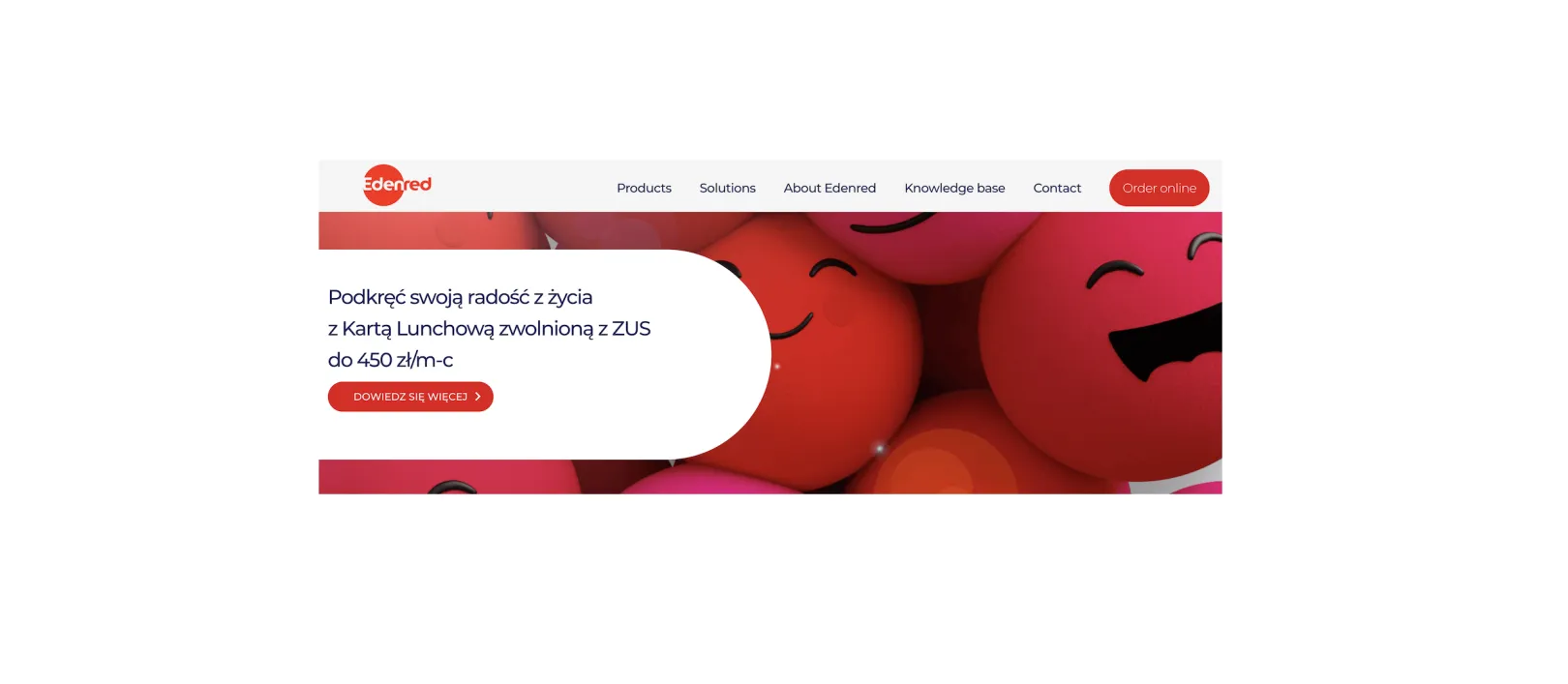
Edenred Polska is the Polish subsidiary of the global Edenred group, offering employee benefits such as lunch cards and gift cards to corporate clients, cardholders, and merchant partners. The marketing team needed a modern, editable website but faced a Drupal implementation where even basic text changes required developer tickets. Rather than a costly rebuild on a new platform, the project focused on unlocking Drupal through a paragraph-based component library the team could manage independently.
About the project
Edenred Polska operates a Drupal website serving three audiences: companies purchasing benefit cards, cardholders using Edenred products, and merchants accepting Edenred payments. After years of frustration with an implementation that blocked self-service editing, the organization planned to abandon Drupal entirely and issued a request for proposals that excluded the platform.
The client
Edenred Polska is part of the Edenred group headquartered in France. The Polish marketing team publishes product pages, landing pages, and promotional content for corporate buyers, card users, and business partners. Global technology standards require the site to remain on Drupal.
Challenge
The platform faced several interconnected problems:
- Drupal Paragraphs was installed but not wired into a usable editorial workflow; content managers could not edit basic text without filing developer tickets.
- The marketing team pasted finished graphics in place of editable copy, breaking mobile layouts and hiding content from search engines.
- Image-based pages loaded slowly, lacked heading structure, and could not be updated quickly during campaigns.
- Frustration peaked with an RFP for a full rebuild on a different CMS, with Drupal removed from the candidate list.
Solutions
Discovery and universal component design
Discovery sessions mapped how the marketing team presents products and campaigns. Designers created paragraph components in three to four color variants rather than fixed page layouts, each with a dedicated mobile layout instead of a scaled-down desktop view.
Paragraph-based page building
The implementation rebuilt the Paragraphs configuration so every page section became an independent, reorderable component. Editors add, remove, and configure blocks from the admin panel. Style variants use Paragraphs behavior plugins and CSS custom properties so teams pick light, dark, brand, or neutral treatments without duplicate paragraph types.
Editor-focused admin experience
The admin interface adopted the Gin theme for a clearer editing experience. The Geysir module enabled faster in-place paragraph editing. A complete staging example page showed every component and variant so the team could explore without formal training.
SEO and responsive front-end
Image-based sections were replaced with structured, editable text and proper heading hierarchy. Twig templates and mobile-first CSS delivered responsive layouts across devices, restoring indexability and faster page loads.
Result
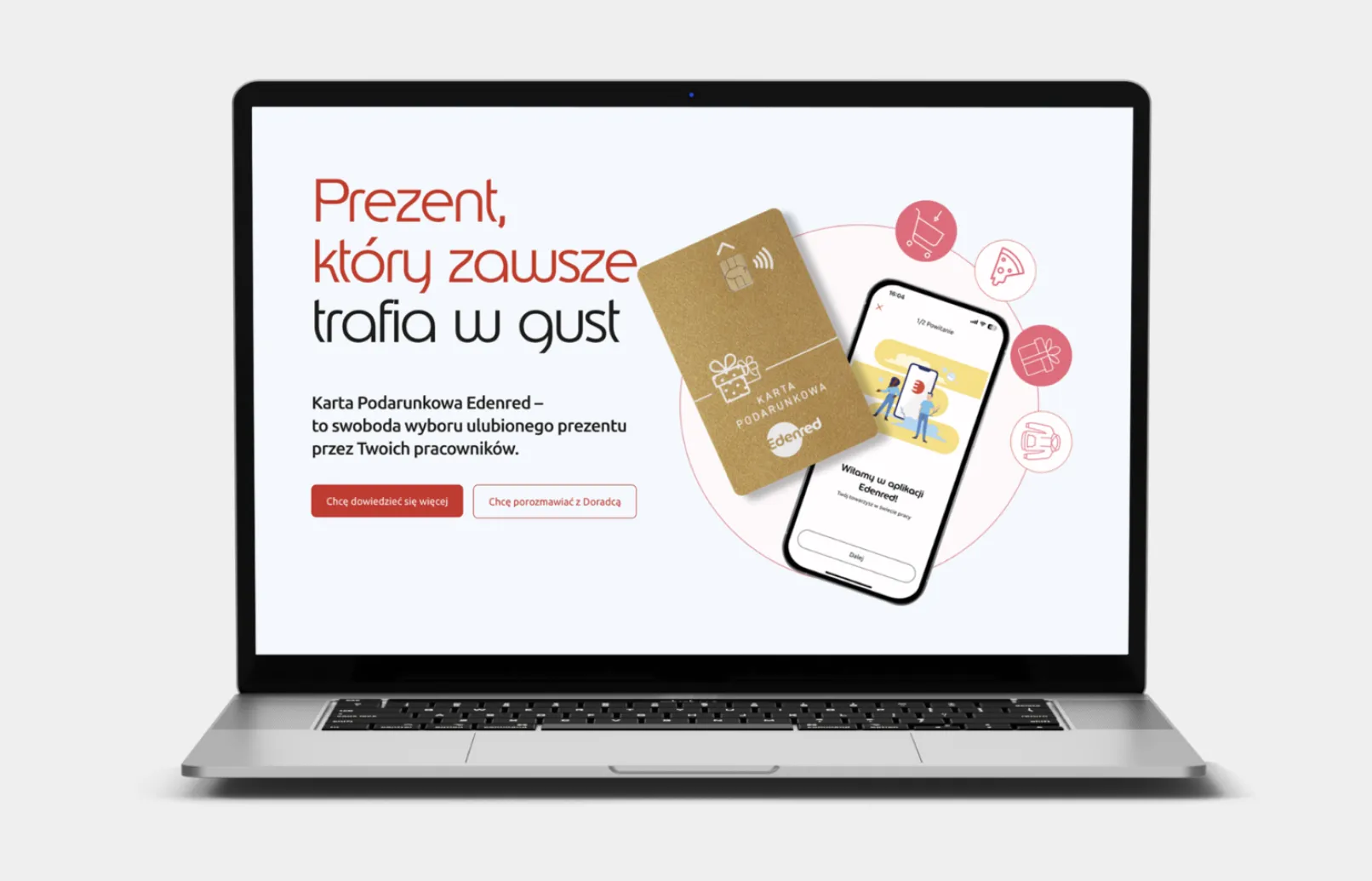
The first redesigned page, a gift card landing page launched ahead of the holiday season, recorded an approximately 24% increase in conversion rate compared with the previous image-based version. Content managers began building new landing pages, product announcements, and webinar promotions without developer tickets. Edenred commissioned six to nine additional paragraph types to expand the component library and cancelled plans to migrate off Drupal.
Examples of implemented features:
- Reusable paragraph components with three to four color variants per type.
- Dedicated mobile layouts for each paragraph type.
- Gin admin theme and Geysir in-place editing for the marketing team.
- Staging handover with a full component showcase and no formal training session.
- Gift card landing page with approximately 24% conversion uplift after launch.
- Self-service landing page creation for products, events, and webinars.
Why Drupal was chosen
The Edenred Polska website was already mandated on Drupal by the French headquarters. Replacing the CMS would have discarded an existing installation, URL history, and editorial workflows without guaranteeing a better content model.
Drupal Paragraphs offered reusable page components with configurable fields, view modes, and responsive layouts. Combined with a modern admin theme and in-place editing tools, the platform could give the marketing team self-service page building while developers focused on new component types instead of every content change. Staying on Drupal avoided a costly rebuild and let the team prove results on a live landing page before expanding the component library.
Technical Specifications
Drupal version: