Sector(s)
Team Members
Project Team
Audrius Bukauskas (audriusb) - Lead Drupal Developer
David Wright - Systems Administrator
Emma Clark - UX lead and designer
Sasha Kaufmann - UX researcher
Léonie Watson - Accessibility consultant
Geoff Young - Technical Architect
Christian-Ray Garcia - Tester
Will Haslam - Tester
Will Danckwerts - Project manager, site builder and content editor training
Visit the site
Visit the siteOrganizations Involved
Community contributions
Contributions were made to:
- Core to improve integration with MSSQL, particular around Views. It was advised that these patches were added to a driver as Drupal Core is not designed to be compatible with MSSQL. However, the patches are available for anyone who may need them amongst the community.
https://www.drupal.org/sandbox/audriusb/2781285
https://www.drupal.org/node/2657888; - Field Collection module to make it compatible with MSSQL
https://www.drupal.org/node/2761297; - ECK Entity to provide a filter feature to filter ECK entities by name
https://www.drupal.org/node/2777745; - YAML form to add ability to disable HTML5 validation, allow MSSQL compatibility and bug fixes
https://www.drupal.org/node/2772305
https://www.drupal.org/node/2772697; - Slick Carousel to improve cacheing
https://www.drupal.org/node/2769073; - SMTP Authentication to add a missing Drupal 7 feature to batch email processing;
- Ultimate Cron – bug fixing
https://www.drupal.org/node/2779717.
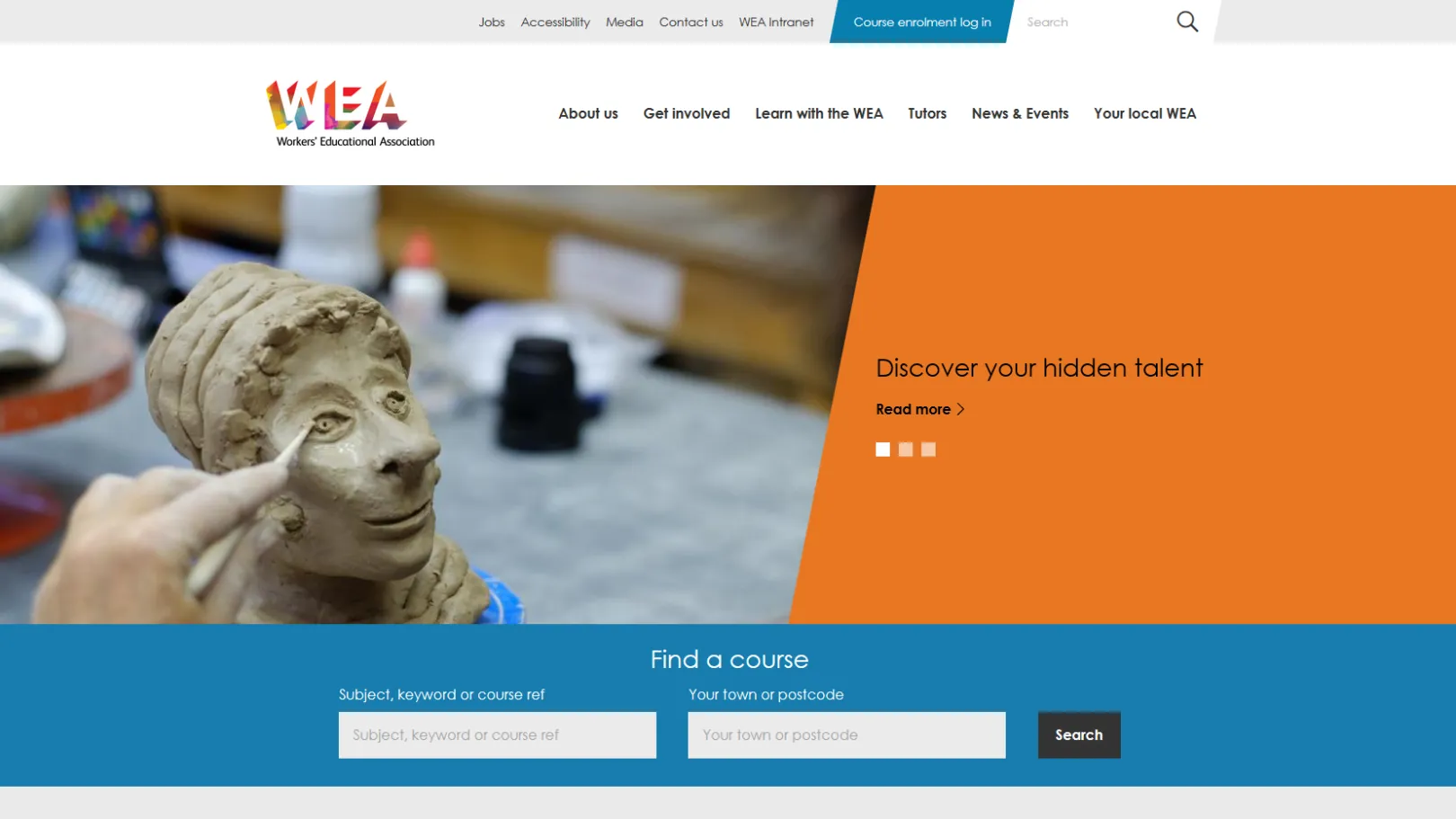
The Workers' Educational Association (WEA) is the UK’s largest voluntary sector provider of adult education in England and Scotland working with the support of nearly 3,000 volunteers, 2,000 tutors and over 10,000 members. The organisation also has a mission to raise aspirations and develop educational opportunities for the most disadvantaged. This includes providing basic maths, English and IT skills for employment; courses to improve health and wellbeing; creative programmes to broaden horizons and community engagement activities that encourage active citizenship.
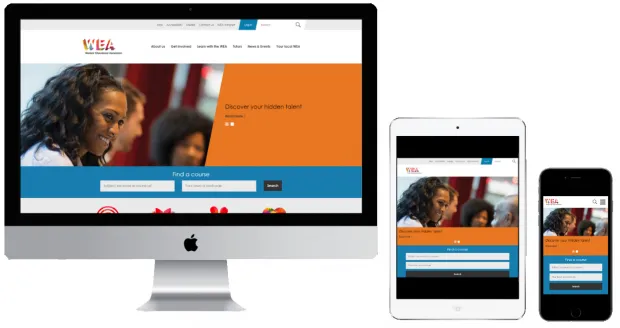
The WEA website provides information and engagement with its volunteers, tutors and members as well as prospective and existing students. This includes access to WEA's online course search and enrolment website.
Panlogic are a London-based digital agency who have provided digital services for 17 years including Drupal 7 and 8 development and consultancy. Operating with the public and third sectors and other multi-stakeholder organisations, current clients include the Royal National Institute of Blind People (RNIB), International Transport Forum (a department of the OECD) and the Royal United Services Institute.
About the project
With Drupal standing as a firm first-choice of CMS for the aforementioned reasons, Panlogic were keen to make use of Drupal 8 to anticipate increasing commitment amongst the developer community to the new version and to take advantage of the security, stability and accessibility benefits.
Goals
WEA sought to consolidate their various regional offices’ websites in a single, easy-to-navigate presence with considered user experience maintaining brand consistency. Key to success was a system that could facilitate the coordination of a federalised organisational structure with each region containing its own content editors, processes, content and audience. These regional profiles needed a consistent theme reinforcing WEA’s brand, reflecting the organisation’s vision and values and maintaining a common quality standard whilst accommodating differing regional needs.
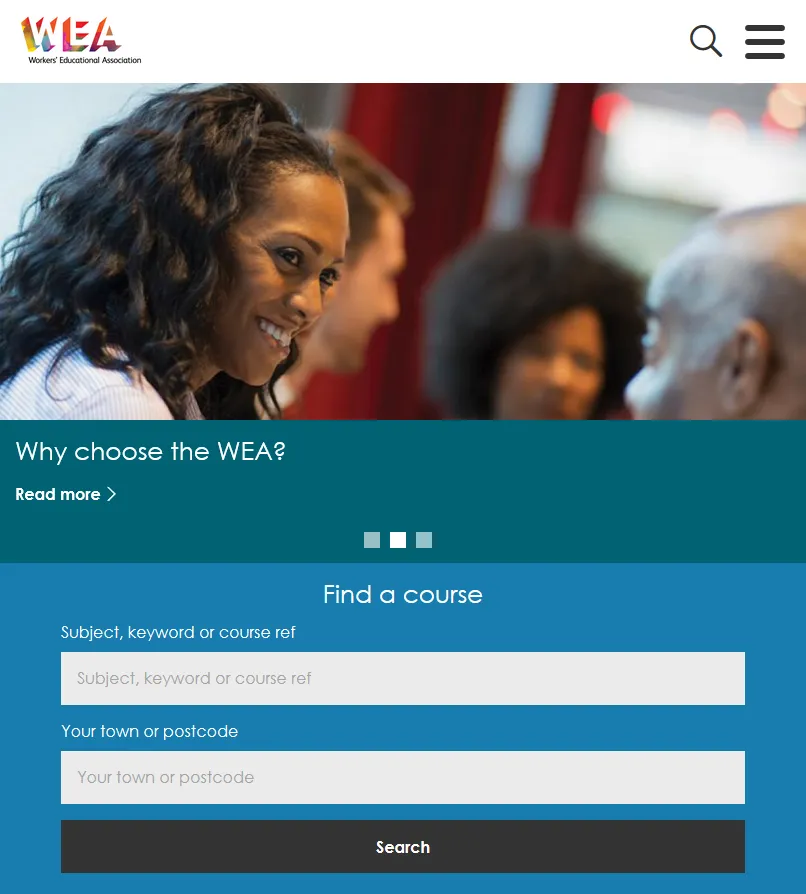
Panlogic’s ‘definition of done’ for the project deliverables included high standards of accessibility, having provided modern website applications to strict AA standards for other clients including the Royal National Institute of Blind People. An equally rigorous approach was taken for mobile/tablet responsiveness and good adherence kept to Drupal coding standards as appropriate.
Responding to user needs and harnessing Drupal’s capabilities
Thorough user research exercises assisted in successful construction of an intuitive experience for users. A custom theme was developed for the website using SASS technology and HTML5 with information architecture structured to respond directly to evidence surfacing from Panlogic’s user research report.
Drupal’s flexible permission system was taken on enthusiastically by WEA’s content editors, particularly when enhanced with Content Access module to set permissions on a page-by-page basis. Content editors were easily able to manage their respective areas of the website and control which members of their audience particular content was directed towards. Content was tagged using taxonomy lists so that the Content view could easily be filtered by editors to display only relevant content. A combination of modules were used to provide a well-organised media library with easy access to embedding and modifying images within pages.
Apache Solr was employed to power the website’s search functionality including harnessing of Solr’s geospatial search feature to deliver interactive maps useful for WEA’s regional structure and localised offices and participating locations. Promotional sections of the website were delivered using Drupal Views to neatly organise categorised promotional content. Performance for end users was optimised using Wincache and Supercache modules.
Project process and management approach
Development was carried out over a 6-week period. Whilst Panlogic normally opt for a scrum-based management methodology, a more traditional plan was requested in this case. The Panlogic development team continued to log project information using Slack and manage prioritisation of tasks in a Kanban-fashion using Trello.
Challenges around using Drupal 8 with Windows
Whilst the brochure and promotional aspects of the website were structured using ordinary Drupal features such as ECK Entity bundles, Views etc., a more unique challenged was posed by the use of Drupal 8 with a Windows and Microsoft SQL stack. A clean install of Drupal 8 on the platform was fraught with database errors and was unusable with MSSQL. During the course of the project Panlogic submitted numerous contributions to Core and Contrib modules to integrate better with MSSQL.
Why Drupal was chosen
A straightforward transition for content editing staff
WEA’s various content editors maintained their previous websites using a range of content management systems; Wordpress, ModX and Drupal itself in some cases. With CKEditor built into Drupal 8 Core, a familiar content editing interface provided a comfortable transition. Extended features offer a number of mechanisms WEA staff use on a daily basis such as scheduled publishing and systematic image styling.
Good management of permissions
Drupal’s flexible permission system provided an excellent framework to coordinate role-based viewing and editing of WEA’s regional and subject-based content categories. The revision system offered by Workbench Moderation module provides further content management capabilities which would be time-consuming to match with any custom-built system.
Flexibility and control for administrators
Drupal’s configurability offers strong capabilities and independence for administrator users to carry out website changes and management without touching code.
A balance of affordability and rich availability of features
As a free, open-source content management system, the platform offers obvious financial benefits for the charity whilst its extensive module library presents competitive scale for future feature additions and integrations with third-party systems. With Composer packaged into the Core product with Drupal 8, further benefits in this area are available with greater adherence to industry standards and flexibility for extension.
Technical Specifications
Drupal version:
The SQLSRV module was vital to the feasibility of the website, without this Drupal would be unable to connect to the MSSQL database available. Wincache was equally essential for the practical feasibility of the project; without Wincache in place, PHP would function too slowly on the Windows platform for the website to be used.
Field Collection and ECK Entity modules make efficient use of resources available to site builders and content editors respectively, improving performance through the reuse of existing assets.
Modules such as Media entity, Entity_Browser and File_Browser were combined to provide an easy-to-use media library offering:
- Quick uploading and previewing of files
- Good embedding capabilities both using file fields and within WYSIWYG editors
- Management of file usage and inherited replacement of files
Workbench Moderation provides historical, revisions-based management of each page. Content Access module was required to extend Drupal’s permissions system to allow editors to configure on a page-by-page basis.
Search API module is used to connect to Apache Solr and conduct geospatial searches. YAML form provides many of the useful form-building features available with Webform module for Drupal 7 as well as a number of other features.