Sector(s)
Team Members
Project Team
Development and service: erdfisch. Hosting and operations: Kraut.Hosting. Client and project lead: the joint editorial team of the Verbraucherzentralen at Verbraucherzentrale NRW e.V.
Visit the site
Visit the siteOrganizations Involved
Community contributions
Numerous contributed modules received improvements and new features during this project, among them Slots, Paragraph Block, Form Decorator, Rabbit Hole Links, Component Behaviors and the Sites module suite, all maintained on drupal.org.
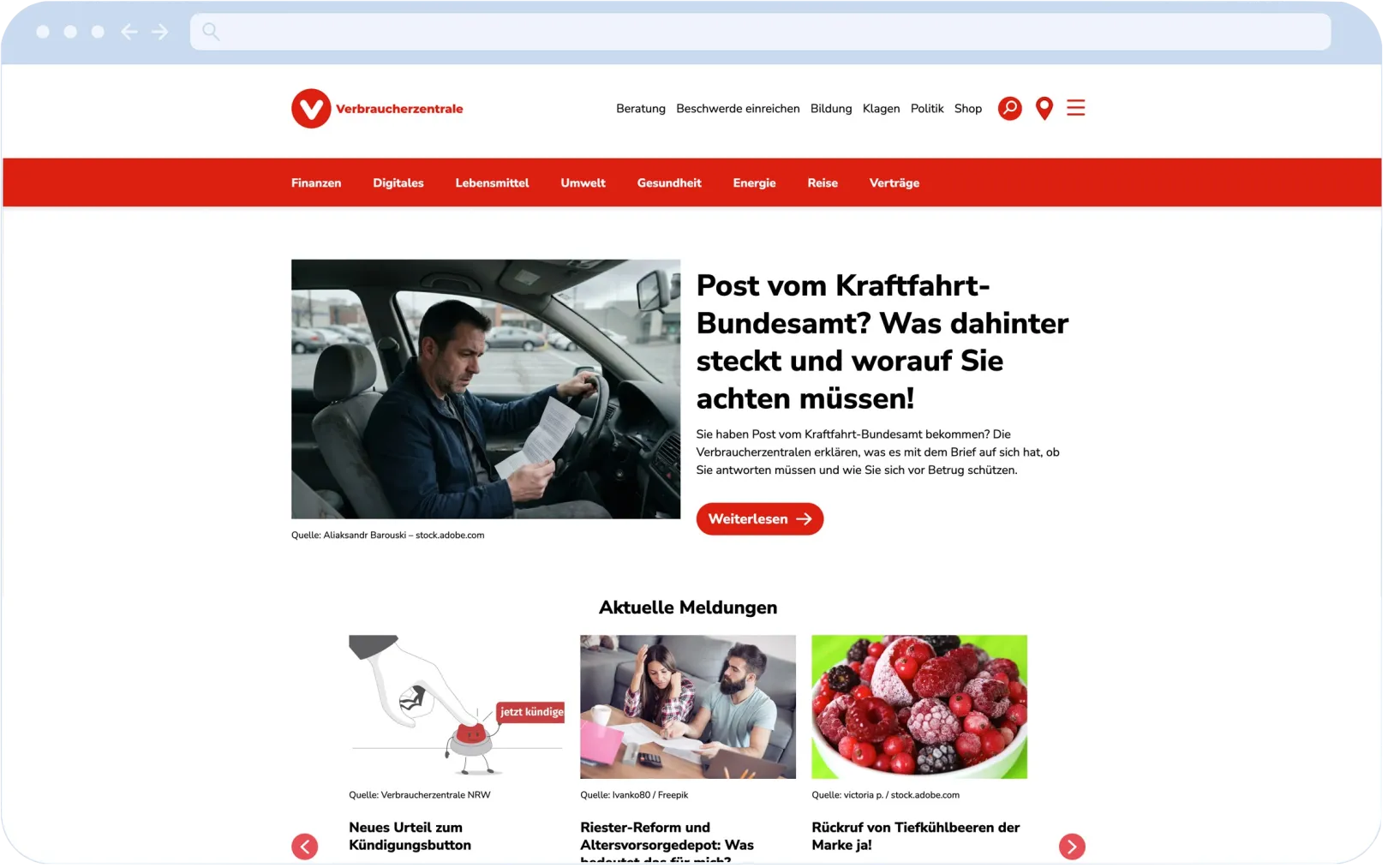
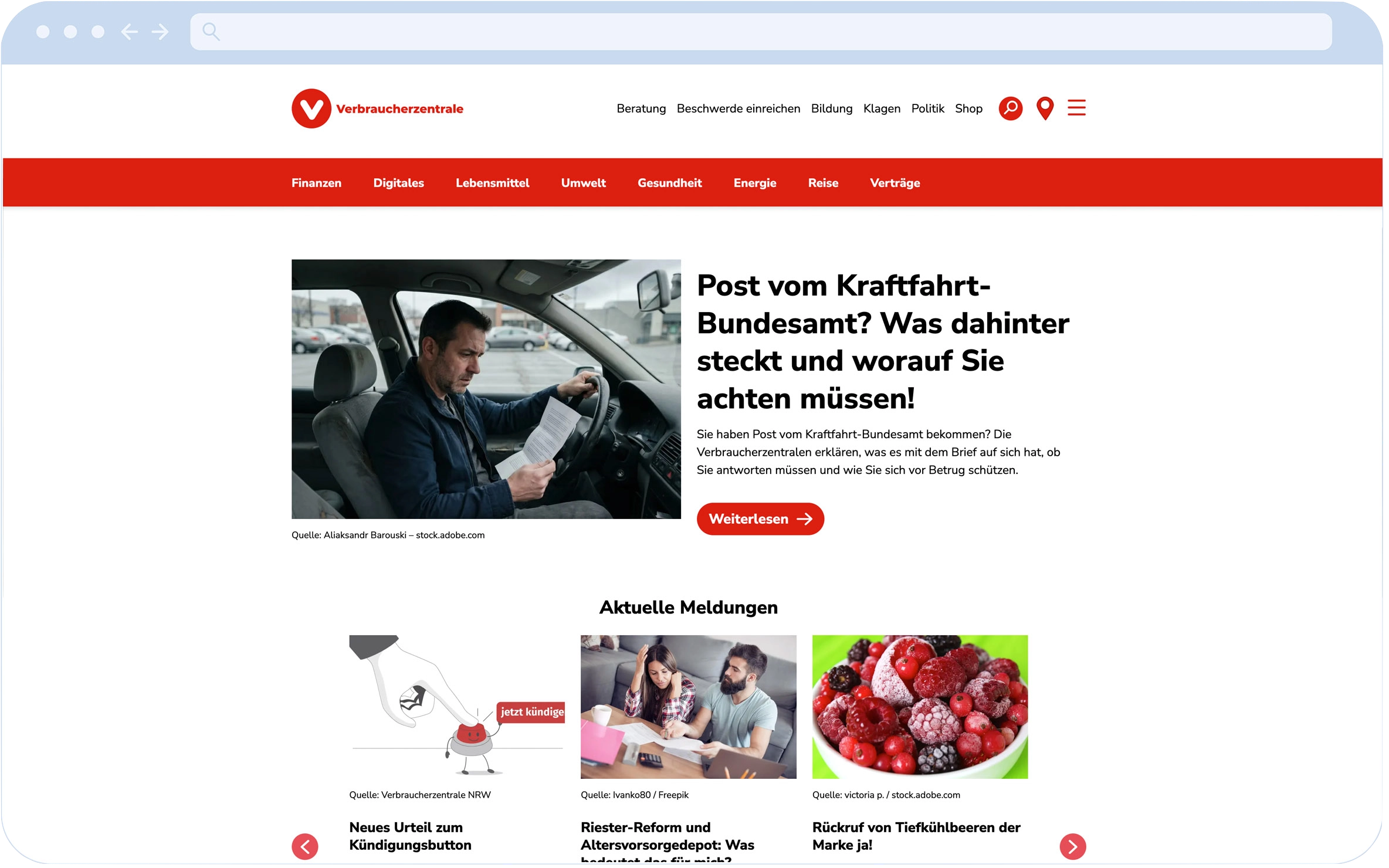
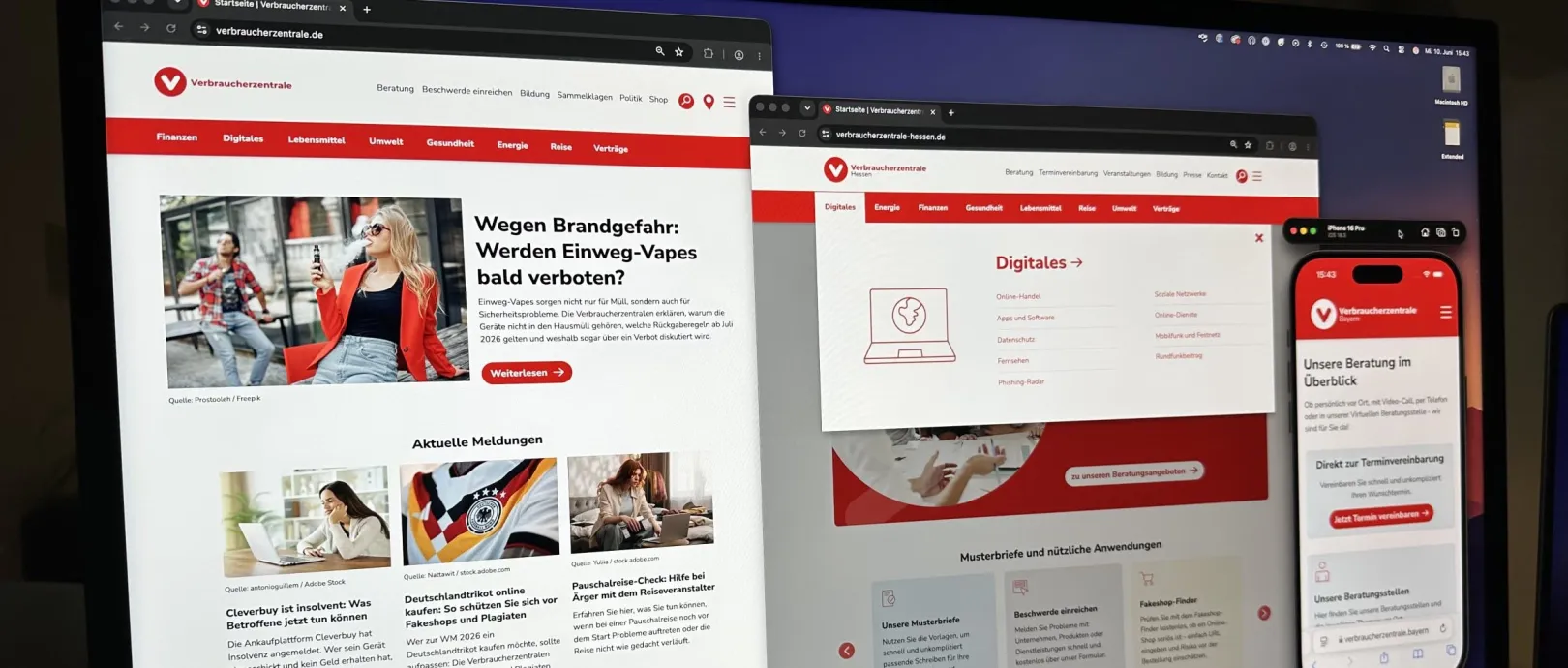
Germany's consumer advice centres now run more than 50 websites on a single Drupal platform. Content written once by a central editorial team appears on every relevant site and can be adapted locally, while around 160 editors across the country build pages and campaigns themselves, without developer support.
Results at a glance
- Over 50 websites, including verbraucherzentrale.de, 15 state portals and dozens of project and topic sites, managed from one system
- More than 70 million visits per year, served without interruption through the switch to the new platform
- Search-engine visits up 14.3% in the 51 days after launch compared with the 51 days before (Matomo web analytics; spring and early summer are not fully comparable seasonally)
- Two formerly separate websites merged into one: around 58,000 content items and over 21,000 old web addresses carried over automatically
- Content in up to twelve languages, including right-to-left scripts and Easy Read German (Leichte Sprache)
One platform, many addresses
Each site keeps its own domain, from classic .de addresses to regional top-level domains such as .nrw or .bayern. The 15 state portals:
- verbraucherzentrale-bawue.de
- verbraucherzentrale.bayern
- verbraucherzentrale-berlin.de
- verbraucherzentrale-brandenburg.de
- verbraucherzentrale-bremen.de
- verbraucherzentrale-hessen.de
- verbraucherzentrale-niedersachsen.de
- verbraucherzentrale-mv.eu
- verbraucherzentrale.nrw
- verbraucherzentrale-rlp.de
- verbraucherzentrale-saarland.de
- verbraucherzentrale-sachsen.de
- verbraucherzentrale-sachsen-anhalt.de
- verbraucherzentrale.sh
- vzth.de
About the organisation
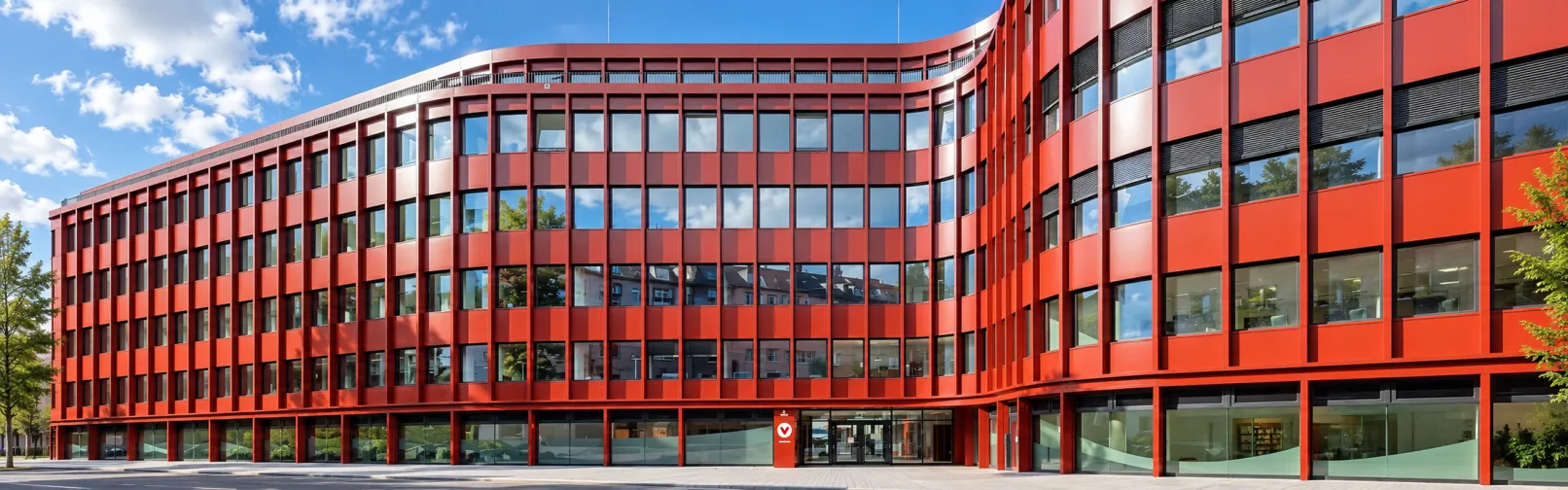
The Verbraucherzentralen are Germany's independent, non-profit consumer advice centres. Each federal state has its own centre. Together they advise people on everyday issues from contracts and energy to data protection and online shopping, in around 200 local offices and increasingly online. The shared online presence is run by a joint editorial team based at Verbraucherzentrale NRW e.V. in Düsseldorf.
About the project
Goal
Turn the huge reach of verbraucherzentrale.de into more people finding the advice services, events and newsletters of their own state's consumer advice centre.
Challenge
The setup dated back to 2015. A visual refresh would not have been enough:
- A new brand identity needed its first large-scale rollout
- Far more visitors now use mobile devices and expect interactive self-help tools
- Accessibility, IT security and data protection requirements have grown
- The consumer advice centre of Lower Saxony, until then running its own Drupal website, was joining the shared platform
- True multilingual content was hard to manage, and around 70,000 media files had piled up
Solution
- One content pool, over 50 individual websites. National articles can be taken over by state sites and enriched with regional information without changing the original. State editors can only edit within their own site, and search engines always know which site a piece of content originally belongs to.
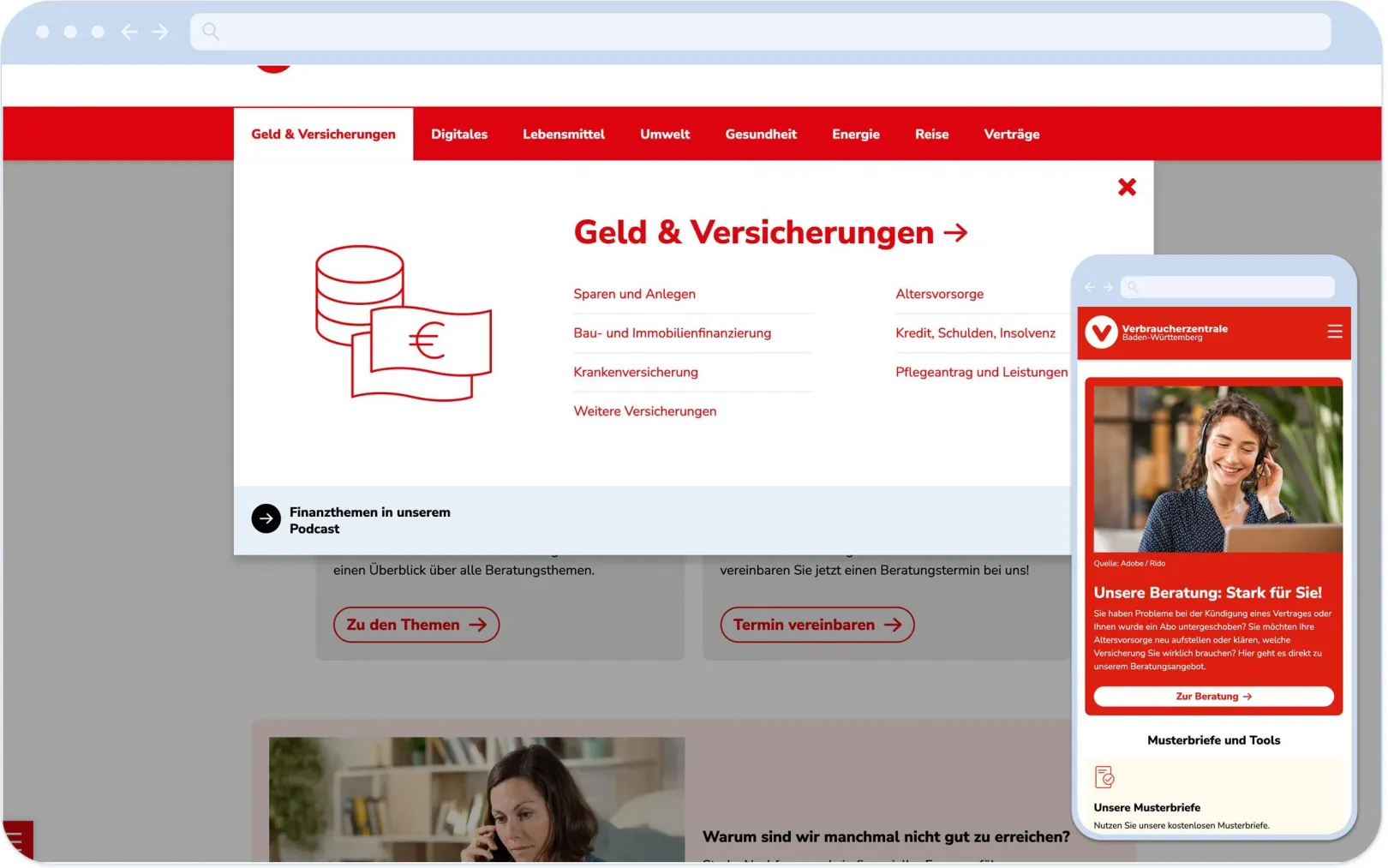
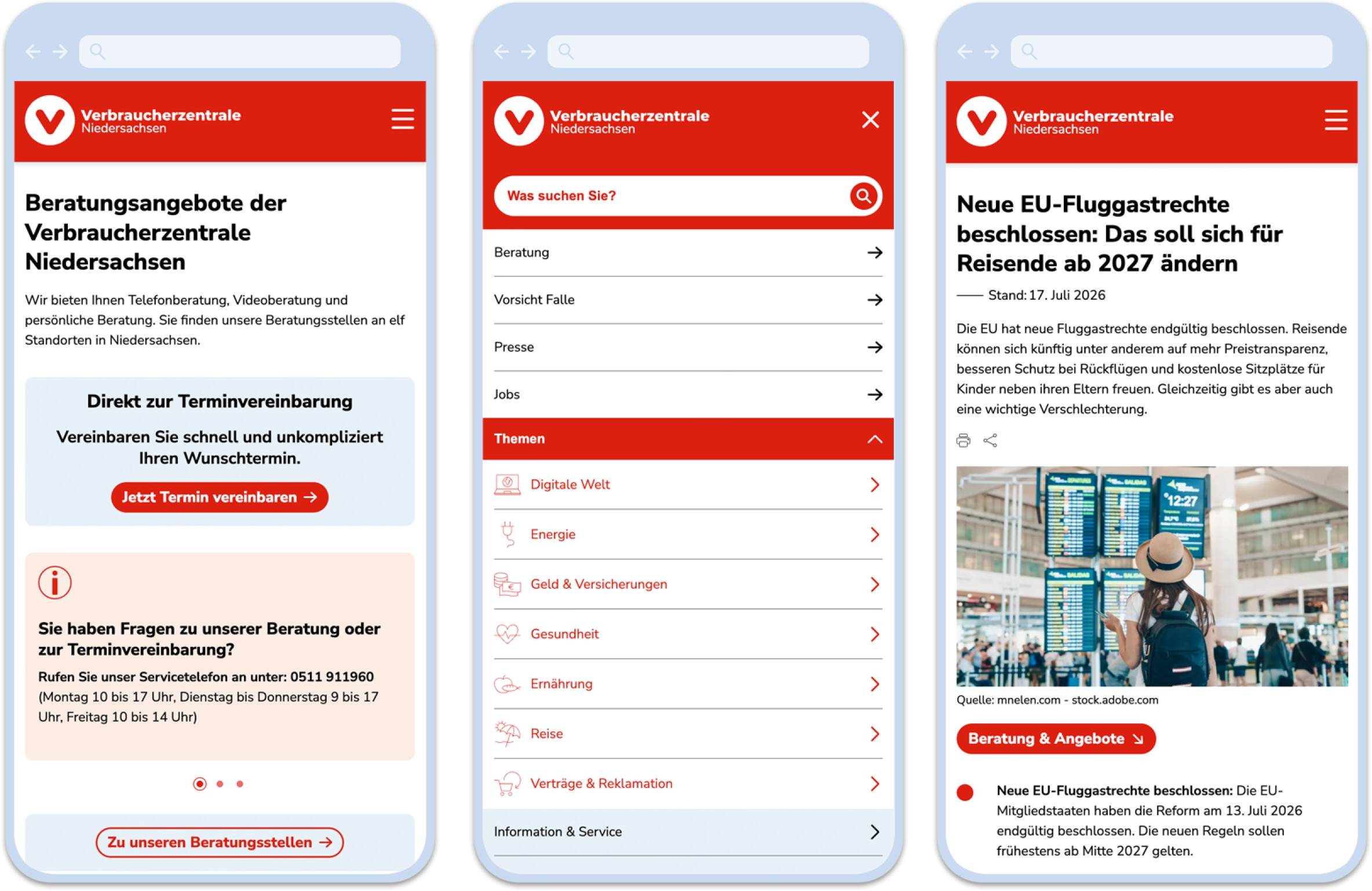
- Regional offers on the national portal. Visitors to verbraucherzentrale.de can choose their federal state. Articles then show the matching advice services of that state's centre at defined places; visitors who choose nothing see a neutral version.
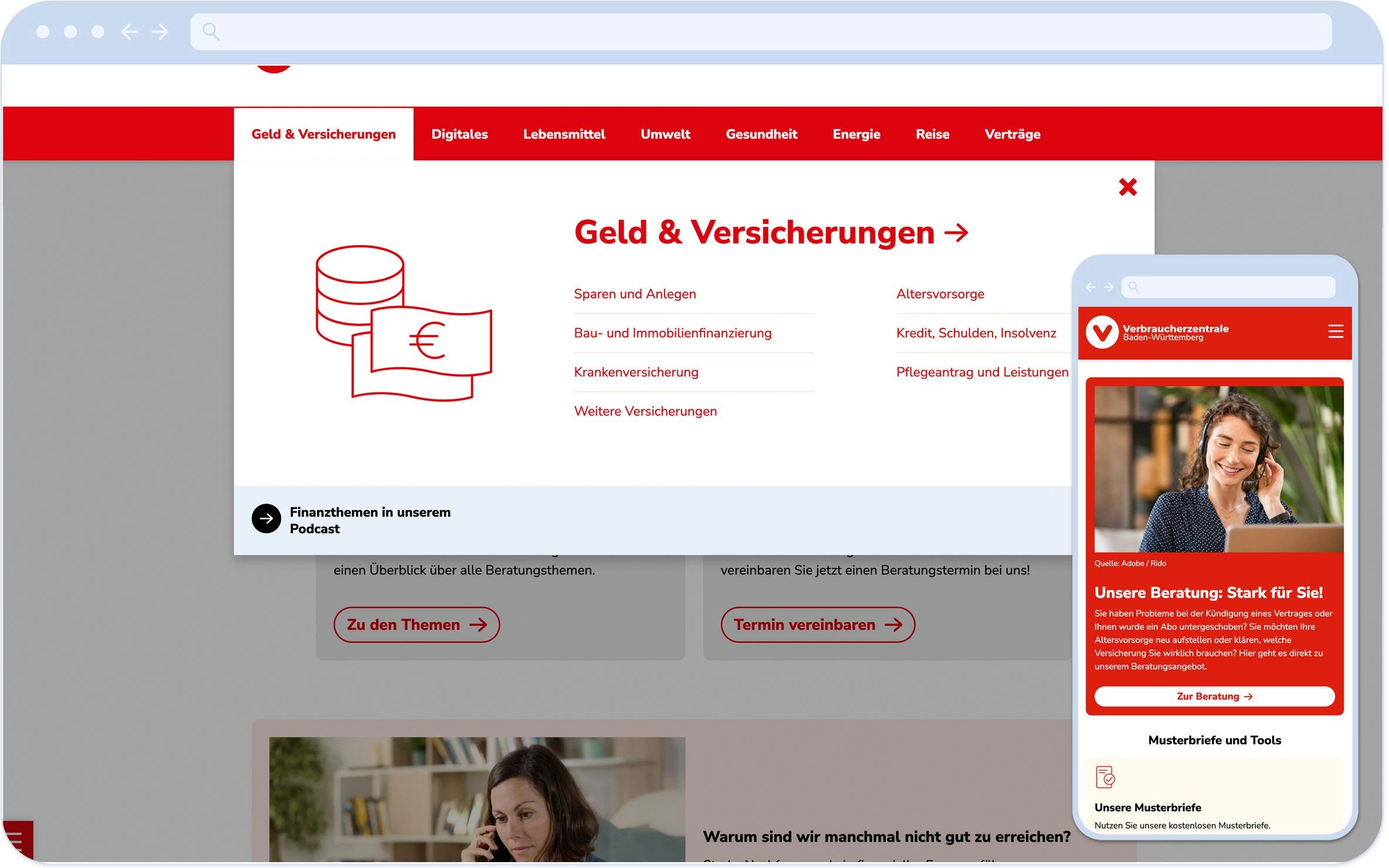
- A toolkit editors use on their own. Editors assemble landing pages and campaign pages from ready-made, brand-compliant components. Central notices appear automatically on all matching pages.
- One teaser tool, many layouts. Preview elements pointing to other content either update automatically when the target page changes or are built freely by editors. Editors choose how a group of teasers looks, from card grids to swipeable galleries, without writing code.
- Migration of two systems into one. Around 58,000 content items from 25 content types were consolidated, partly with AI support. Over 21,000 old addresses redirect to their new location, so existing links keep working. A central media library now tracks copyright and licence information.
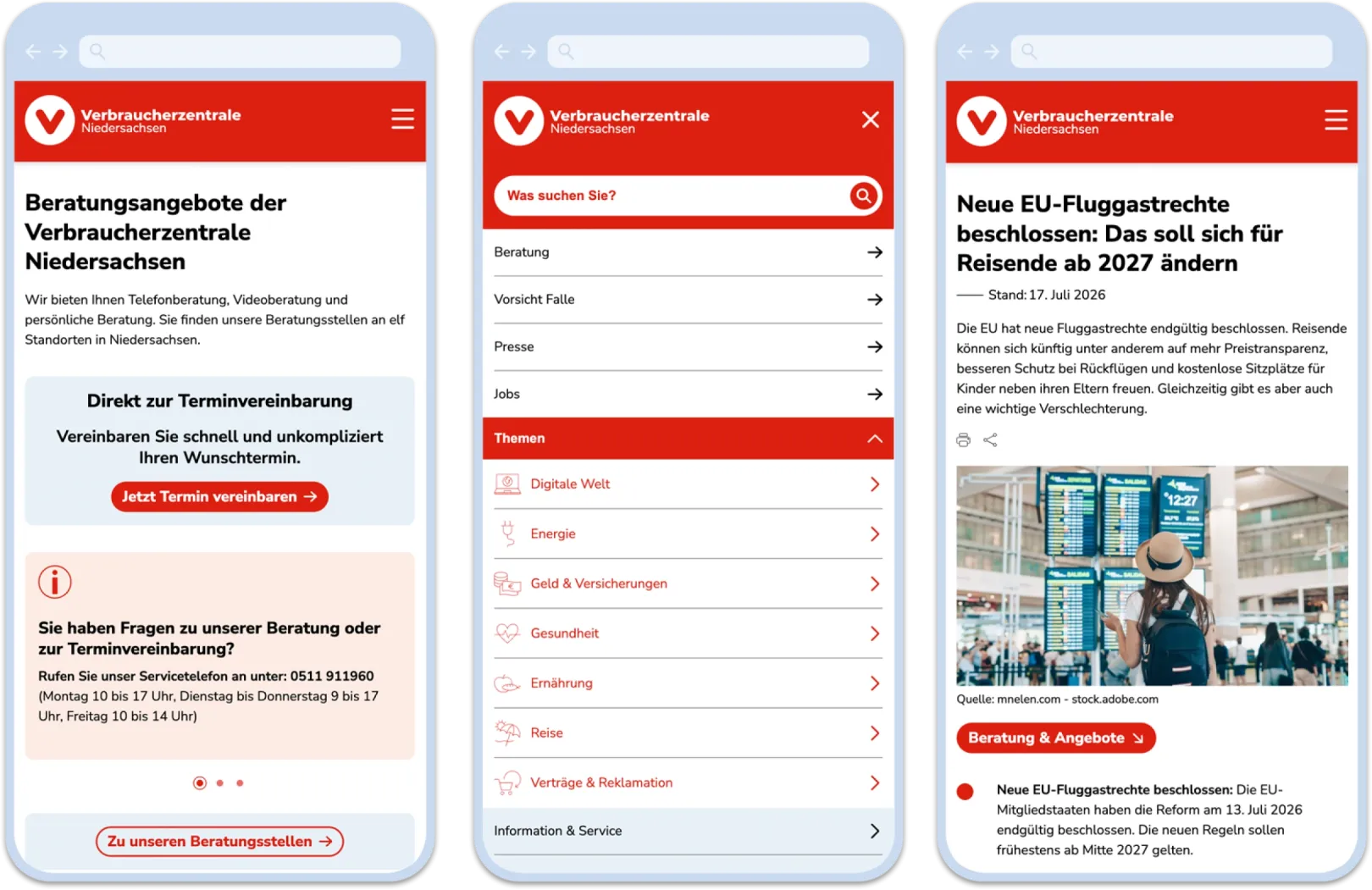
- Accessible and multilingual by design. Components were built mobile-first and tested for accessibility during development. Easy Read German is treated as a language of its own, with its own layout, and right-to-left scripts such as Arabic, Farsi and Dari display correctly.
Timeline
Work started in early 2025; the new platform went live in June 2026 on the latest version of Drupal.
Outcome
- State-specific offers appear on the national portal for the first time
- Editors work independently, and the consumer advice centres keep full control of an open, vendor-independent platform
Why Drupal was chosen
When the relaunch came up, the joint editorial team quickly decided to stay with Drupal. The reasons:
- A federated organisation needs a federated website. Maintaining content centrally, sharing it across many domains and letting each state adapt it, all with clear, hierarchical permissions, is a core strength of Drupal.
- Digital sovereignty. As largely publicly funded organisations, the consumer advice centres want open source software, compliance with the General Data Protection Regulation (GDPR), full control over their own data and no dependency on a single vendor. With Drupal and community-maintained building blocks, they could move development or hosting to another provider at any time.
- Multilingual and structured. Strong multilingual support and a structured content model make the content well suited for search engines and services based on artificial intelligence (AI).
- Protecting past investment. The existing Drupal setup from 2015 had proven its multi-domain approach; the goal was to modernise it, not replace it.
Technical Specifications
Drupal version:
Key modules/theme/distribution used:
- Sites provides the multi-domain architecture: one installation, over 50 sites, content shared and overridden per site. It also carries the hierarchical permissions, so state editors work only within their own site.
- Layout Builder and Layout Paragraphs let editors compose landing pages; Paragraphs with behavior plugins drives the flexible teaser tool.
- Slots places central notices automatically in context-defined positions on any content type.
- Search API Solr powers faceted search.
- The frontend uses Single Directory Components with a Storybook living styleguide, which allowed accessibility testing per component.