Sector(s)
Team Members
Visit the site
Visit the siteOrganizations Involved
Community contributions
Approximately 4 patches to Drupal core and contrib modules were tested and are in use on the site. Each of those helps bring Drupal forwards as a more stable and useful platform.
We also contributed the following modules:
In addition, we also wrote an article to share our learnings about managing large migrations at scale and again presented on it at DrupalCon Prague 2022.
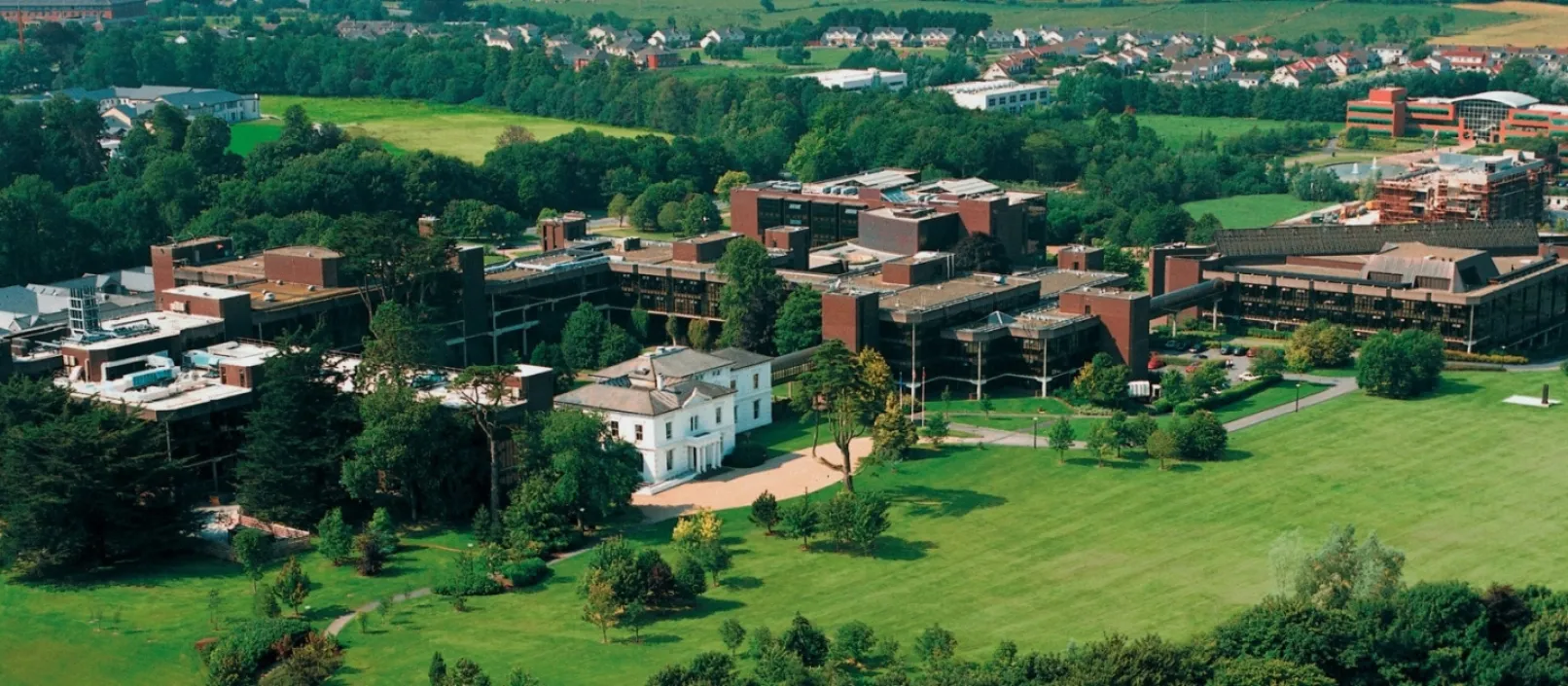
The University of Limerick (UL) is one of Ireland’s premier higher education institutions, recognised globally for academic excellence and research innovation. UL serves a diverse student body across its four core faculties. Offering a comprehensive academic portfolio ranging from undergraduate degrees to doctoral and postdoctoral research, UL requires a robust, high-availability digital presence to engage prospective students, researchers, and global academic partners.
Facing the inevitable end-of-life (EOL) of Drupal 7, the University of Limerick required an immediate, future-proof solution to maintain the security, performance, and long-term stability of its primary web ecosystem.
Beyond mitigating security risks, the migration presented a strategic opportunity: transitioning to modern Drupal 9 establishes a unified digital infrastructure. This scalable platform provides the technical foundation needed to eventually consolidate over 200 disparate websites into a streamlined, central architecture.
To execute a migration of this scale, UL partnered with Annertech, Ireland’s leading open-source digital agency and a recognised specialist in enterprise-grade Drupal solutions.
Known for our deep expertise in complex migrations, higher education digital transformations, and active contribution to Drupal development, Annertech guided the university through a seamless transition to Drupal 9, ensuring a secure, performant, and scalable web framework built for future growth.
About the project
Key Project Challenges
Managing an expansive digital footprint of more than 200 distinct websites across various systems posed significant operational hurdles for the University of Limerick. Site maintenance, brand enforcement, and regulatory compliance had become increasingly complex over time.
To eliminate mounting technical debt, UL made a strategic decision to consolidate its fragmented web properties onto a single platform. To successfully achieve this, the project team had to overcome four critical roadblocks:
1. Complex Data Migration
The legacy site architecture treated individual university sections (such as /business or /science) as independent Drupal installations. While these sub-sites originally shared a common template, years of independent updates led to structural drift. Content types, taxonomies, and paragraph layouts diverged, resulting in duplicate variations like multiple "People" profiles with conflicting fields. Cleaning and standardising this data for migration was a major technical undertaking.
2. Strict Public Sector Accessibility
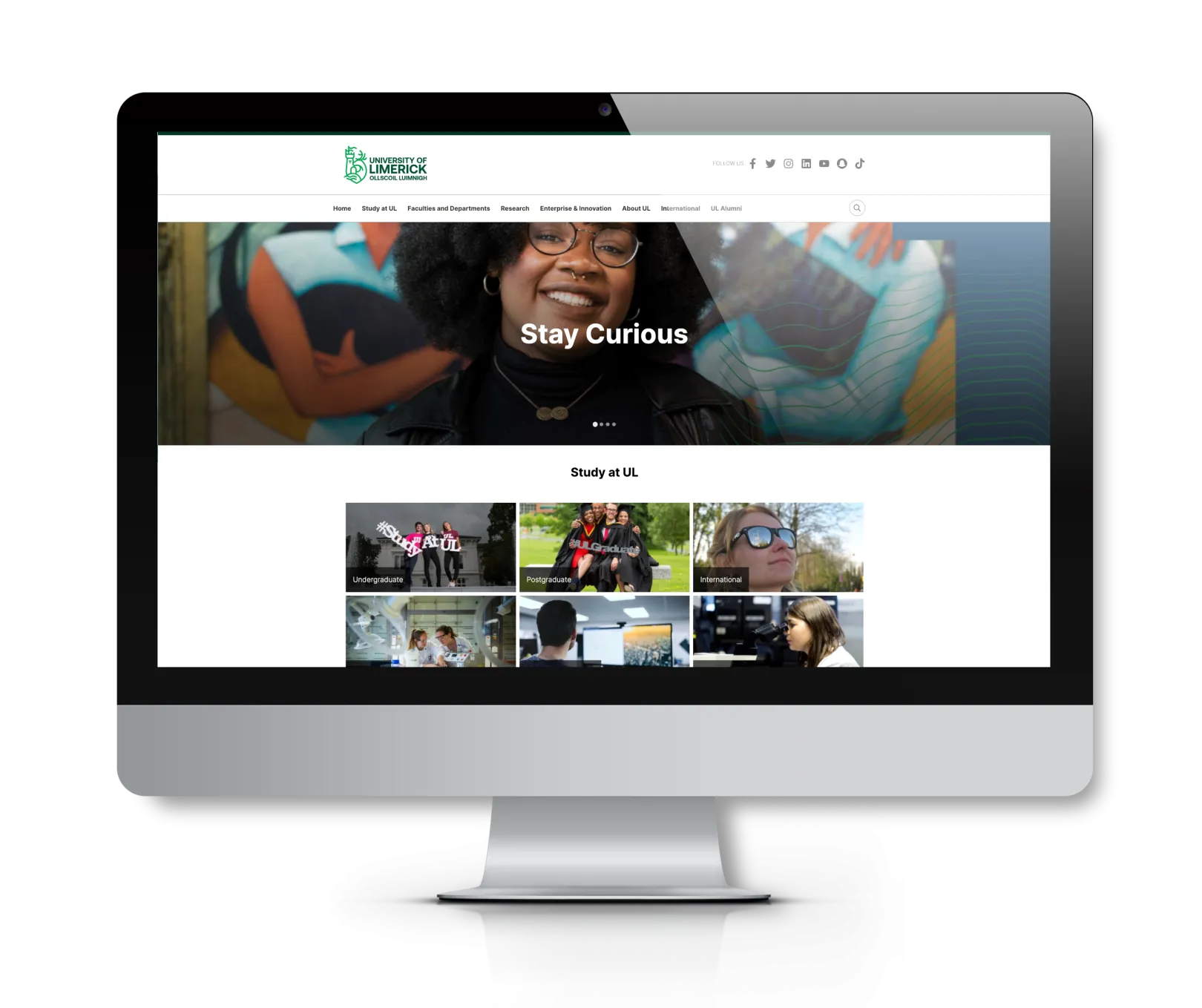
Meeting modern accessibility guidelines was a top priority. However, UL’s established brand identity presented a hurdle: its core colour palette was not designed with modern contrast standards in mind. While a full visual redesign was outside the initial scope, resolving critical accessibility flaws was essential to ensure the site complied with public sector standards.
3. Editorial Friction & Technical Debt
Decades of incremental patches, custom tweaks, and parallel functionality had overburdened the back end. Content editors faced a convoluted, unintuitive administration interface filled with redundant custom tools. This fragmented backend made publishing tedious and threatened content consistency across departments.
4. High-Stakes Website Performance
From prospective international applicants researching programs to current faculty relying on daily resources, site speed directly impacts engagement. Upgrading the architecture offered an opportunity to optimise performance from the ground up, driving better search engine rankings, higher conversion rates for prospective students, and a faster experience for the campus community.
Technical Solutions & Implementation
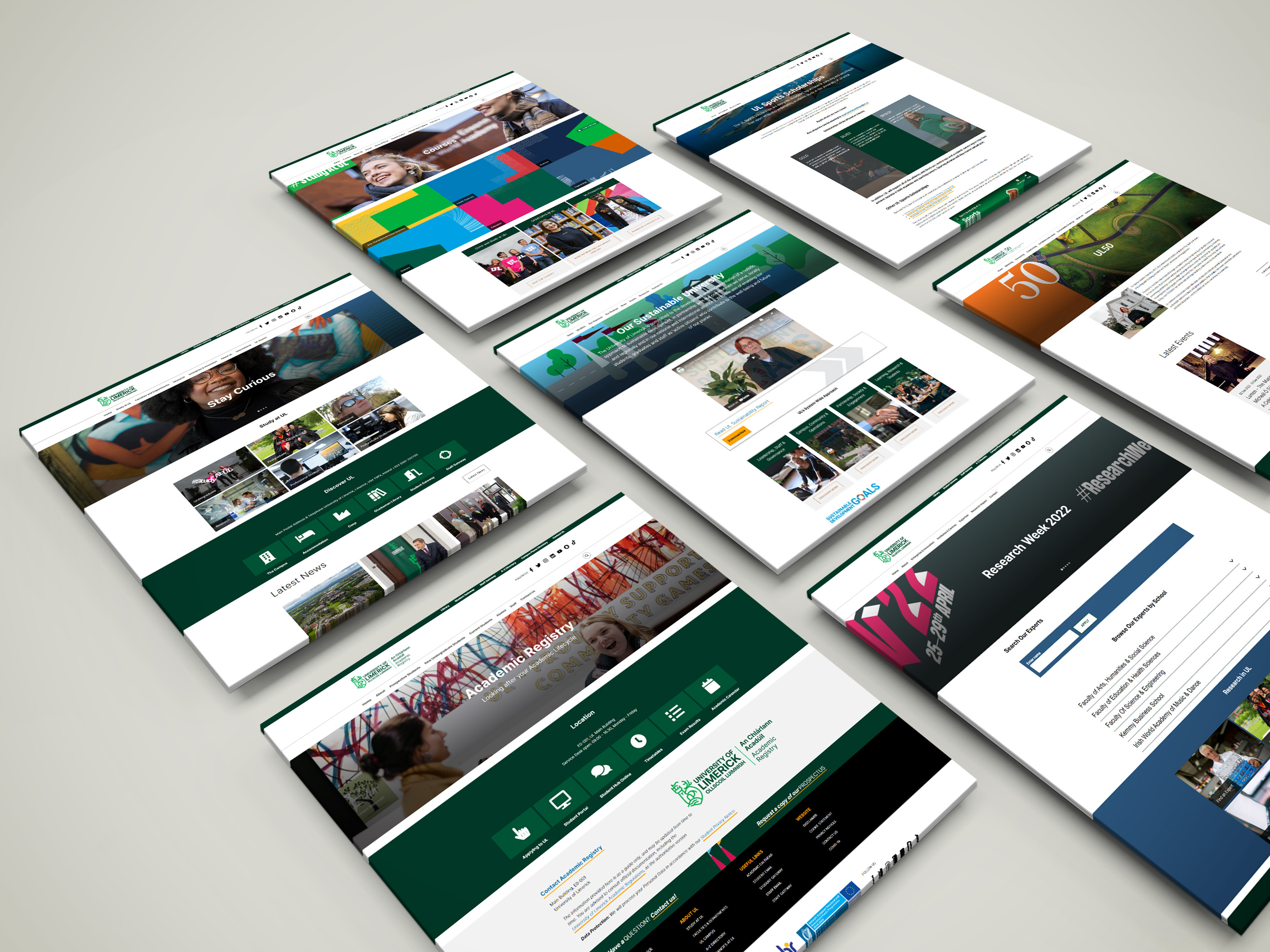
To solve the university’s governance and technical challenges, Annertech implemented a modernised Drupal strategy built around data consolidation, accessibility compliance, optimised editor workflows, and enterprise-level caching.
1. Data Consolidation & Streamlined Architecture
The initial phase focused on migrating a core cohort of 50 sites from a legacy Drupal 7 setup into a single, unified Drupal 9 instance. To clean up years of technical debt, the data structure was dramatically simplified during the migration process:
- Massive Scale: Executed over 3,700 individual migration processes to transfer more than 60,000 content nodes.
- Content Types Reduced by 60%: Streamlined from 70 fragmented content types down to 28 standardised types.
- Components Reduced by 80%: Consolidated 95 legacy paragraph types into 20 reusable components.
- Taxonomies Reduced by 45%: Refactored over 60 disparate vocabularies down to 32 clean taxonomy structures.
2. Overhauling Web Accessibility
When the National Disability Authority (NDA) audited the legacy site, it returned an accessibility compliance score of just 24.62%, citing severe contrast and parsing issues.
Without altering the core brand identity, the team implemented essential front-end fixes:
- Colour Contrast: Adjusted primary UI palettes to ensure a minimum 4.5:1 contrast ratio.
- UI Components: Ensured programmatically determinable names for all interactive user interface elements.
- Code Parsing: Resolved structural HTML parsing errors to ensure compatibility with screen readers and assistive technologies.
3. Redesigning the Content Editor Experience
To eliminate editorial friction, the legacy administration setup was replaced with a modern, component-driven editorial environment:
- Layout Builder: Integrated Drupal’s native Layout Builder to give editors an intuitive, drag-and-drop tool for creating visually consistent pages.
- Group Module: Leveraged the Group module to establish granular permissions, allowing departmental teams to manage their own content securely within a centralised platform.
4. High-Availability Performance & Edge Routing
To deliver rapid global load times and support ongoing migration phases, Annertech deployed an enterprise edge caching strategy:
- Fastly CDN Integration: Coupled Fastly’s Content Delivery Network with Drupal’s Cache Purge system. This allows updated content to clear instantly while the rest of the site remains lightning-fast in cache.
- Seamless Traffic Routing: Utilised Fastly to selectively route traffic between the new Drupal environment and the legacy server for non-migrated sub-sites. This hybrid approach ensured a seamless experience for visitors and search engines alike during the transition.
Conclusion & Business Impact
Transitioning to a modernised Drupal 9 architecture has given the University of Limerick a secure, stable, and scalable foundation for future growth.
By unifying dozens of fragmented sub-sites into a single platform, UL successfully enforced brand consistency, satisfied strict public sector accessibility standards, and dramatically reduced its ongoing technical debt. Today, the university provides a fast, inclusive, and modern digital experience for prospective students, staff, and international researchers.
Why Drupal was chosen
The University of Limerick selected Drupal as the foundation for its new modern digital infrastructure for a number of reasons:
- Platform Familiarity: Staying within the Drupal ecosystem allowed UL’s teams to leverage existing institutional knowledge, avoiding the steep learning curve of an entirely new CMS despite changes to data models and new editor tooling.
- Centralised Governance: UL were able to leverage Drupal’s advanced user roles and content-grouping capabilities to bring 200+ fragmented sub-sites into a single platform, improving security, brand consistency, and long-term maintenance.
- Unmatched Flexibility: Drupal’s native handling of complex content types, paragraphs, and taxonomy gave UL the structural flexibility needed to manage diverse academic and research content at scale.
- Security & Compliance: As an industry standard for higher education, Drupal provided out-of-the-box accessibility (WCAG) compliance and enterprise-grade security.
Technical Specifications
Drupal version:
Key modules/theme/distribution used:
One of the requirements of the project was to have a single CMS to manage and maintain and a single login for administrators. By using the Group module, we were able to create a group for each faculty, school, and research group, and assign content related to that faculty, etc to that group. In addition, we were able to define which users were allowed to create, edit and manage content within each group, giving UL granular access control at a per group level.