Accessibility Standards Canada (ASC) is a federal departmental corporation responsible for developing and revising national accessibility standards under the Accessible Canada Act. These standards shape how federally regulated sectors—including government institutions, transportation systems, and financial organizations—ensure equitable access for all Canadians. As digital accessibility is central to ASC’s mandate, their online public review process plays a vital role in enabling Canadians to participate in the creation of these standards.
ASC previously relied on a basic webform to collect public feedback on draft standards. While functional, the form was difficult to navigate, offered limited clarity, and did not support complex, multi-section standards. Users could not save drafts, return later, or provide contextual comments—creating barriers inconsistent with ASC’s commitment to accessible digital services.
To address these challenges, ASC partnered with Drupal Bliss to build a modern, fully dynamic “Provide Feedback” portal powered by Drupal 11-WxT.
About the project
Modernizing the User Experience while Supporting Flexible Workflows
The project replaced a legacy webform with a modern, intuitive digital experience designed to make the submission process faster, easier, and more user-friendly.Rather than collecting general comments, the new application enables users to provide contextual feedback tied directly to individual sections of a standard. This structured approach produces more precise, actionable information, improving the quality of submissions while making it easier for ASC reviewers to understand and assess the feedback received.
The solution features a dynamic, responsive front-end tightly integrated with Drupal 11, providing users with a seamless and engaging experience across desktop and mobile devices. The modern architecture supports interactive functionality while maintaining the flexibility expected of an enterprise content management platform.
Recognizing that submissions often require careful consideration, the solution allows users to save drafts and complete their work over multiple sessions. This flexibility accommodates a wide range of user needs, reduces abandoned submissions, and provides a more convenient experience for individuals and organizations preparing detailed responses.
Accessibility considerations were embedded throughout every phase of design and development rather than treated as a final compliance exercise. The solution adheres to recognized accessibility standards and follows inclusive design principles to ensure equitable access for all users, while serving as a model for accessible digital service delivery.
Improving Operational Efficiency with a Secure and Future-Ready Platform
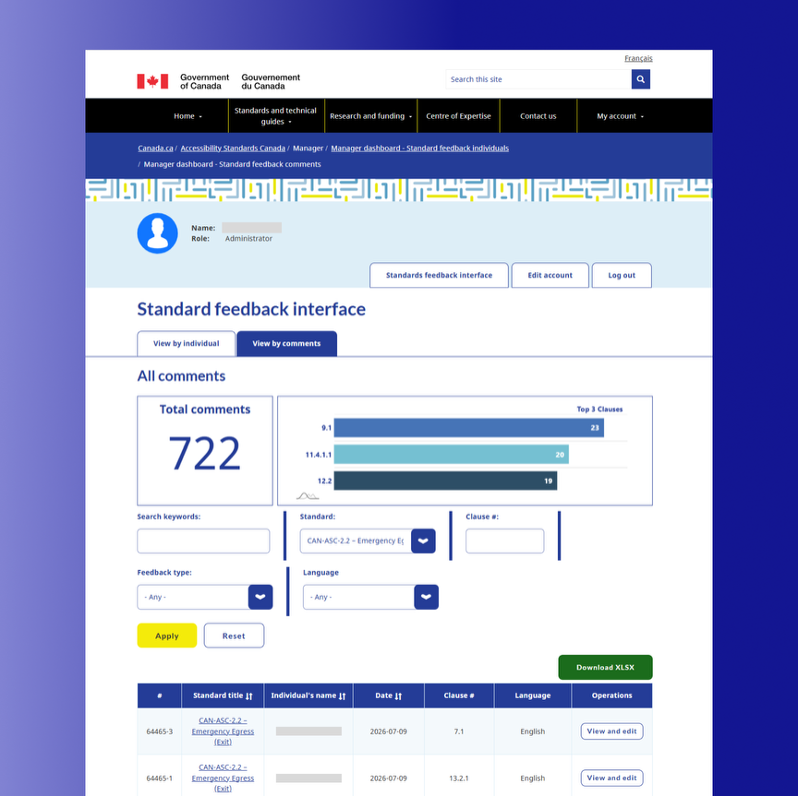
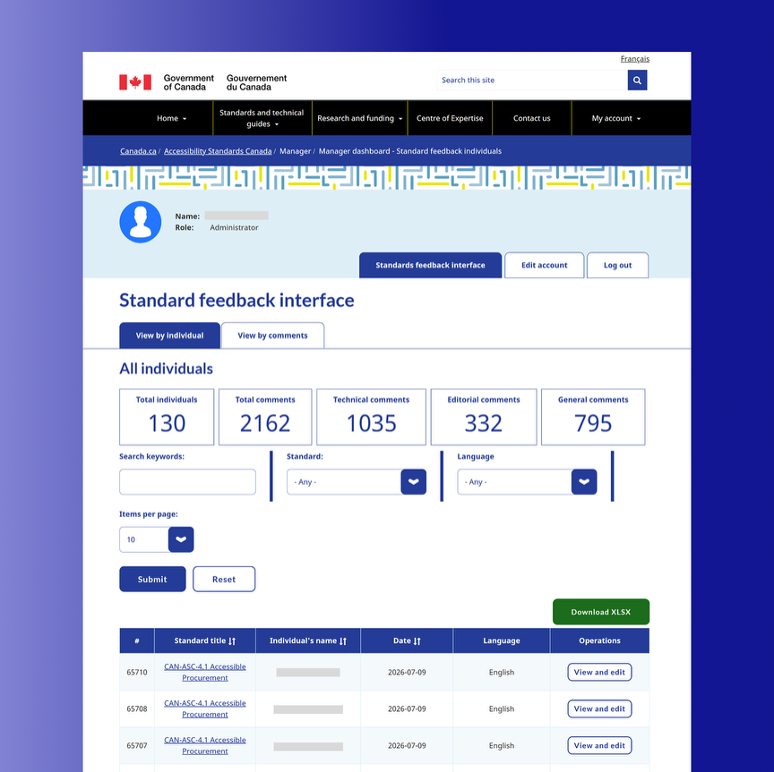
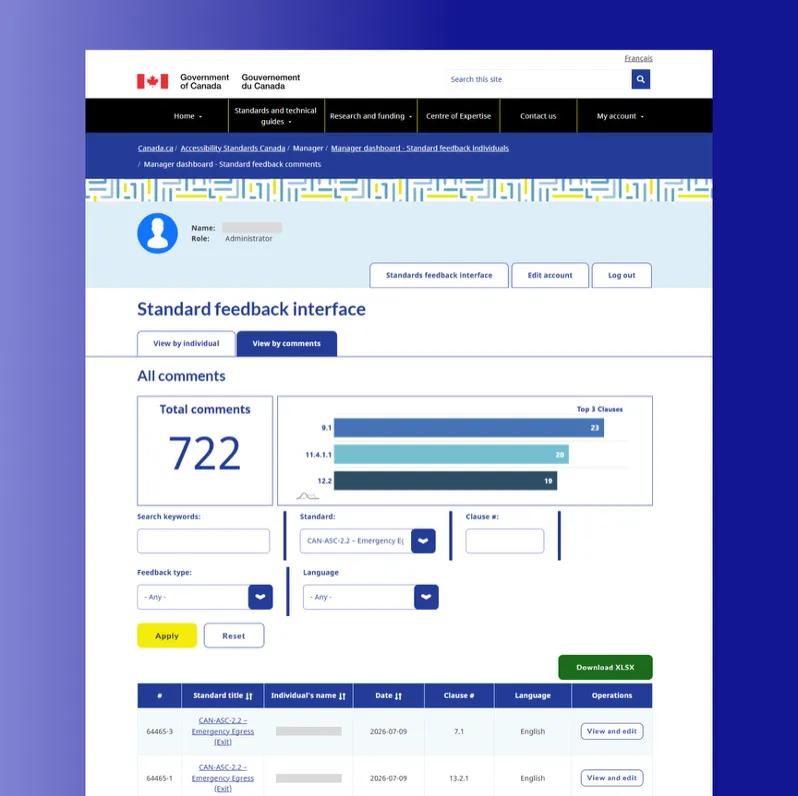
In addition to enhancing the public experience, the project significantly improves internal workflows. New capabilities for searching, filtering, reviewing, and exporting submissions enable administrators to process feedback more efficiently, reduce manual effort, and generate reports that support informed decision-making.
Built-in CSV export functionality enables administrators to extract submission data for offline analysis, reporting, and archival purposes. This capability supports organizational reporting requirements while providing flexibility for further analysis using external business intelligence and reporting tools.
The application was developed on Drupal 11, providing a modern, secure, and highly maintainable foundation for future growth. Submission data is managed using Drupal's entity framework, ensuring information is stored in a structured, consistent, and extensible manner. This architecture supports advanced searching, reporting, future enhancements, and integration with other enterprise systems while maintaining data integrity. By leveraging the latest capabilities of the Drupal platform, the solution delivers improved performance, enhanced security, greater stability, and long-term sustainability while remaining adaptable to evolving business requirements.
A More Accessible Feedback Interface for Users and an Easier, More Efficient Administrative Process for ASC
The completed solution transformed a traditional, form-based process into a modern digital experience that is more intuitive, accessible, and efficient for both users and administrators. By enabling contextual feedback, draft saving, and personalized submission management, the application significantly reduced friction throughout the submission process while supporting more complete and higher-quality responses. The solution's responsive design and accessibility-first approach ensure that individuals of all abilities can participate effectively, helping the organization deliver a more inclusive and user-centered digital service.
From an operational perspective, the project streamlined the review and management of submissions through structured data, advanced search and filtering capabilities, and a custom administrative dashboard. Administrative staff can now locate, review, and analyze submissions more efficiently, while CSV export functionality simplifies reporting and supports evidence-based decision-making. Built on Drupal 11, the platform also provides improved performance, security, and long-term maintainability, giving the organization a scalable foundation that can adapt to future policy changes, evolving standards, and additional business requirements without requiring significant redevelopment.
Why Drupal was chosen
Accessibility-First Architecture with Enterprise-grade Security
Drupal 11-WxT was selected as the foundation for this solution because it provides the enterprise-grade capabilities required to deliver a secure, accessible, and highly configurable digital service. The platform's flexible architecture made it possible to build a modern, intuitive submission experience while supporting advanced functionality such as authenticated user accounts,, draft management, structured data storage, and contextual feedback tied to specific sections of a standard. Drupal's robust content and entity frameworks also provide the scalability needed to accommodate future enhancements without requiring significant architectural changes, ensuring the solution can evolve alongside changing business and policy requirements.
Equally important, Drupal 11 aligns with the Government of Canada's mandate of accessibility, security, and long-term sustainability. Its mature security model, active open-source community, and regular release cycle provide a stable and well-supported platform for mission-critical applications. Drupal's strong accessibility foundation helped ensure compliance with recognized accessibility standards, while its extensibility enabled seamless integration with custom administrative workflows, reporting tools, and Webform functionality. By leveraging Drupal 11, the organization benefits from a future-ready platform that reduces long-term maintenance costs, supports continuous improvement, and provides a reliable foundation for delivering exceptional digital services.
Technical Specifications
Drupal version:
Key modules/theme/distribution used: