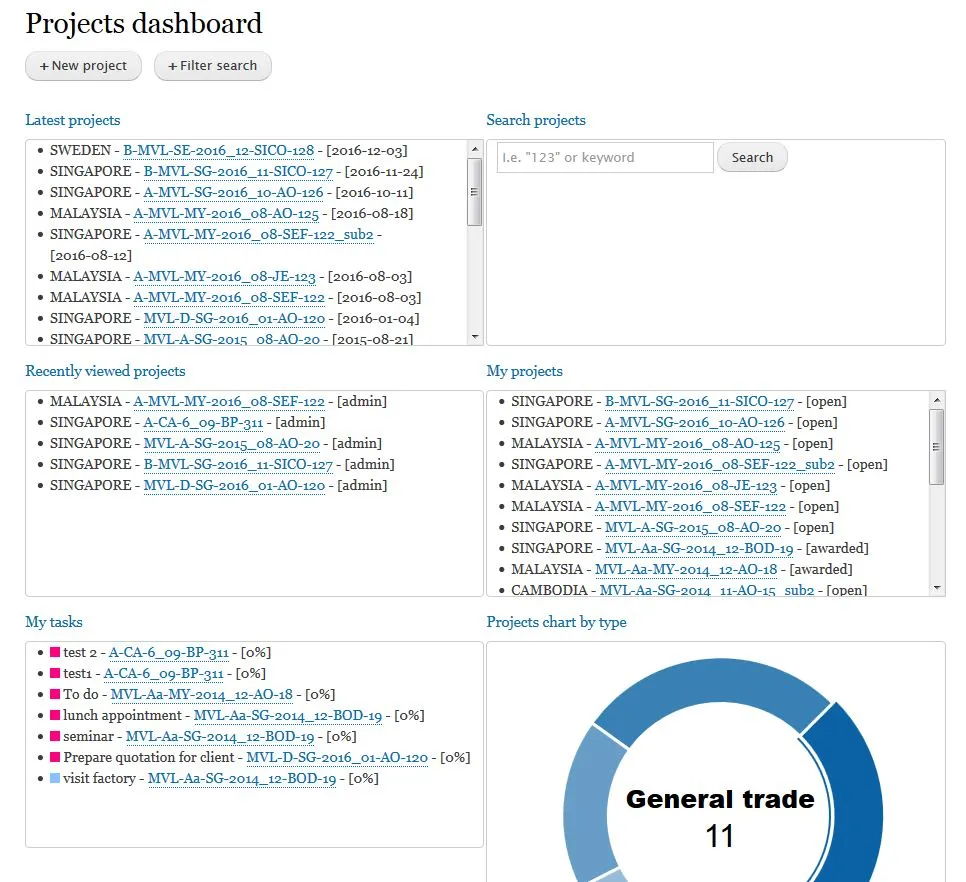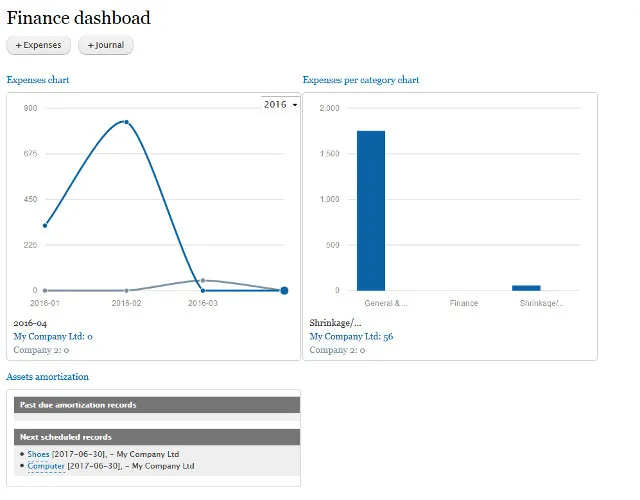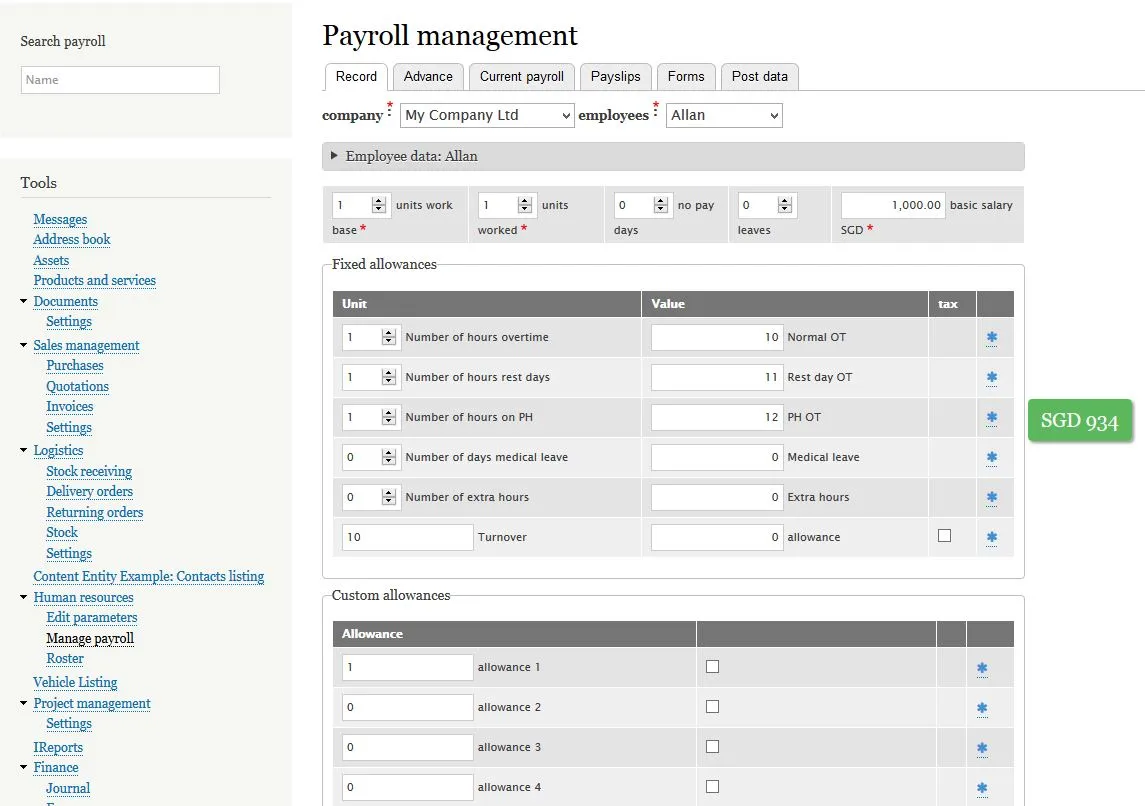
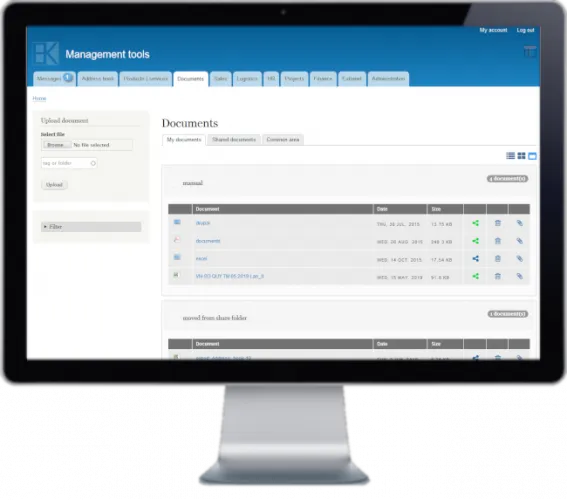
In April 2014, this project was started to migrate an in-house back office management application for SME to Drupal 8.
This back-office system, was initiated in 2006 for internal needs of newly created company. It was developed in PHP with mysql data storage. The initial idea was to have a tool that could help this new company to run its business as efficiently as possible with few constraints that are always critical in a good organization: central and unique data references (share unique information across offices); simple to use with minimum training or learning curve (no resource for that!); flexible and cost effective; access control and security.
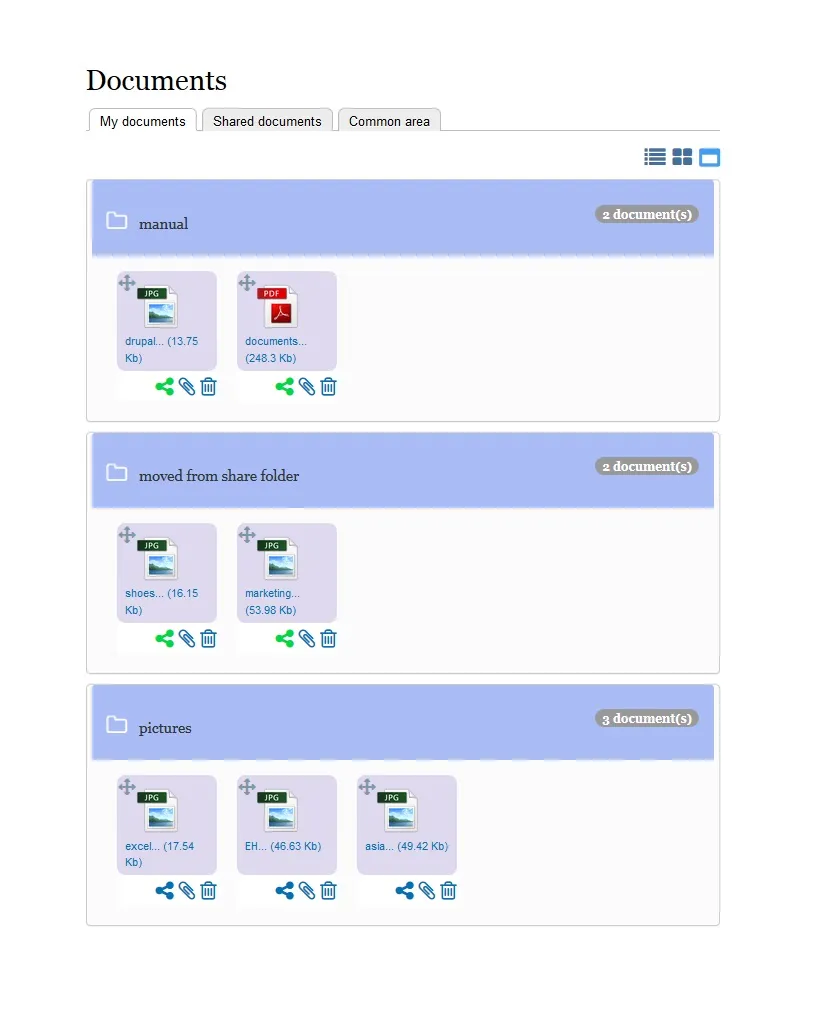
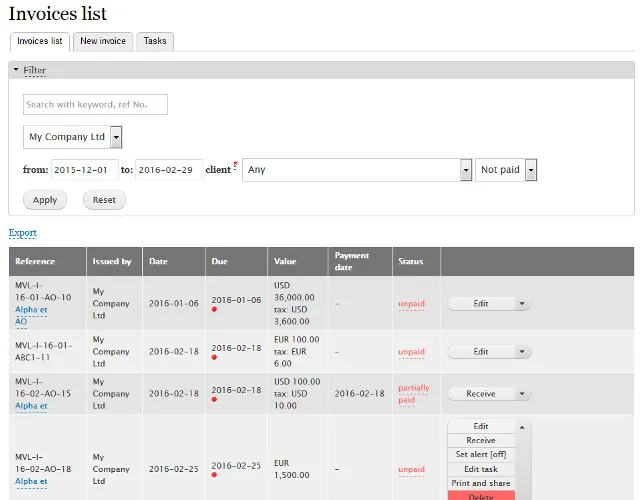
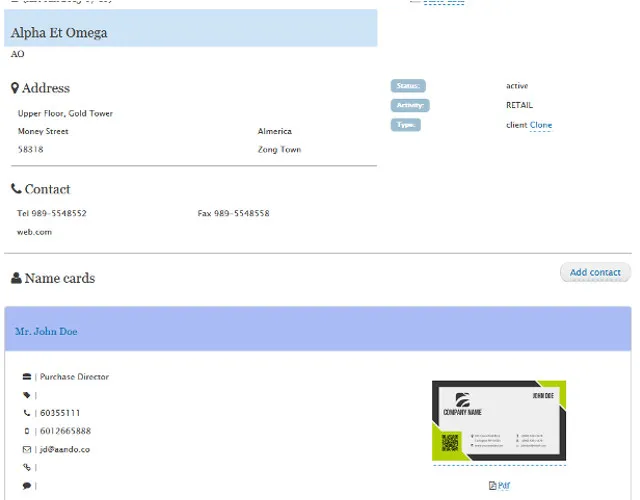
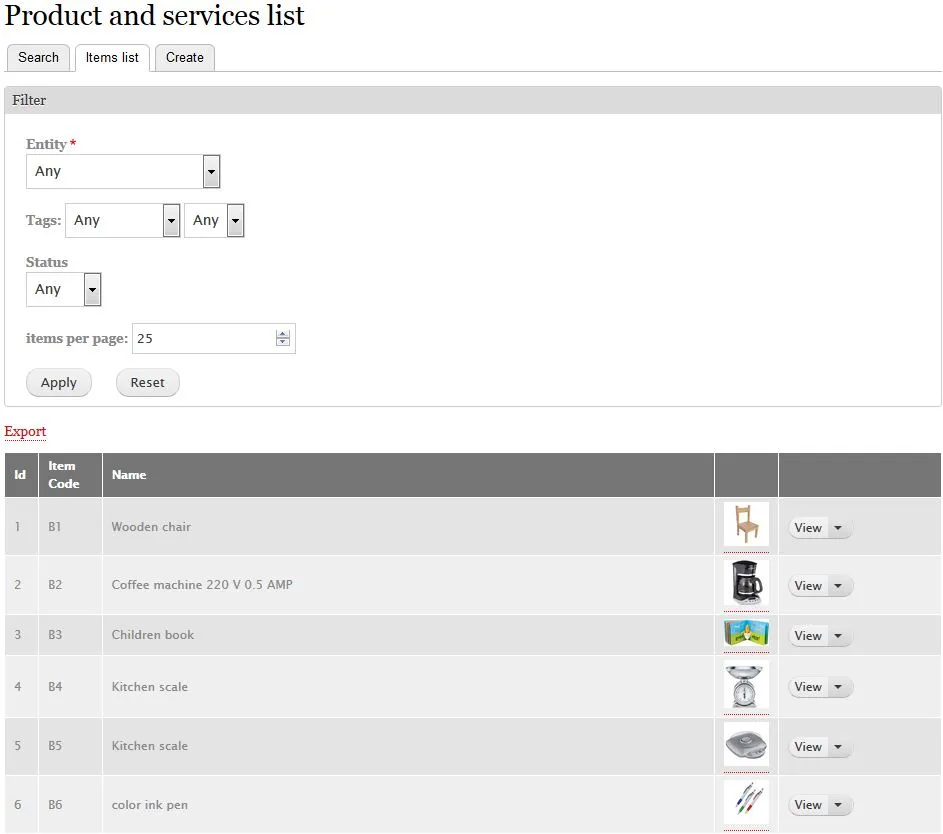
This system was used later in different business environments: trading, distribution and services, by other companies. Along the way it was extended to new functions and capabilities based on the requirements of the users including multilingual needs as it was used in various countries with different working languages. Thus from simple invoicing and projects follow-up tool it soon covered various back-office and collaborative modules like documents management, accounting journal, cash management, internal claims and invoices, budget and reporting, duty roster to name only a few.
About the project
EK management tools suite is currently running live with few companies that manage their daily business operations. We provide SaaS solution for our customers integrated with AWS cloud services.
The application is available as open source profile.
We also welcome Drupal developers enthusiastic about business process solutions who would like to contribute. C
The short and long term milestones we foresee are:
- implement content entities for custom modules;
- extend modules for localized requirements (i.e. payroll, accounts);
- interface data with other front-end or ERP.
Why Drupal was chosen
There are obvious reasons why Drupal 8 was chosen:
1) when migration was started, Drupal 8 was still at beta stage but it was already set to make a major move into professional platform to develop application "for small businesses, global enterprises, and everything in between"; its structure make it also easy to extend and maintain;
2) the modular structure of Drupal was already matching the existing structure of the original PHP application; it allows flexibility in the solutions offered to companies;
3) the multi-site capabilities of Drupal helps manage multiple dedicated applications;
4) business we encountered is mostly running in multilingual environment and this has always been a solid criterion of the application. Creating an easy-to-use back-office solution means that everyday users need to feel comfortable with a tool that uses their language;
5) Drupal community is active. Besides our custom modules, we can integrate other very useful modules in our solution;
Technical Specifications
Drupal version:
Key modules/theme/distribution used:
Most of the modules used are currently custom modules.
We use some other contributed modules for email management mainly.
Also composer manager is used to integrate external libraries used by the system which are pdf and excel generator libraries.