Sector(s)
Project Team
- SparkFabrik: Drupal development, cloud infrastructure, DevOps
- Zambon: Communication and Digital Strategy (project ownership)
- Insana: project governance, web and graphic design, content management
- Sketchin: UX and information architecture
Zambon is a chemical-pharmaceutical multinational founded in Vicenza, Italy, in 1906, grown from a family business into a group operating across many countries. As part of a wider digital transformation, the Group set out to build an entire ecosystem of web products in a future-proof, multi-cloud perspective.
Before the project, Zambon ran 24 sites with national domains structured differently in each country and a digital identity diluted by inconsistent design approaches. The Group needed one univocal, shared image, centralized governance of design and content, and the ability to drive the redesign of every local site from a single template.
The work was delivered by a multidisciplinary team: Zambon's internal digital strategists and specialist partners for governance, content, and UX, with SparkFabrik leading technical development and cloud infrastructure.
About the project
Goals
Support Zambon's digital transformation by building a coherent ecosystem of web products: unify a fragmented multi-country web presence under one Group identity, give the internal team autonomous content governance, and create a single design template and platform to drive the redesign of every local site.
Challenge
Twenty-four separate sites, each with its own domain and structure, had diluted the Group's identity. Zambon needed centralized management of design, content, and approval workflows, wanted to internalize governance and platform updates, and needed a content strategy for two key audiences: business partners and new talent. The platform also had to serve every market equally, including China, where connectivity and compliance differ.
Solution
SparkFabrik turned the Design System into a live component catalog on Drupal. Highlights:
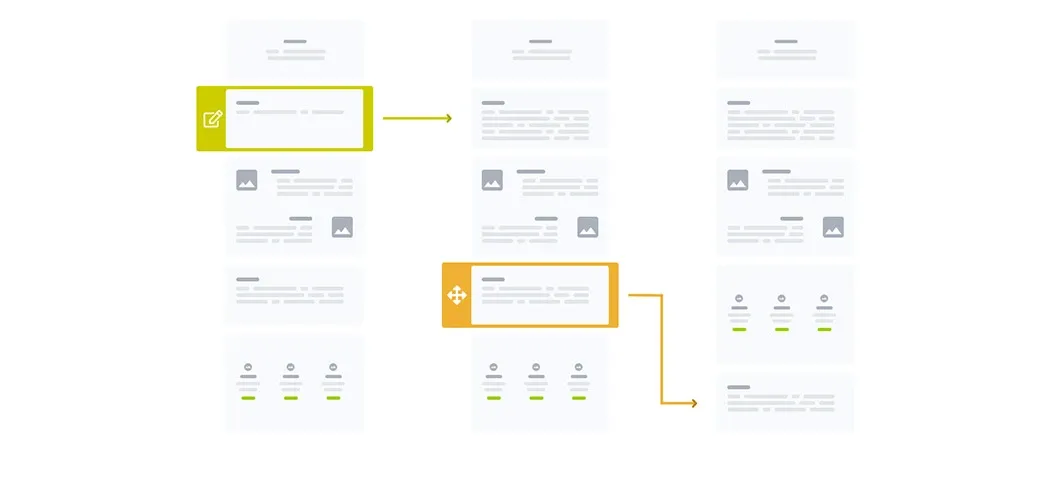
- Modular architecture: a catalog of reusable components lets editors assemble most pages without custom development; adding or changing a component does not disturb existing content structures or the editor experience
- Parallelized delivery: once the core components existed, content population and development of specialized components ran in parallel, speeding up the build
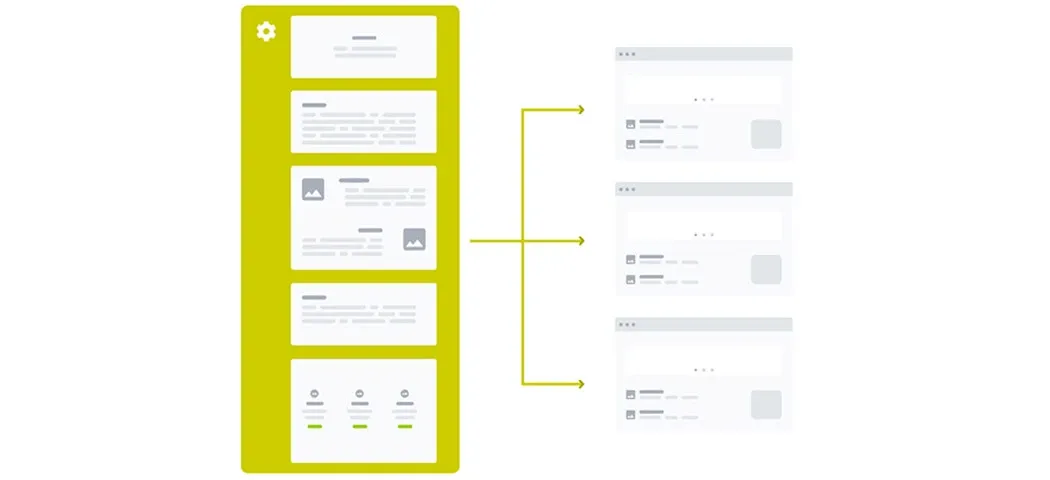
- Single shared codebase: corporate and country sites share one codebase, so each update and new feature reaches all sites automatically
- Multi-cloud delivery: Western-market sites run on Google Cloud Platform and Eastern ones on Alibaba Cloud, keeping one uniform architecture while meeting regional requirements
- China parity: Alibaba Cloud gave the Chinese market an experience equivalent to the rest of the world in efficiency, security, content control, and usability
- Cloud-native operations: containerized delivery with continuous integration and delivery and automated multi-site deployment
Outcome
- The content of 24 websites was merged into one organic, coherent corporate site that tells the Group's identity as a whole
- The internal team manages and requests content changes in complete autonomy
- New features and components are released automatically across every site through the shared deploy system
- The Design System proved valuable enough to become the basis for future product-focused sites, giving Zambon a reusable, already-operational foundation
The design system created together with SparkFabrik is today an asset of great value for the entire company.
Cristiano Poian, Head of Digital Strategy, Zambon
Why Drupal was chosen
The team deliberately stepped away from the traditional approach of configuring an off-the-shelf CMS with rigid, complex data structures. Instead it adopted Drupal as an advanced development framework and built a catalog of reusable, modular components on top of the shared Design System. Drupal won on:
- Framework flexibility over a fixed CMS: content structures could keep evolving with still-changing specifications, without reorganizing the whole data model
- Modular page composition: editors build pages by choosing components, so new editorial needs are met by adding a component, not by re-architecting
- Stable editorial experience: adding or changing components later does not force changes to the editors' interface or workflow
- One codebase, many sites: a single shared codebase serves the corporate and country sites, so one code update reaches them all
- Open source, no per-seat licensing: freedom to scale sites, editors, and content across countries, backed by a large community
Technical Specifications
Drupal was used as a development framework rather than a pre-packaged CMS. Structured content modeling let the team build a catalog of reusable, modular components mapped onto the Design System, so editors compose pages by selecting components instead of using rigid templates. Content structures stayed flexible, so components could be added or changed without reorganizing the data model or disrupting editors, and a single codebase served many sites inside a multi-cloud pipeline.