Sector(s)
Visit the site
Visit the siteThe Client
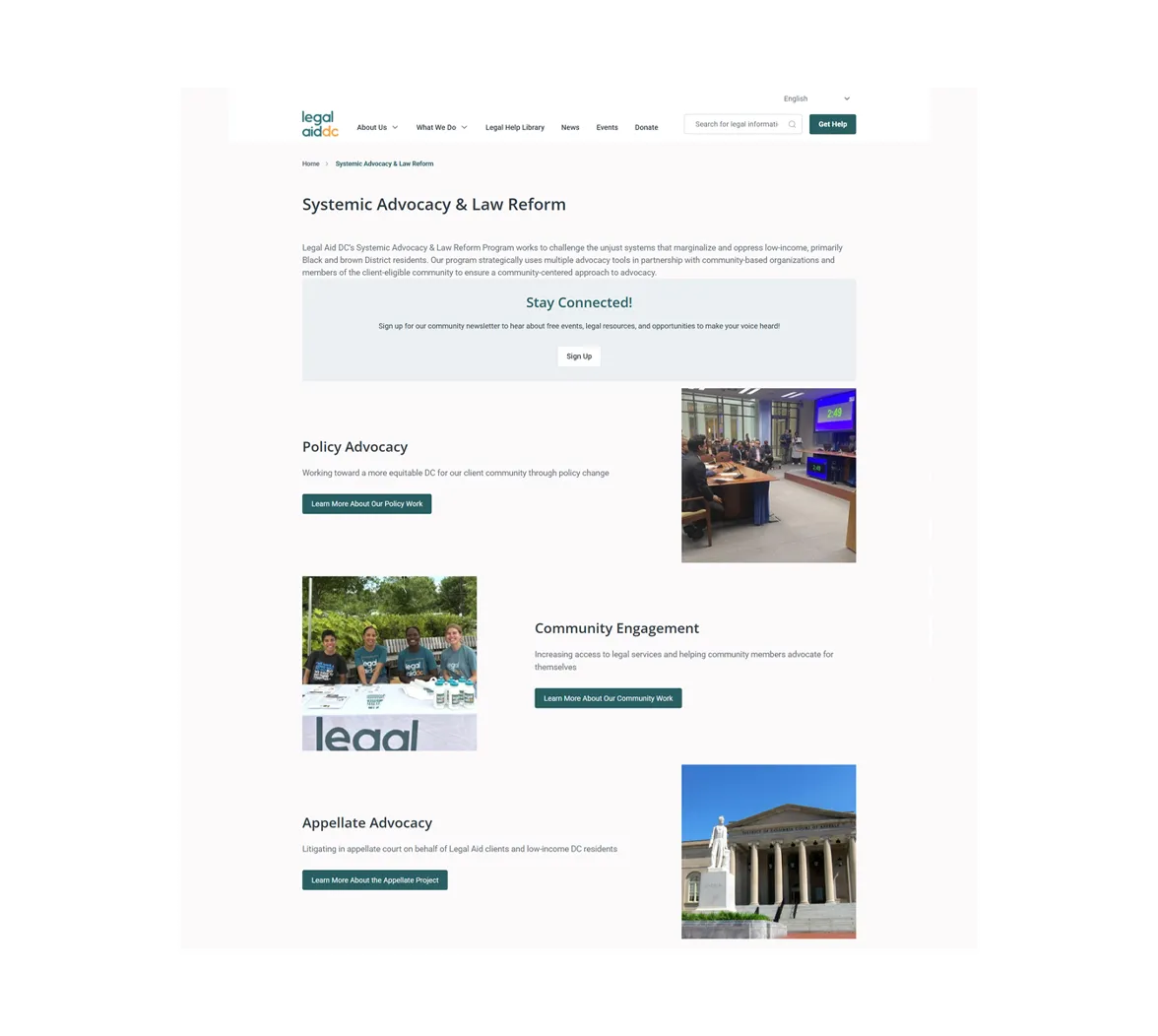
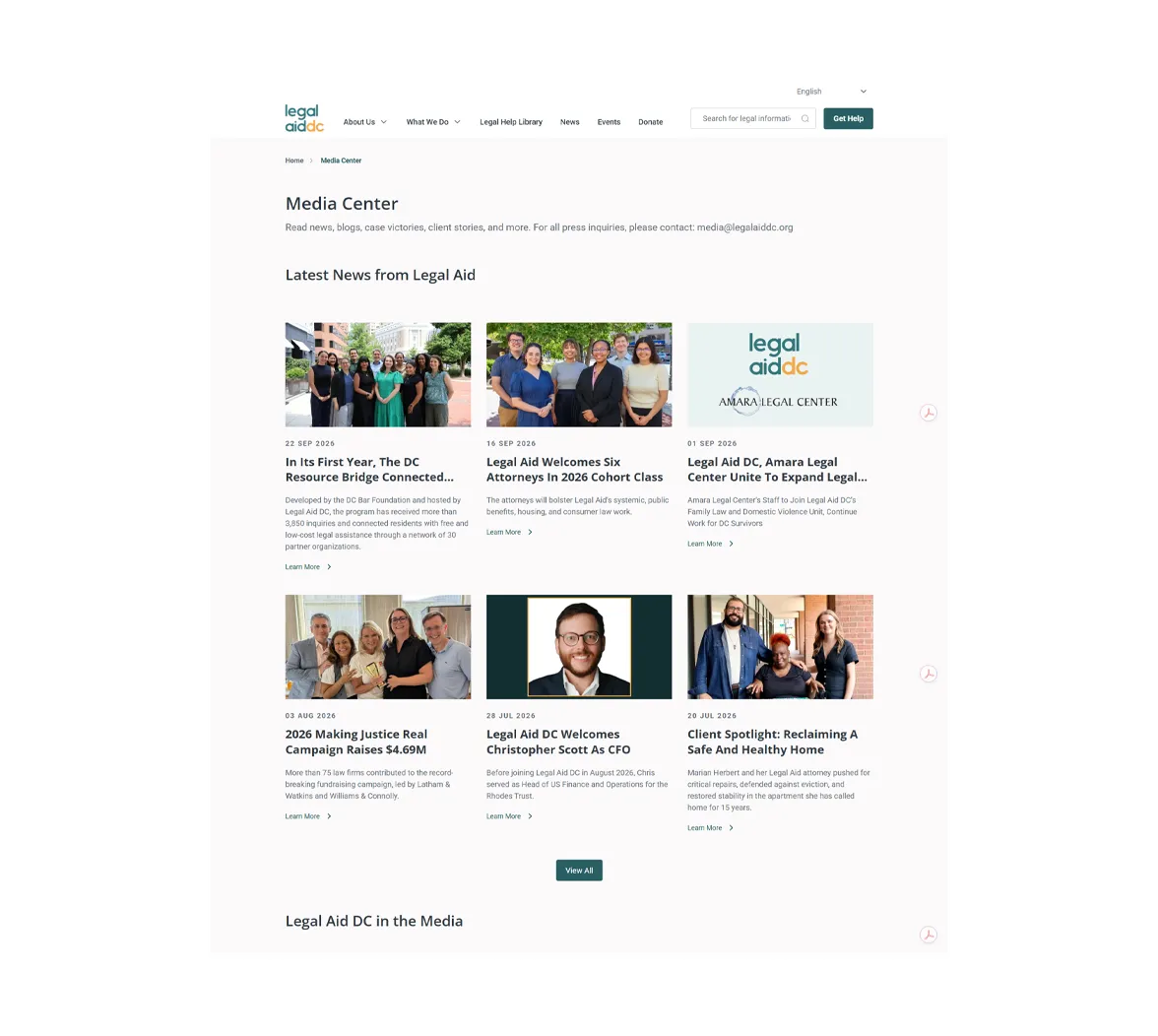
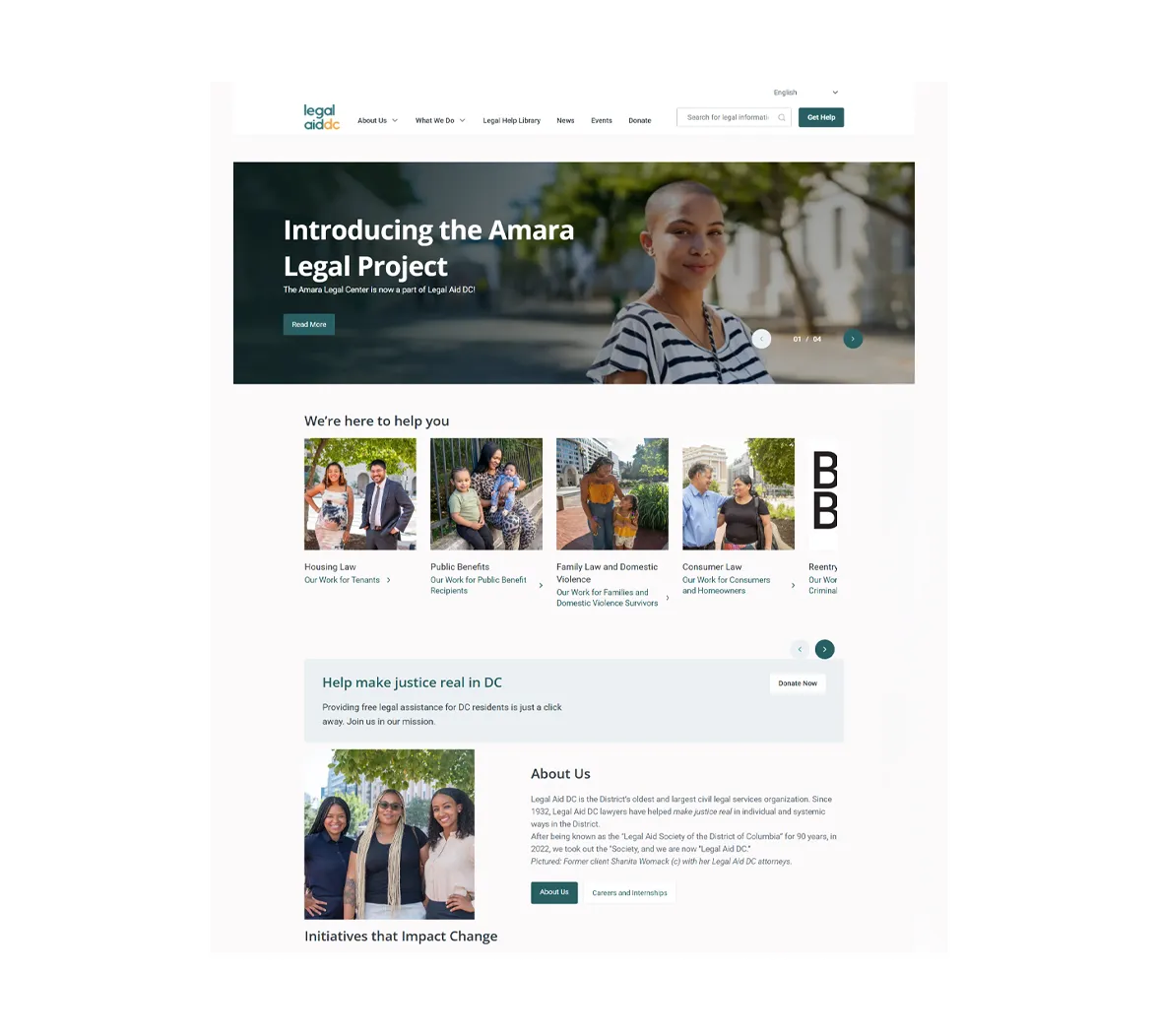
Legal Aid DC is a legal services organization focused on helping individuals and communities access legal assistance and resources. Its website serves as a central digital channel for sharing legal information, organizational updates, publications, events, and other community resources.
About the project
The Situation
The Legal Aid DC website was running on an earlier version of Drupal with a substantial module ecosystem supporting content management, search, media, security, accessibility, and specialized legal features. Staying on the older release would have increased future maintenance effort, complicated dependency management, and delayed adoption of platform improvements. The organization chose to modernize the platform and maintain a supportable foundation that could carry its mission forward.
The Challenge
Legal Aid DC faced several considerations specific to its platform and mission:
- A substantial ecosystem of 158 contributed modules and 19 custom modules requiring careful compatibility review
- Custom functionality supporting litigation cases, appellate projects, blogs, events, staff listings, and a safety exit button, each needing individual assessment
- Protecting existing content, media, taxonomy, layouts, navigation, and editorial configuration from any disruption
- Managing regression risk across forms, search, navigation, and other existing features
- Delivering the full upgrade within a 3 to 4 week window with minimal disruption to visitors seeking legal information
The Solution
BinaryWorks delivered a structured platform upgrade that moved the Legal Aid DC website forward while preserving existing content, functionality, integrations, and the experience of both visitors and content administrators.
Technical assessment and planning: The engagement opened with a full platform review, including a module inventory, dependency mapping, and an upgrade plan built around the project timeline, following a structured migration and upgrade approach.
Module compatibility review: All 158 contributed modules were assessed, with required updates and replacements identified and executed. Dependencies were updated in a controlled sequence to protect site stability.
Custom functionality review: Each of the 19 custom modules was individually reviewed, with particular attention to features that make the website distinctive, including litigation case management, appellate project pages, blogs, events, staff listings, and the safety exit button that protects visitors who need to leave the site quickly.
Content and configuration validation: Existing content, media, taxonomy, layouts, navigation, and editorial workflows were verified end to end, with no content or media loss during the upgrade.
Quality assurance: Functional and regression testing covered critical user journeys, forms, search, navigation, and custom features, with user acceptance testing involving the client team before deployment.
Phased deployment: The production release followed a controlled, phased approach, with post-deployment validation of critical functionality.
The Results
A modernized Drupal platform: Legal Aid DC’s website now runs on Drupal, positioning it for continued maintenance, security updates, and future enhancements.
Comprehensive module compatibility: 158 contributed modules and 19 custom modules were reviewed and brought into compatibility, with no critical issues left unresolved.
Specialized legal features preserved: Custom modules supporting litigation cases, appellate projects, blogs, events, staff listings, and the safety exit button were validated and preserved.
Responsive user experience validated: Functional testing confirmed consistent behavior across desktop, tablet, and mobile devices for the agreed critical journeys.
On-time delivery: The full upgrade was completed within the planned 3 to 4 week window, with no unresolved critical defects at handover.
Stronger maintainability: The modernized platform is easier to maintain going forward, with cleaner dependency management and clearer paths to future updates.
Strengthened quality assurance: Structured testing established repeatable patterns that will support future releases.
Improved cross-team collaboration: Project management, business analysis, user experience design, development, and quality assurance teams worked in close coordination throughout.
Why Drupal was chosen
Drupal was the right fit for Legal Aid DC because the website’s complexity, custom workflows, accessibility standards, and long-term supportability align with Drupal’s strengths. Its flexible content model, mature module ecosystem, and strong security posture make it well-suited for a legal services organization that depends on structured content and specialized features. As an open platform backed by a strong community, Drupal also gave Legal Aid DC the long-term sustainability it needed to serve its community for years to come.
Technical Specifications
Drupal version: