Sector(s)
Gruppo Editoriale La Scuola is a historic Italian publishing group whose founding houses date to 1904 and 1908, spanning brands such as La Scuola, SEI, Il Capitello, Cappelli, and Hachette. It publishes school textbooks for every grade, professional training courses for teachers and institutes, and three sector magazines.
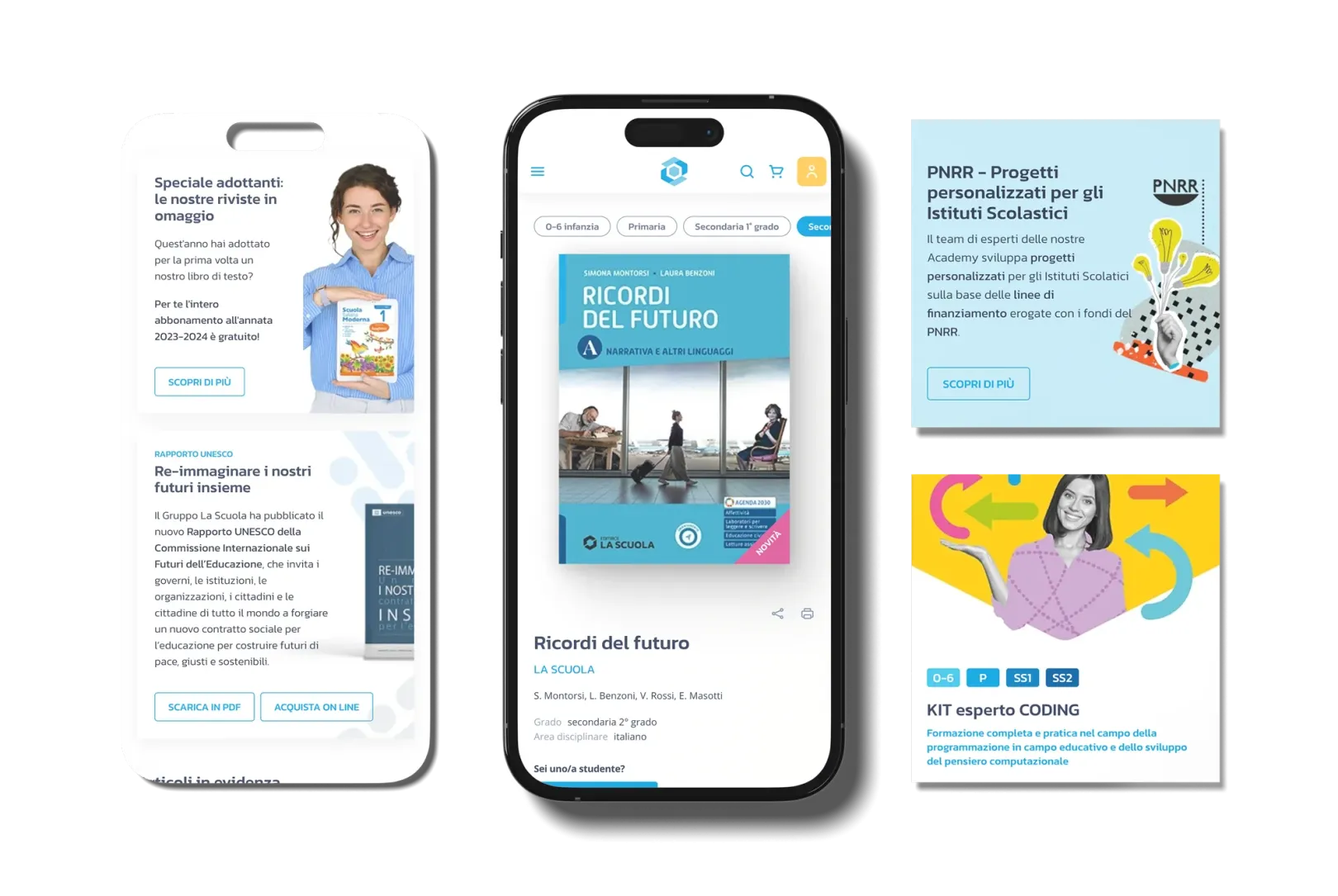
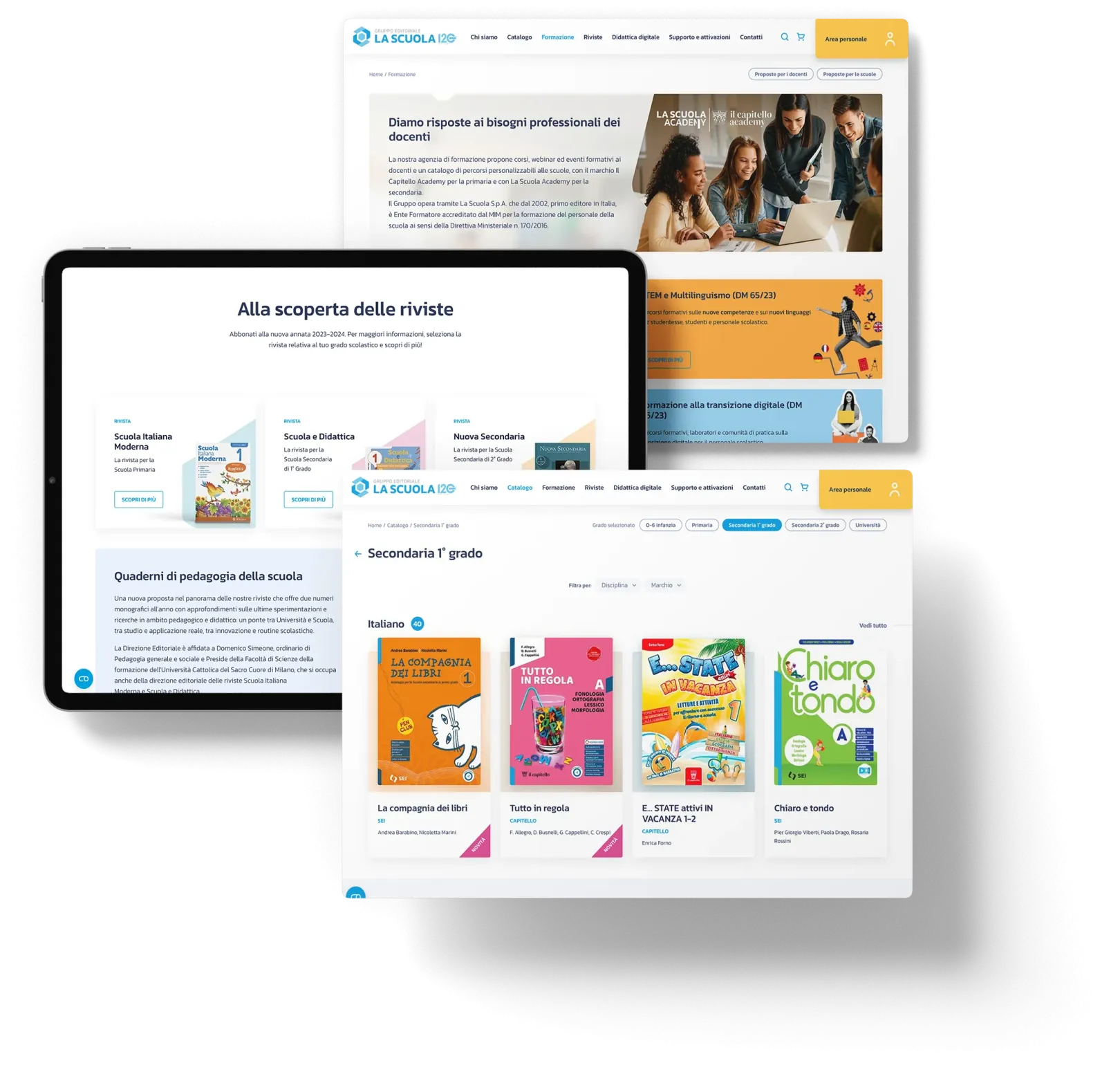
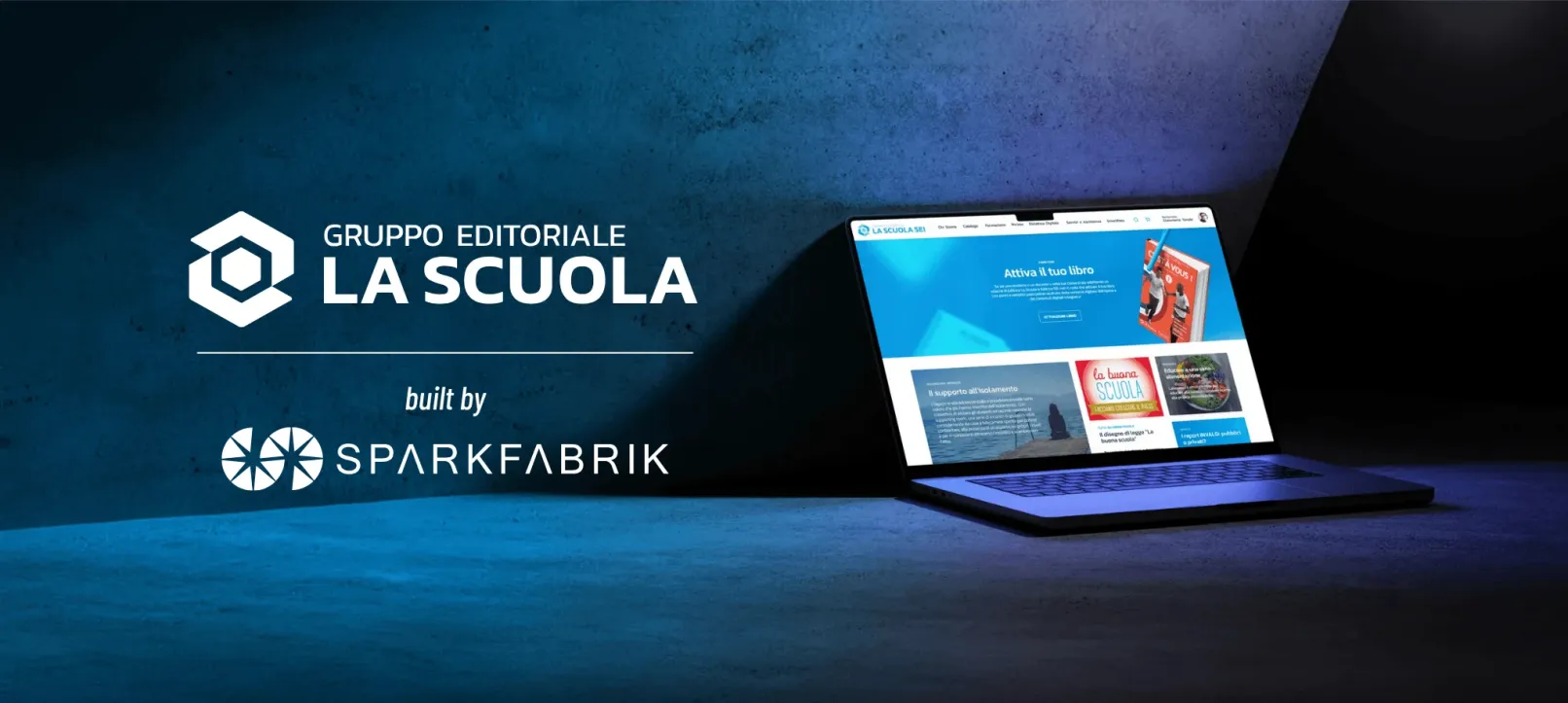
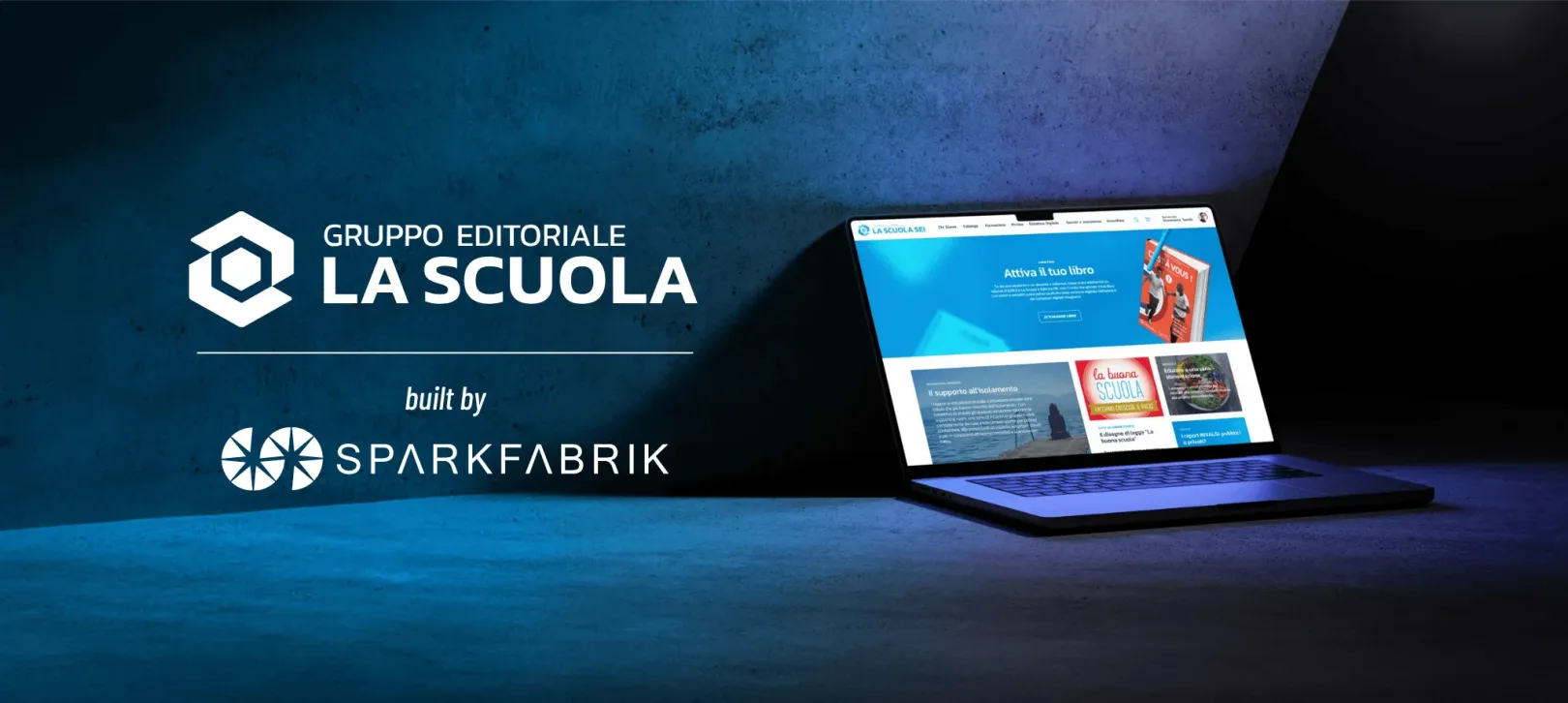
The group needed to replace its digital presence with a modern, high-performance, and scalable portal able to manage a large catalog of works, courses, and magazines, sell them through secure e-commerce, and deliver the digital content that accompanies its printed textbooks. It also needed advanced user profiling and personal areas for teachers, students, and sales agents, plus integration with third-party education services such as Zaino Digitale.
SparkFabrik led the digital identity, design, and technical implementation.
About the project
Goals
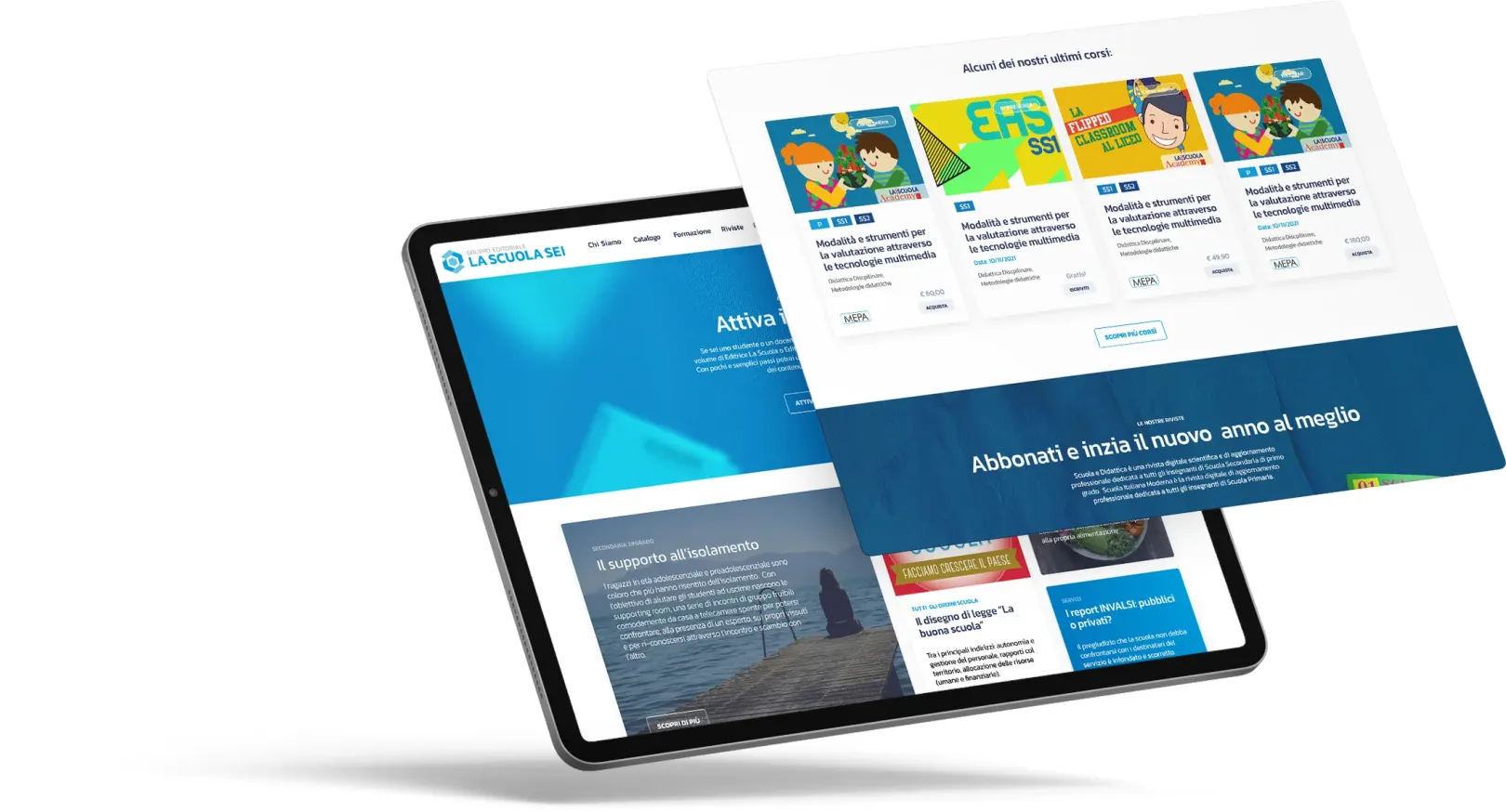
Redesign the group's digital identity and build a modern, scalable portal that showcases editorial content, sells courses and magazine subscriptions, and unlocks the digital materials bundled with printed textbooks — serving teachers, students, families, and sales agents from a single multi-brand platform.
Challenge
One platform had to carry many jobs at once: a large, frequently updated catalog; secure e-commerce for courses and subscriptions; digital-book activation and gated content; advanced user profiling driven by personalized surveys; personal areas for distinct audiences; and integration with external education services such as Zaino Digitale. Analytics pointed to mobile-first usage, so performance and readability on phones were essential. The group's legacy content workflow also had to keep working without disruption.
Solution
SparkFabrik built a headless architecture: a Drupal backend manages all content and business logic and exposes it over JSON:API to an Angular frontend that renders a fast, responsive, mobile-first experience. Separating content from presentation sped up development and deployment and kept the interface performant.
Highlights:
-
Decoupled content delivery: Drupal as the content and commerce backend, Angular as the presentation layer over JSON:API
-
Editorial empowerment: editors update catalog and news autonomously; the layout and content stay flexible
-
Legacy modernization without workflow change: automated catalog import ingests works and all related digital assets from a simple .zip file uploaded by the client to their own servers
-
Cloud-native operations: containerized and orchestrated on Kubernetes on Google Cloud Platform for scalability, resilience, and traffic-spike tolerance, with automated CI/CD
-
Integrations: online payments, distance-learning platforms, and cross-publisher profiling
Outcome
-
Unified multi-brand platform for La Scuola, SEI, Il Capitello, and other group imprints
-
Secure, reliable e-commerce for courses and magazine subscriptions
-
Digital-content activation, personal areas, and survey-based profiling for personalized offers
-
Autonomous, independent content management for the editorial team
-
The new site recorded a significant increase in visits, conversions, and sales, plus stronger user loyalty
Why Drupal was chosen
The group evaluated proprietary monolithic CMS products and lighter-weight options before selecting Drupal as the content backbone. Drupal won on:
-
Decoupled/headless readiness: native JSON:API support let Drupal serve a separate Angular frontend cleanly, separating content logic from presentation
-
Rich content modeling: the catalog of works, courses, magazines, and companion digital assets maps naturally onto Drupal's structured content types and taxonomy
-
Editorial autonomy: the in-house editorial team manages catalog and news independently through a familiar authoring interface
-
Extensibility as a platform: Drupal integrates with third-party systems (payments, distance-learning platforms, cross-publisher profiling) and grows into a Digital Experience Platform rather than a fixed website
-
Open source, no per-seat licensing: freedom to scale users and content without license cost, backed by a large community
-
Commerce and profiling: supports secure e-commerce and survey-driven user profiling for personalized offers
Technical Specifications
Drupal version:
Why these modules/theme/distribution were chosen
Drupal's JSON:API support made the decoupled delivery to the Angular frontend clean and standards-based. Structured content modeling with Paragraphs and Media let editors compose flexible pages and manage the digital assets attached to each work. A migration pipeline turned a simple client-uploaded .zip into fully imported catalog content with related assets, modernizing a legacy workflow without forcing the team to change how they work.