Sector(s)
Team Members
First held in 1957, the John Moores Painting Prize celebrates contemporary painting through a competition and exhibition at the Walker Art Gallery. National Museums Liverpool needed an online system that could support both artists entering the prize and the people administering and judging it.
Following its work on the museum’s main website, Big Blue Door won a separate procurement to deliver the submissions application. Initially built in Drupal 8 and hosted on AWS, it combined a multi-step entry form, artwork images, PayPal payments, administrative reporting and a staged judging process.
The platform initially supported the 2020 competition and continued to evolve for later rounds.
Business case and background
A painting competition creates a substantial administrative task before any work reaches the gallery. Artists need to provide accurate information and suitable images, pay an entry fee and understand what they must do next. Organisers need to distinguish incomplete applications from submitted entries, keep track of progress and give jurors the material they need to make decisions.
The previous process involved a lengthier offline procedure. National Museums Liverpool wanted to replace this with an online service designed to save time and resources for artists and the museum team. With around 3,000 submissions received per year, the system needed to make reviewing large numbers of entries practical.
The requirement extended beyond collecting a form. The competition moves through successive stages, and the information people can see or change needs to follow that process. An artist should be able to develop an entry while submissions are open, but the material under review must become read-only when the window closes. Later rounds may require additional information. Bringing these requirements together was central to the application’s design.
About the project
Bringing entry and review into one application
Big Blue Door’s initial delivery replaced a lengthier offline submission and assessment process with a Drupal application. Artists could create an account, provide information about themselves and their artwork, upload images and pay online. They could return to edit an entry before the competition closed, making it possible to complete the process over more than one visit.
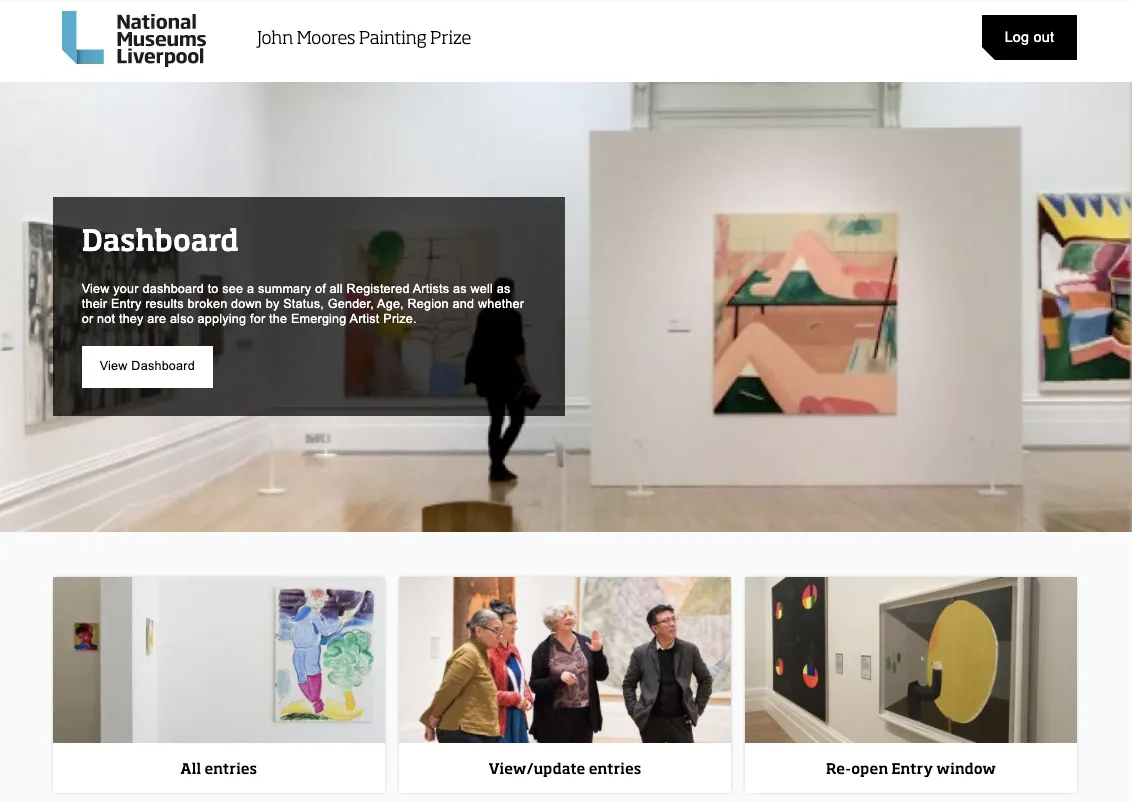
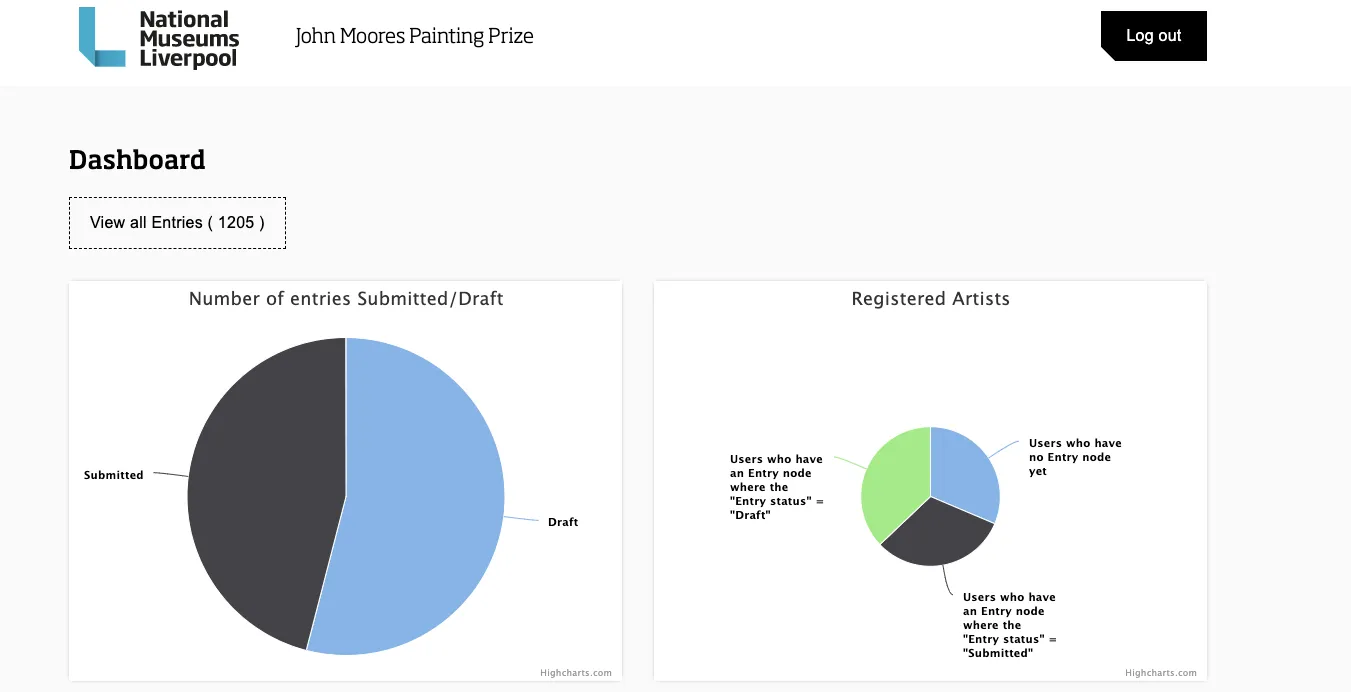
Administrators could view and edit submissions and manage the entry window. A bespoke reporting dashboard summarised participation, including submitted and draft entries, demographic categories and registered artists who had not yet started an application. This gave the museum an overview of progress as well as access to individual records.
Supporting the competition’s stages
The judging interface gave jurors a straightforward way to view an artwork and record a decision. The application also tracked entries through successive review stages, changing access and editing permissions as the competition progressed.
When entries close unfinished drafts are marked as never submitted, while submitted entries remain available for review. Artists can continue to view their information, with further editing enabled for the material needed at later stages. The application process supports the competition’s administration alongside the museum’s own communications and in-person assessment of paintings.
Developing the service across successive rounds
The platform was initially in use for the 2020 competition, which closed in April with ~3,000 applications despite the disruption caused by the pandemic.
Big Blue Door continued working with the museum to prepare the service for subsequent competitions. The 2023 work included reviewing the process stage by stage, testing account and payment journeys, checking judging behaviour and updating competition content and branding.
For 2025, the documented process included individual review and gallery views, response filters and entry-number lookup. The gallery view supported discussion of entries together, with artwork details and larger images available for assessment. Later-stage profiles could include additional images, a video link, a personal statement and exhibition or project history. These developments supported the information needs of both artists and the judging team as the round progressed.
Coordinating delivery with the museum team
Review meetings brought Big Blue Door’s support and development staff together with National Museums Liverpool’s digital team. The teams walked through the application on a demonstration environment, recorded feedback and organised changes around entry and judging milestones. PayPal sandbox testing formed part of the preparation for the 2025 entry journey. The outcome is a maintained application that combines public entry with the more specialised work of administering and judging a major painting competition, with further development informed by how the museum runs each round.
Why Drupal was chosen
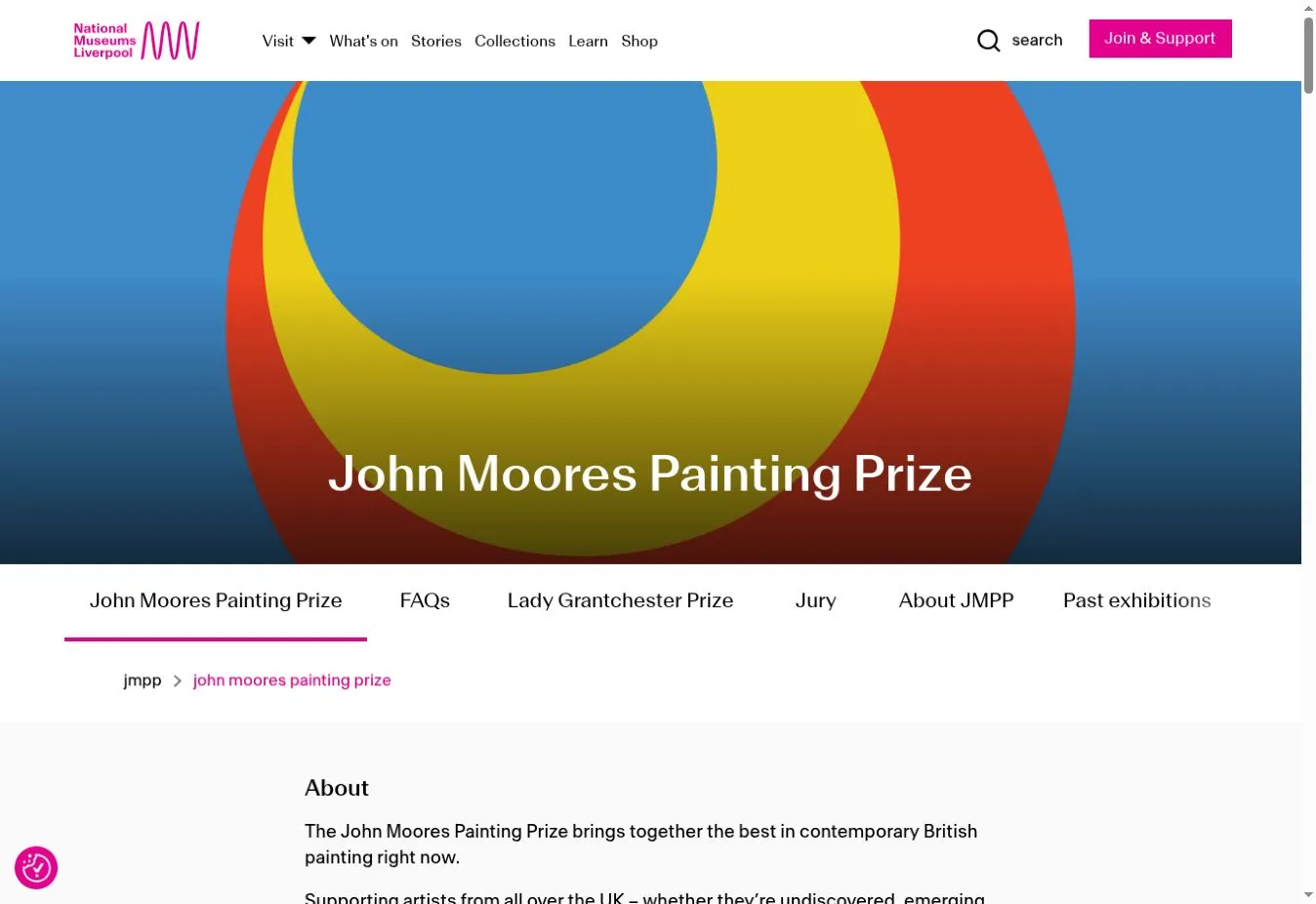
Drupal was selected for consistency with National Museums Liverpool’s main website, which Big Blue Door had also worked on. It provided a familiar platform while allowing the prize application to address a distinct operational need: collecting entries and managing their progress through a competition.
The project required different experiences for artists, jurors and administrators. Drupal provided the basis for authenticated accounts and controlled access, while the application’s custom functionality connected those users with the appropriate forms, information and actions at each stage. Artists could work on their own submissions; administrators could oversee entries and the competition window; jurors could focus on reviewing artwork.
Webform supported the multi-step application and its conditional logic. This was useful for collecting information about the artist, any agent and the submitted artwork without treating every applicant’s circumstances as identical. The payment integration completed the entry journey, while administrative views gave the museum a way to monitor the resulting information.
Drupal also supported continued development between competitions. Ongoing maintenance subsequently moved the application beyond its original Drupal 8 implementation through subsequent upgrades to Drupal 9 & 10. That continuity allowed the service to develop alongside the museum’s practical experience of running the prize.
Technical Specifications
Drupal version:
Webform underpinned the multi-step entry form. Its conditional logic supported the different information required about artists, agents and artwork, while saved submissions allowed artists to return to their entries before the deadline. Later records also document Webform submission and download views for administrative use.
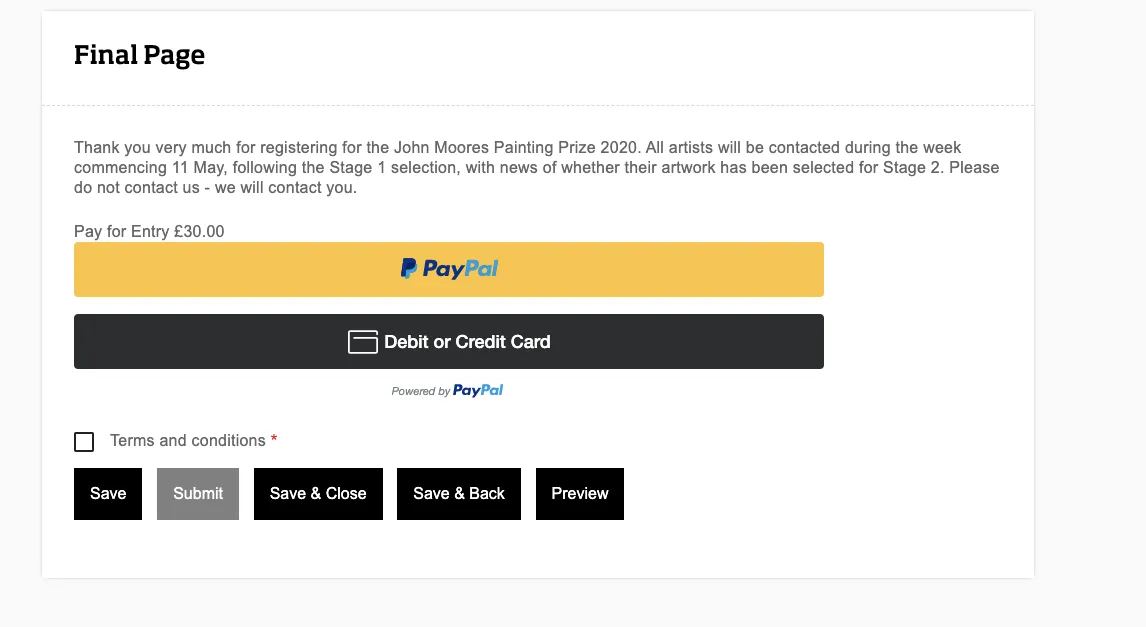
PayPal integration enabled online payment as part of the application journey. The original screenshot shows both PayPal and debit or credit card options. Preparations for the 2025 round included testing through a PayPal sandbox account before using the museum’s live payment setup.
Custom JMPP functionality connected entries, review stages, judging actions and reporting. This was necessary because the prize’s requirements went beyond a standard contact form: the system needed to respond to the competition phase, distinguish user roles and present artwork for assessment. The bespoke dashboard provided a summary of entries and registered artists.
The interface was designed for consistency with the wider National Museums Liverpool presence.