Sector(s)
Team Members
The Commission needed a public website that could be prepared quickly while its work remained confidential. Big Blue Door worked with the Foreign, Commonwealth & Development Office (FCDO) to establish user needs, develop the brand, prototype desktop and mobile experiences and build the service in Drupal 9.
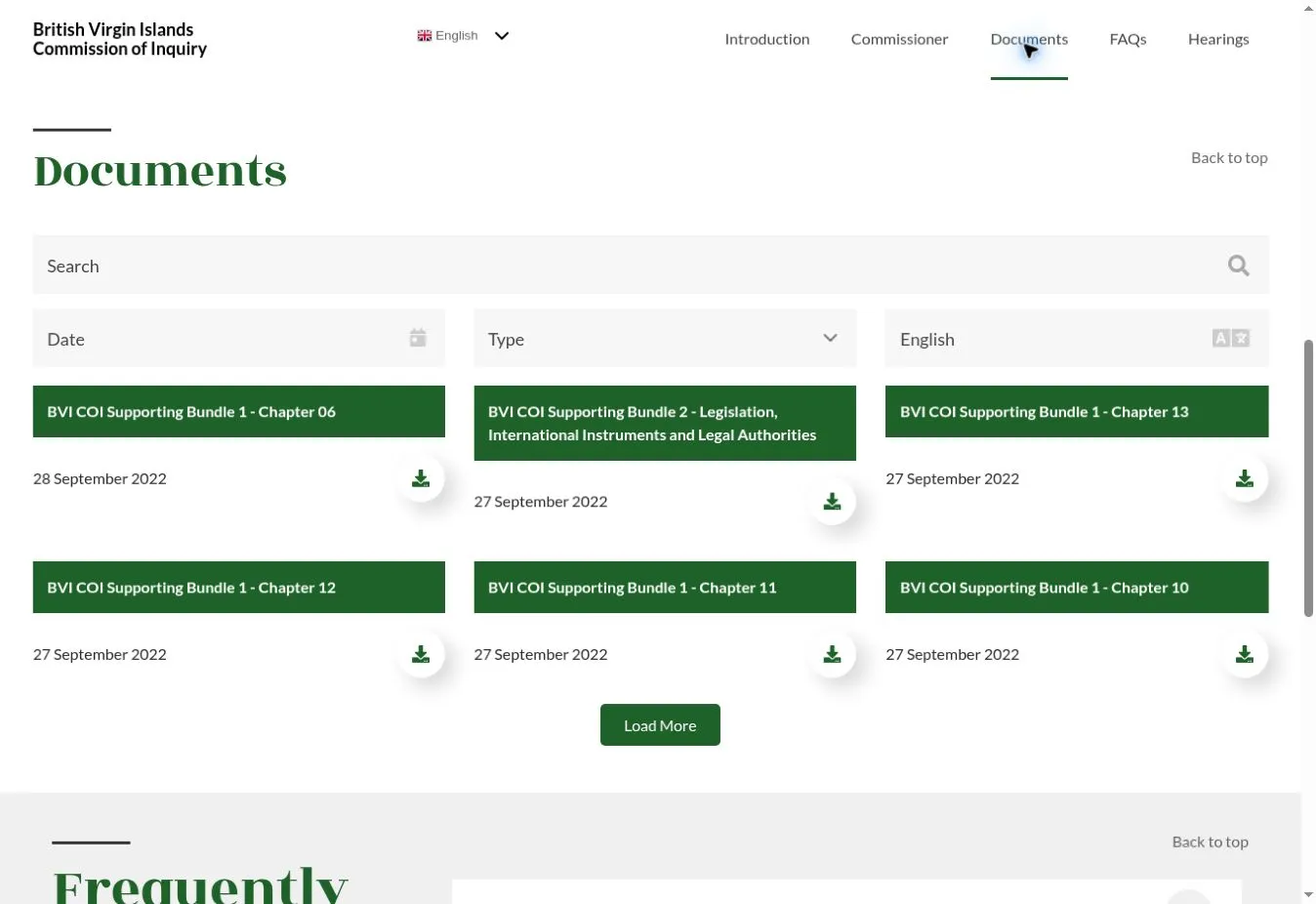
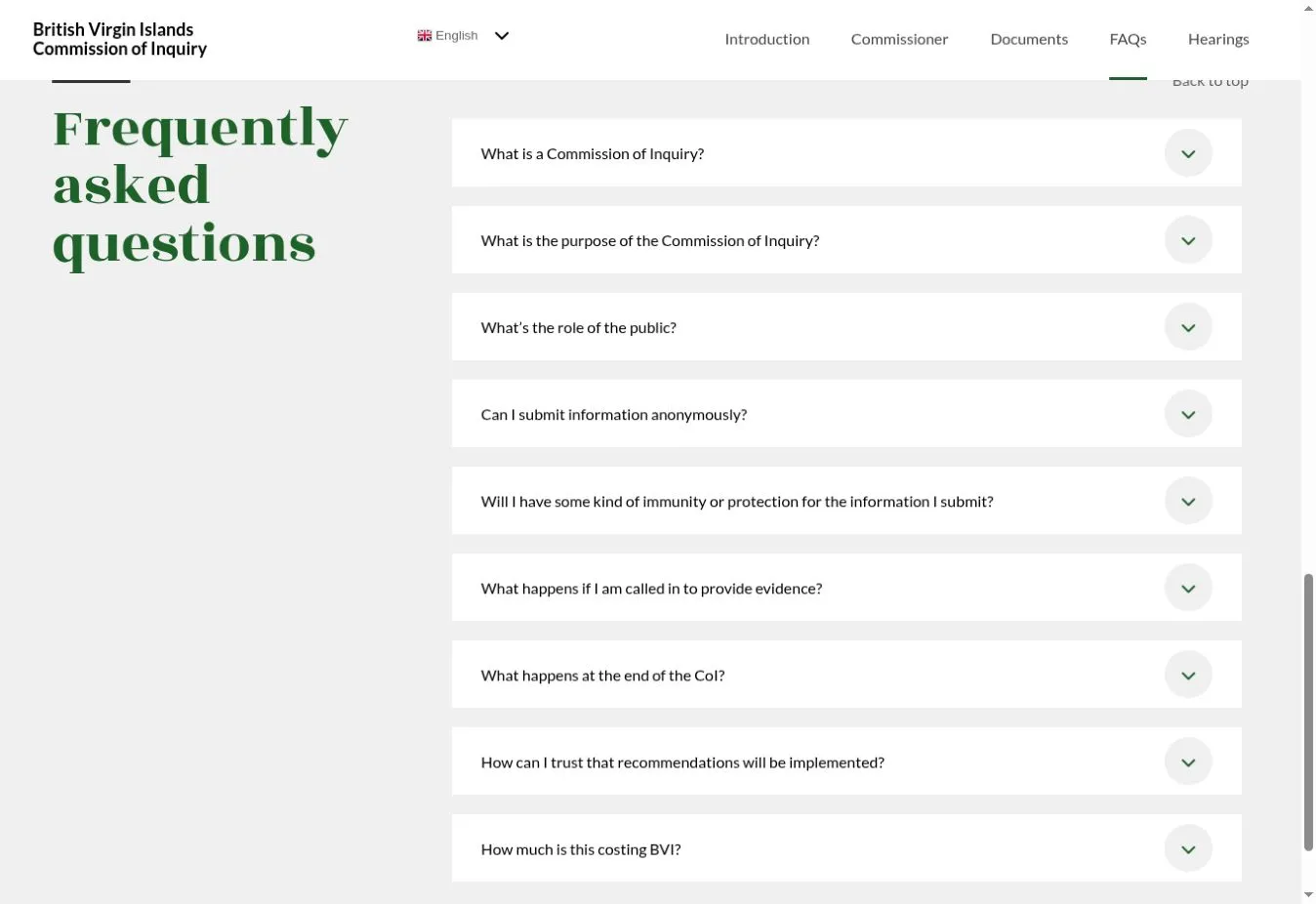
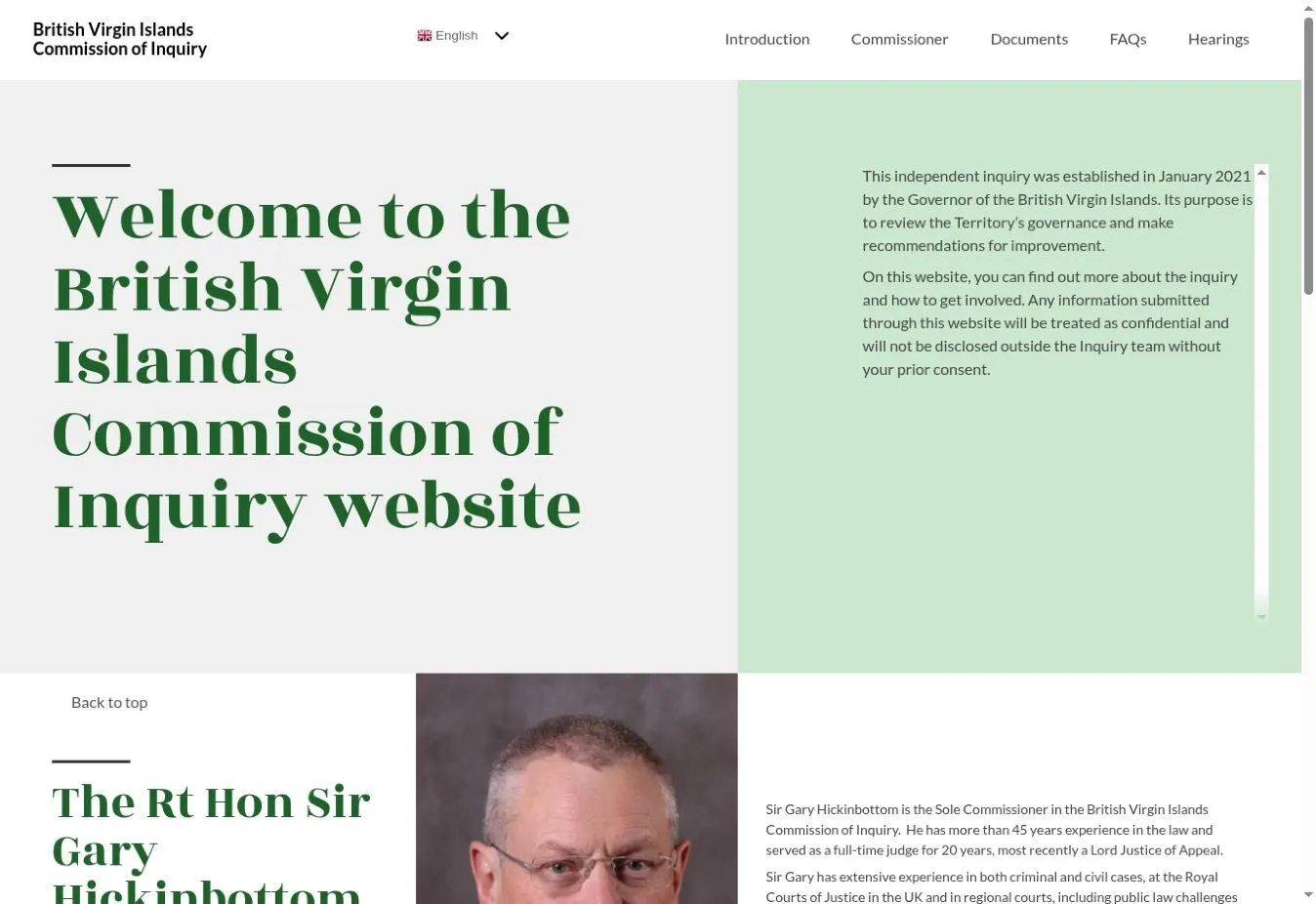
The initial website brought the introduction, Commissioner profile, documents and frequently asked questions together in a single-page structure. Big Blue Door also provided CMS training, hosting and post-launch support. A later hearings section extended the platform to organise the growing public record, bringing dates, summaries, transcripts and related material into a navigable format.
Business case and background
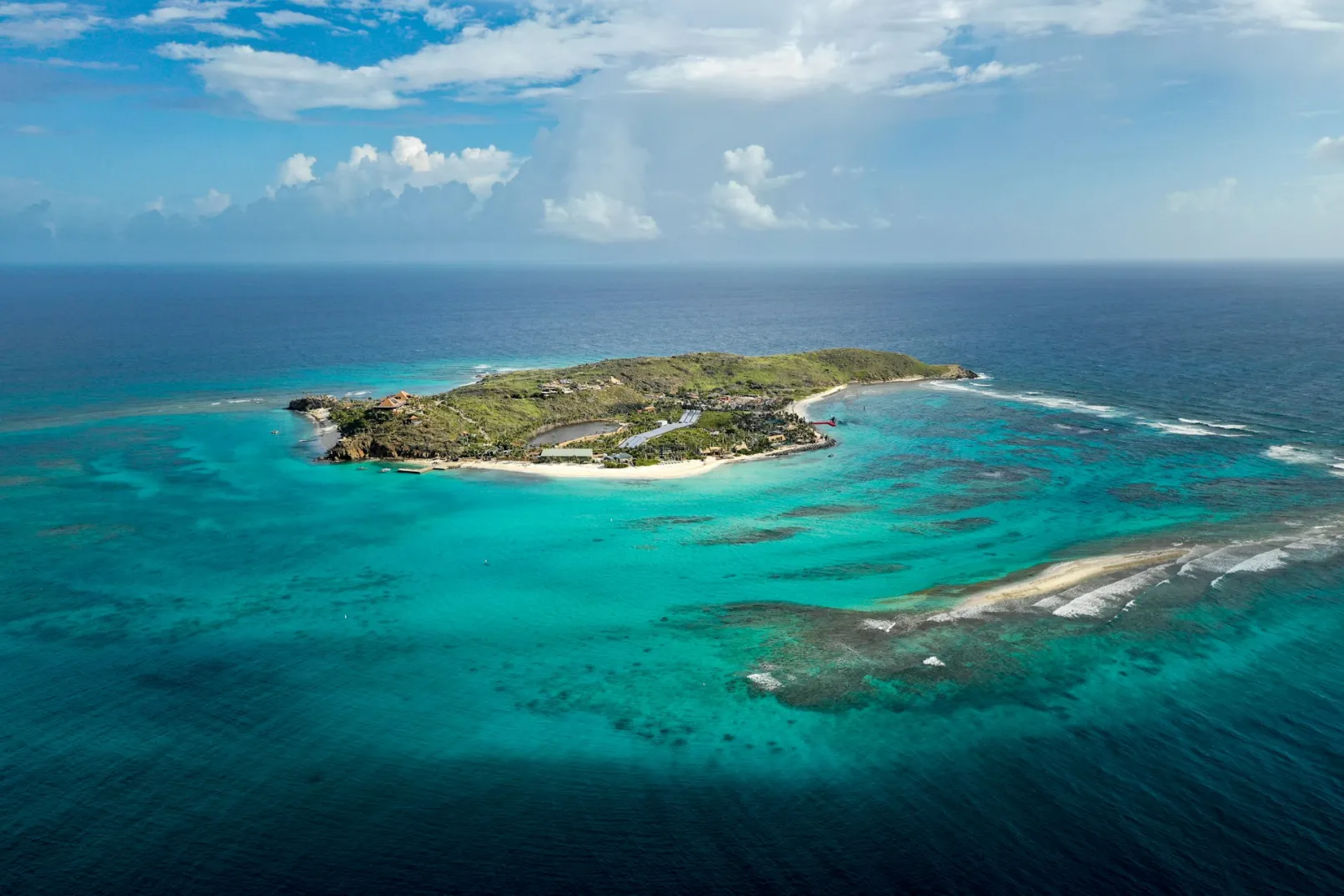
Established by the Governor of the British Virgin Islands in January 2021, the independent Commission examined the Territory’s governance. Led by Sir Gary Hickinbottom, it investigated whether there was evidence of corruption, abuse of office or other serious dishonesty in public office, and the conditions that allowed it to occur. The Commissioner presented his report to the Governor in April 2022. GOV.UK background
The website had an immediate practical role: explain the Commission’s purpose, introduce its leadership and make authoritative information available to people in the British Virgin Islands and beyond. It also needed to accommodate further material as the inquiry developed.
Confidentiality shaped delivery. Big Blue Door was not initially briefed on the precise subject matter, so discovery had to establish the functional requirements before detailed content could be shared. Connectivity was another design consideration: the brief identified people using mobile devices in areas with limited internet and 4G access. A simple structure, clear navigation and responsive presentation were therefore central to the approach.
About the project
Establishing the brief under confidentiality constraints
Following procurement through G-Cloud, Big Blue Door was appointed to design and develop the website on behalf of the FCDO. The team worked to a nine-week delivery timetable, beginning with workshops centred on functionality because detailed inquiry content could not initially be disclosed.
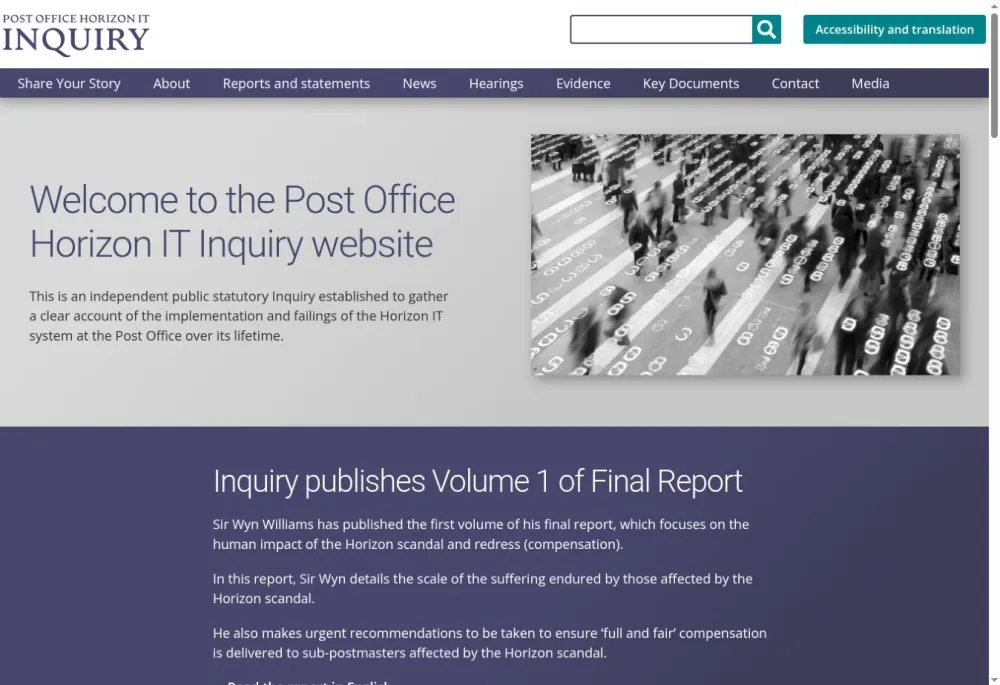
Discovery included user personas and a review of comparable inquiry websites. Big Blue Door drew on experience from the Grenfell Tower Inquiry and Infected Blood Inquiry to identify useful patterns for public information, document access and navigation. This gave the project a practical starting point while leaving room for the Commission’s own needs and identity.
Designing for direct access
The initial structure brought four principal sections together on one page: Introduction, Commissioner, Documents and FAQs. Section links allowed visitors to move directly to the information they needed. This approach reflected the brief’s emphasis on mobile use and limited connectivity, reducing the need to navigate through a deep hierarchy of pages.
Big Blue Door produced wireframes in Figma, explored different interactions and developed a new brand for the Commission. Desktop and mobile creative prototypes gave the FCDO team a concrete design to review and approve before development began.
Building and preparing for launch
The team delivered the Drupal 9 build through an agile approach, using Paragraphs to support flexible content development. Responsive layouts and WCAG 2.1 accessibility considerations formed part of the delivery brief. Google Translate, metadata and sitemap functionality supported wider access and discovery.
Before launch, the site underwent independent penetration testing by Dionach. The implementation also included additional protections for editorial access, including two-factor authentication. Big Blue Door trained the Commission’s team in the CMS ahead of the January 2021 launch.
The client’s contemporaneous testimonial described a product that met the brief and was delivered on time, highlighting the team’s support, expert advice and proactive account management.
Extending the public record
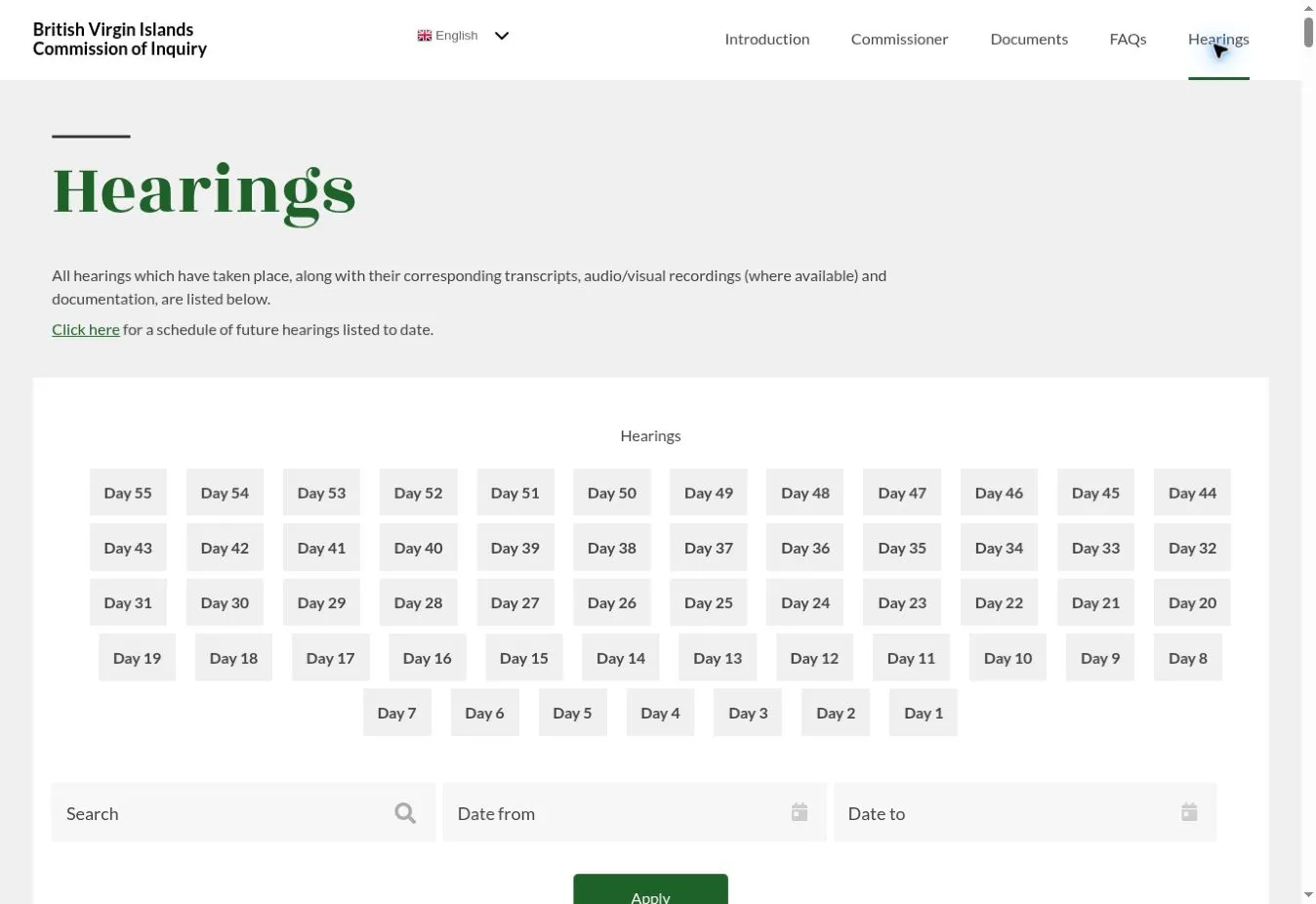
After launch, Big Blue Door developed a dedicated hearings section with date filtering and text search. Hearing records brought together summaries, transcripts and related documents, with links to recordings where available. This made a growing body of proceedings easier to navigate than a flat document list.
The live hearings page now lists Day 1 through Day 55. The documents section also provides search and filters for date, document type and language. These are tangible examples of how the platform developed beyond its compact launch scope and continues to provide access to the Commission’s published material.
Hosting, support and preservation
Big Blue Door’s original hosting service used AWS in the London region, with autoscaling, a content delivery network and backups and disaster recovery across separate availability zones. Jenkins supported automated deployments. The post-launch service included infrastructure and application maintenance, while monthly reports gave the client visibility of website use.
Why Drupal was chosen
Drupal gave the project a foundation that could support both a focused launch and a more substantial publishing service as the Commission’s needs developed. The original scope was deliberately compact, but the platform needed to accommodate documents, explanatory content and subsequent hearing records without forcing the team to begin again with a different system.
Big Blue Door implemented Drupal 9 with a Paragraphs approach to content assembly. This allowed the initial page to be built from defined sections, connecting the introduction, Commissioner profile, document listing and FAQs within a consistent design. It supported editorial flexibility while preserving a clear public presentation.
The later hearings work demonstrates the value of that extensibility. The site gained a dedicated area in which visitors could locate hearings by date or search term and reach the corresponding transcripts and supporting material. The public record could grow within the existing website rather than becoming an unrelated collection of links.
Drupal also supported the operational needs of a small publishing team. Training enabled Commission staff to manage the CMS, while Big Blue Door combined the build with controlled editorial access, independent security testing and an established hosting and deployment process. These choices addressed the practical demands of a sensitive public-sector project: content needed to be straightforward to maintain, public information needed to be easy to reach, and access to publishing tools needed appropriate safeguards.
Technical Specifications
Drupal version:
Paragraphs supported flexible assembly of the main content sections within the agreed design. This suited the single-page launch structure and its mix of introductory text, people, documents and FAQs.
Metatag and XML sitemap functionality supported discoverability, giving the project tools for descriptive metadata and search-engine indexing. The original delivery record names these capabilities; no particular XML sitemap package is asserted here.
Google Translate provided an additional language-access option. It complemented the responsive website but should not be confused with professionally reviewed translations of inquiry material.
The visual design was developed specifically for the Commission. Big Blue Door created a green colour palette and combined Rozha One and Lato typography, refining desktop and mobile prototypes with FCDO stakeholders. No specialist Drupal distribution or off-the-shelf theme is used.