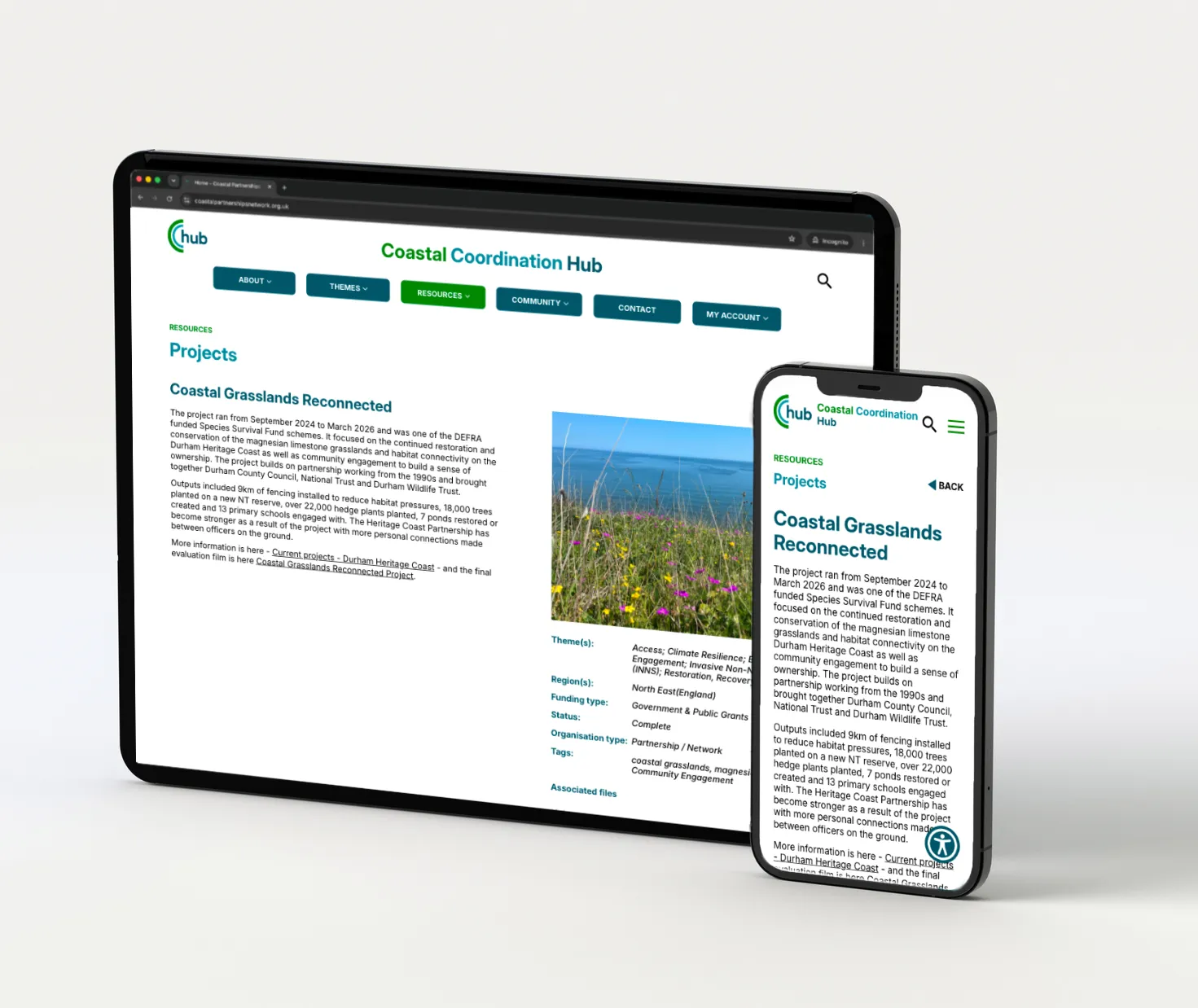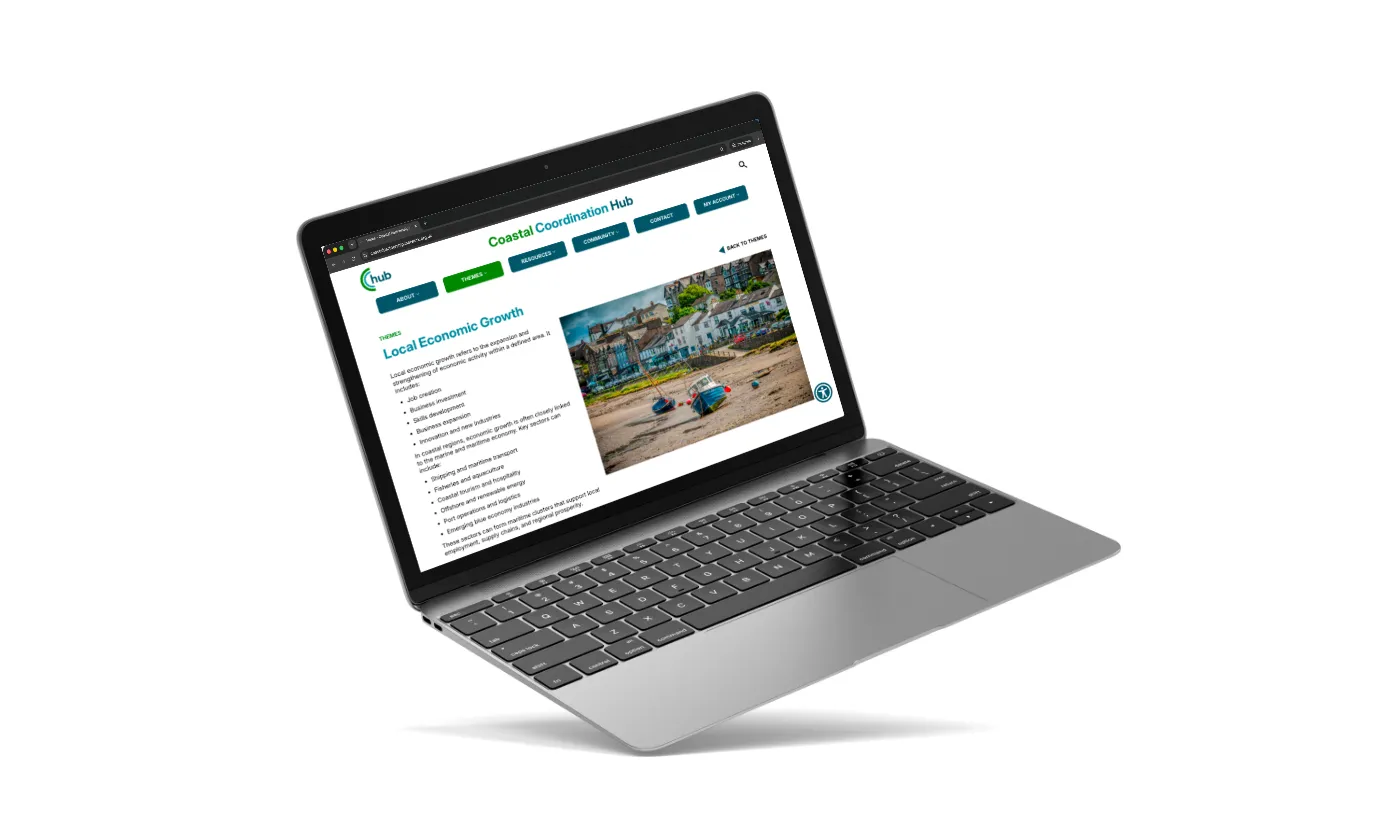
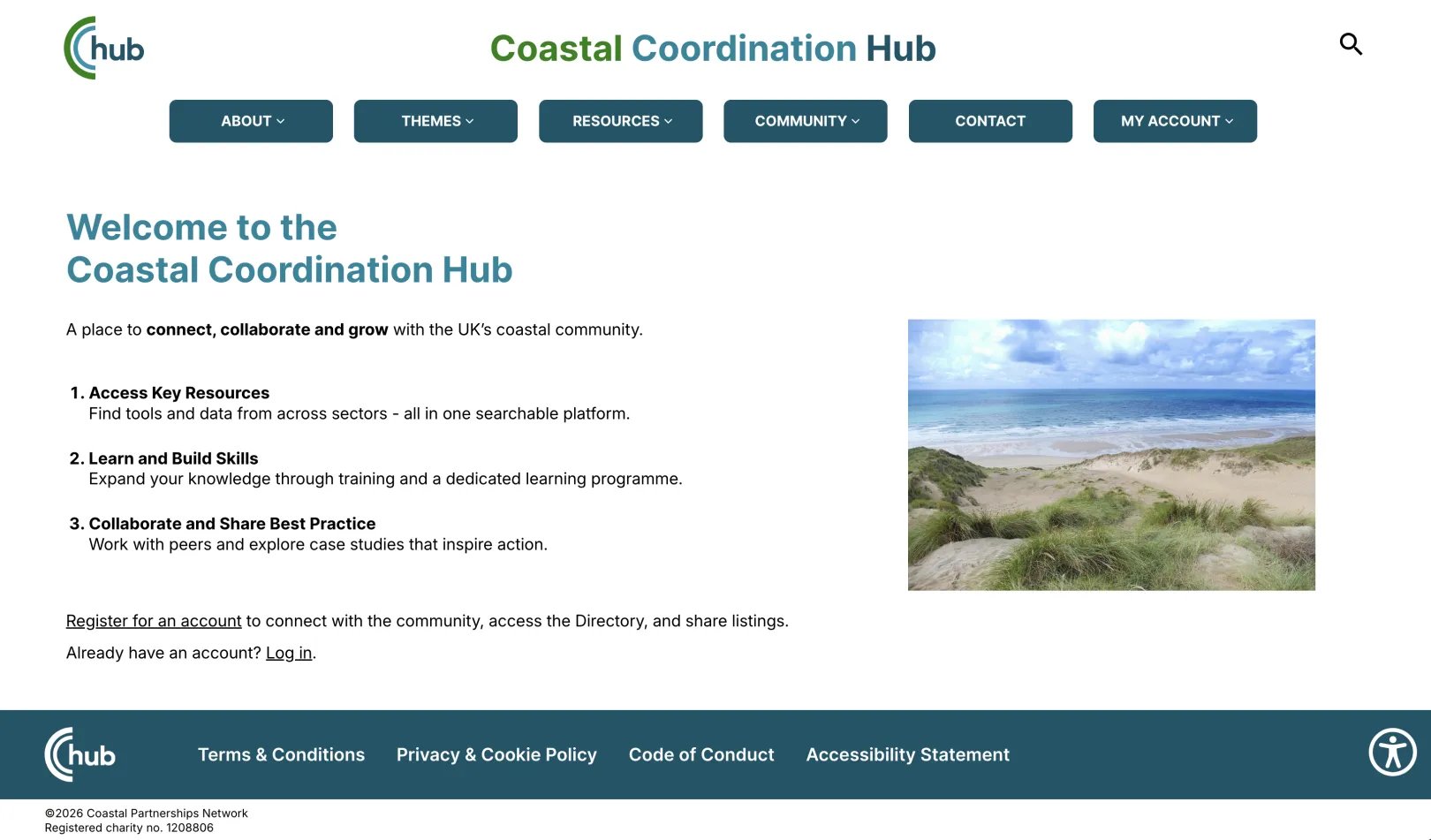
The Coastal Coordination Hub (CCH) is an online platform for: sharing coastal projects, research, publications, and consultations; learning about funding, training, opportunities and events; and a place to engage in discussion. It brings together information typically spread across many sources and gives people working within the coastal sector a single place to share (and/or signpost to) their work.
The Coastal Partnerships Network (CPN) came to Drupal Centric with an existing incomplete Drupal 10 site and a detailed action log of changes, some of them urgent. They didn't want a rebuild. The work had to happen inside the existing Drupal CMS, and they also needed long-term support and a clear upgrade path.
About the project
Improving and future-proofing an established Drupal platform
CPN had carried out a thorough review of the site and recorded every change in an action log, backed up by detailed specification documents. The work covered template (Twig) updates, restructured page designs, new page layouts, and improvements to existing features, with a tight deadline for the urgent items.
Drupal Centric:
- Reviewed the action log and gave a fully itemised quote, including a separate price for the urgent changes and a quote for ongoing maintenance.
- Moved the site under Git version control and Composer-based dependency management.
- Restructured and simplified the custom code to follow standard Drupal practice.
- Delivered the requested changes to templates, layouts, content types and functionality.
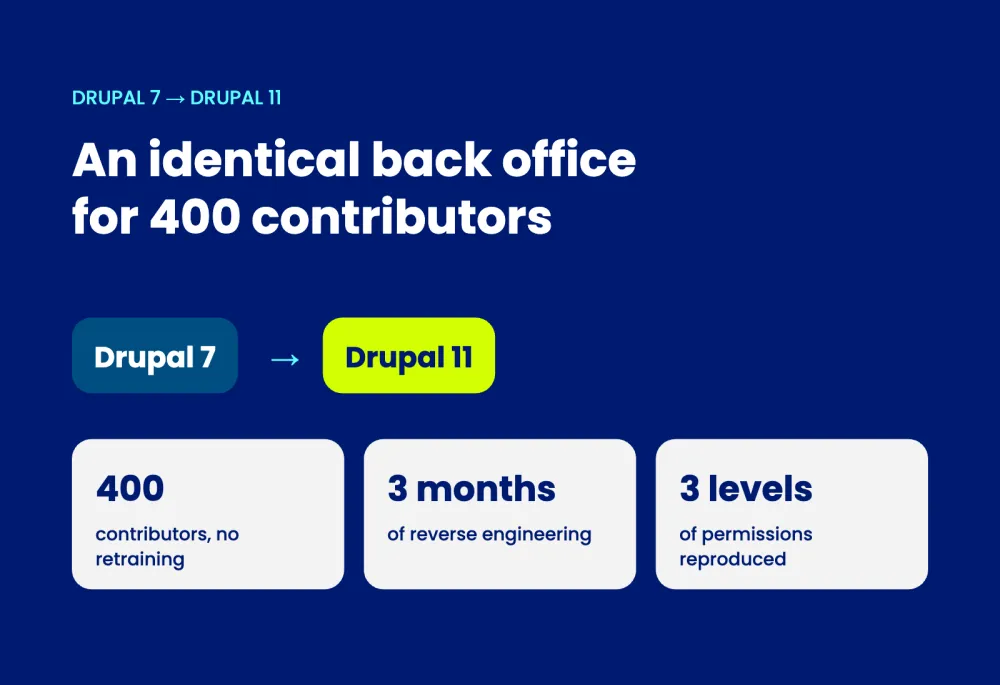
- Upgraded the site from Drupal 10 to Drupal 11 and cleared out legacy technical debt.
- Provides ongoing support and maintenance.
Requirements
- A flexible CMS for many content types: research, projects, publications, consultations, funding, training, opportunities, events and discussions; each with its own fields, filters and listing tables.
- A registration and log-in journey that turns visitors into registered contributors, with a redesigned sign-up form, log-in by email address, a surname field, and a user dashboard.
- Editorial control over everything users submit, through content moderation and admin notifications.
- A community discussion space where topics and replies link to listings, users can report posts, and followers get email notifications.
- Content organised by theme and by region, with a multi-value region field so users can find what's relevant to them.
- A platform that meets accessibility requirements and stays secure and maintainable over the long term.
Outcomes
- Joined-up content. Every listing type is tagged by theme, region and lead organisation, and has consistent filtered tables with a "Clear" button, so content links up across the site instead of sitting in silos.
- Personal user dashboards. Each user sees their draft, under-review and published listings/discussion posts in one table, along with the listings and discussions they've bookmarked.
- Faster editorial workflows. Moderation, automatic unpublishing of user submissions, admin email alerts with direct moderation links, mail logging, and a styled confirmation before content is deleted.
- Better engagement. Discussion panels on event and listing pages, reply notifications for followers, a pop-up for reporting posts, and a training video that provides step-by-step instructions on how to add listings/discussion posts.
- Accessibility. Colour-contrast fixes, a corrected heading order, labelled and ARIA-annotated forms, accessible tables, an accessibility statement, and an accessibility toolbar.
- A refreshed brand. Refreshed logo, colour scheme, favicon, menus, footer, homepage, and About section (Background, Function, Vision/Mission/Objectives, Created & Funded By).
- A durable foundation. Upgraded to Drupal 11, audited for PHP 8.4 compatibility, deprecated code replaced, and core and contrib modules kept up to date.
Why Drupal was chosen
CCH content is functionally complex; it has many connected content types, user-submitted content with moderation, community discussions, role-based dashboards, and filtering by theme and region. Drupal's entity, taxonomy and Views systems are built for this kind of content model. Content moderation and granular permissions let CPN open the site up to registered users without giving up editorial control.
Because the site was already on Drupal, CPN could extend and restructure it rather than start again. New content types, moderation states, layouts and user journeys all went into the current site without a rebuild. Moving it to Git and Composer and applying standard Drupal practice made the codebase easier to maintain. It also meant the upgrade from Drupal 10 to 11 could be done as a routine step.
The CPN website and the Coastal Coordination Hub (also overseen by CPN) now run on the same well-maintained Drupal foundation.
Technical Specifications
Drupal version:
Key modules/theme/distribution used:
Business problems these modules solved
- One CMS now manages eight or more content types, where coordination information used to be scattered.
- Users can submit their own content, but admins still decide what gets published. Nothing goes live without approval.
- CPN can see who contributes, bookmarks and joins discussions, broken down by theme and region.
- Editors can manage pages, resources and publications with less developer help, using Paragraphs, the IMCE file browser and node cloning.
- CAPTCHA/reCAPTCHA, flood control on log-ins, and post reporting keep spam and abuse down.
- Moving to Drupal 11 keeps the site on supported software for the long term.