Sector(s)
Team Members
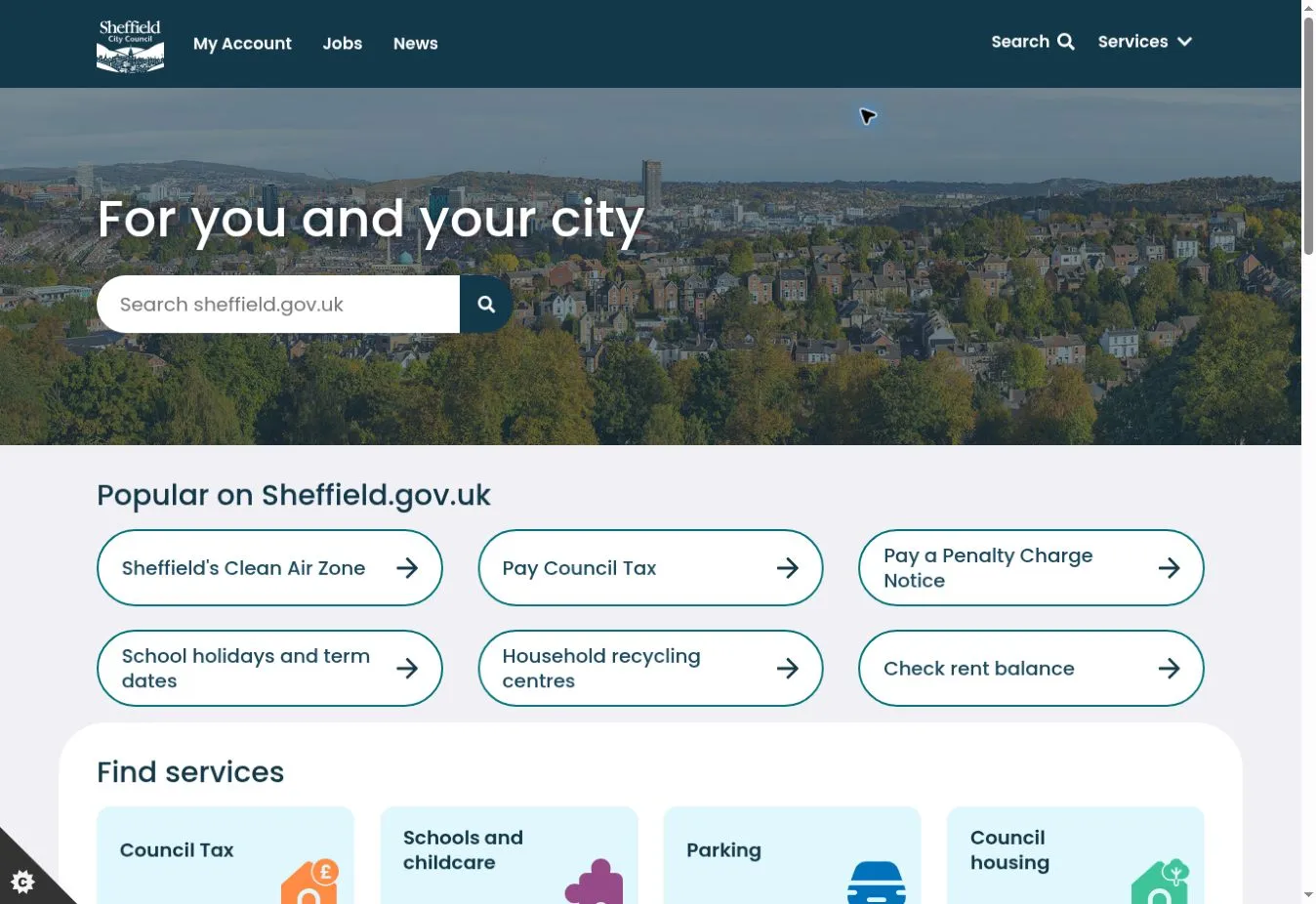
The initial website and intranet launched in May 2022 following a six-month delivery programme. Big Blue Door worked with Sheffield’s digital transformation, IT and communications teams on research, migration, implementation, training and the transition to supported AWS hosting.
The work brought together public information, search, online forms, geographic data and authenticated staff access. Editorial roles and approval workflows supported controlled publishing across a large content estate. The relationship then developed beyond the original launch: Big Blue Door helped establish and support LocalGov Drupal Microsites, added exhibition functionality and continued to maintain the platforms. Sheffield’s own team and other specialist partners have also contributed to the estate’s ongoing development, making collaboration an important part of the project’s long-term value.
Business case and background
Sheffield needed to replace a legacy platform that was expensive and complex to develop and operate. Adobe Experience Manager required specialist expertise, while the existing hosting and deployment arrangements placed a substantial support burden on the Council’s internal team. The change formed part of a wider transformation programme to improve digital customer journeys and access to services.
The Council wanted more control over its platform and greater scope for its own staff to contribute. It also needed an external partner to take responsibility for hosting, deployment processes and ongoing technical support, allowing internal specialists to concentrate on content, user experience and service needs.
Continuity mattered. The first phase prioritised moving the public website and intranet onto a sustainable foundation, carrying forward the previous look and feel where that supported speed and efficiency. Subsequent phases could then improve presentation and make fuller use of LocalGov Drupal’s features. The growing need for campaign and service websites added another requirement: retain distinct identities and audiences while bringing their technical operation into a more consistent, supported approach.
About the project
Moving a substantial content estate
The first objective was to replace the legacy public website and intranet while preserving access to existing information. Big Blue Door delivered the initial project over six months using an Agile approach and fortnightly development sprints. Research and close collaboration with the Council’s digital transformation, IT and communications teams helped align the build with organisational needs.
Approximately 8,000 pages were migrated from Adobe Experience Manager into Drupal, with associated URL redirects. The initial release prioritised continuity and a responsive presentation, establishing the platform for later improvements rather than making every possible design change part of the migration.
Supporting residents and Council staff
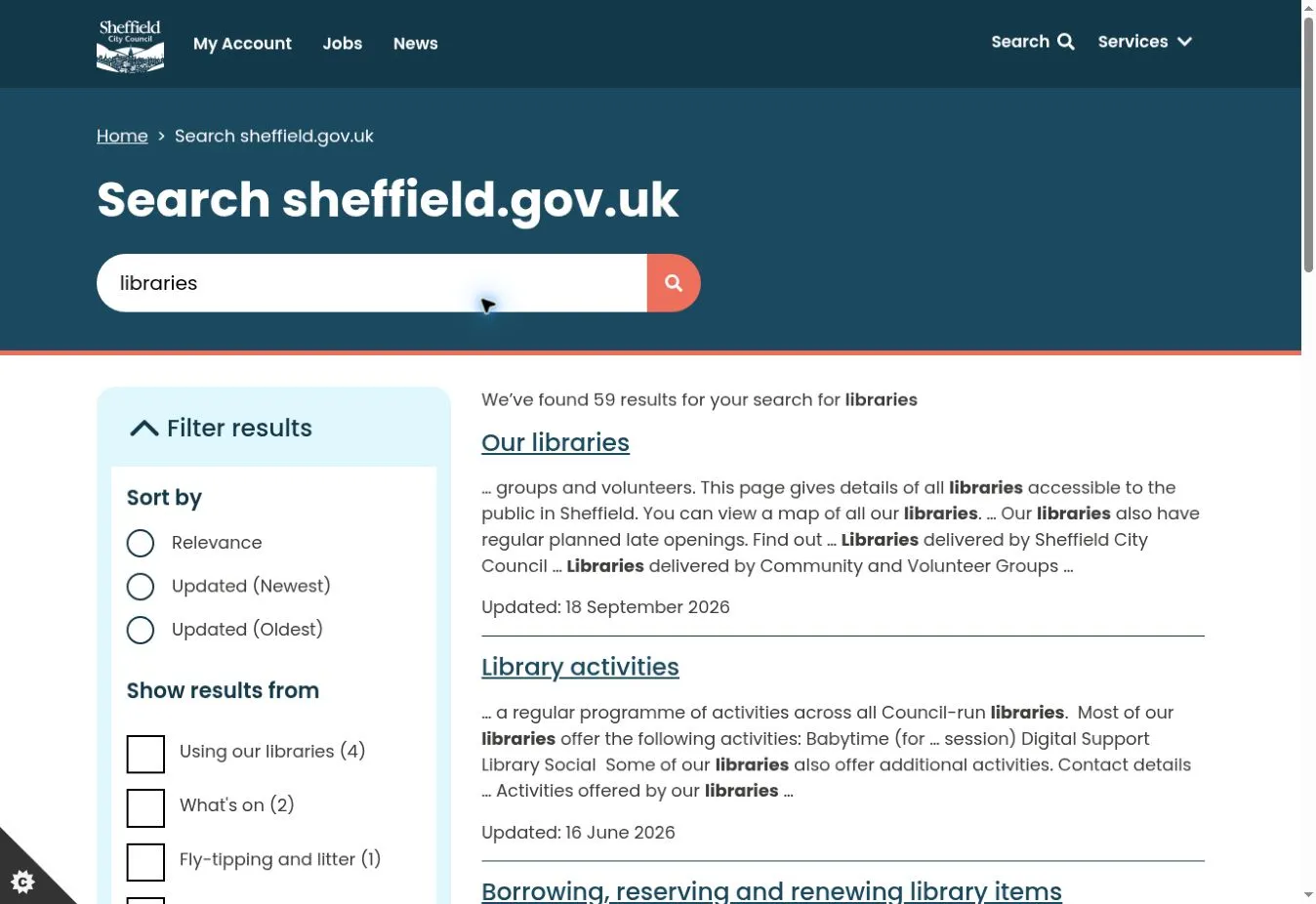
The original delivery included search and complex online forms, alongside integrations that displayed local information through interactive maps. The geographic data covered examples such as councillors, libraries, bin collections and polling stations.
The intranet extended the programme to staff information. Single sign-on supported authenticated access, while role-based editorial controls allowed wider staff to prepare drafts and reserved publication approval for content administrators. Training helped regular CMS users take ownership of their work, supported by workflows designed to make changes traceable and auditable.
Accessibility was a delivery requirement, with work undertaken to WCAG 2.1 guidelines and additional font-size and contrast controls included in the original implementation.
Extending into LocalGov Drupal Microsites
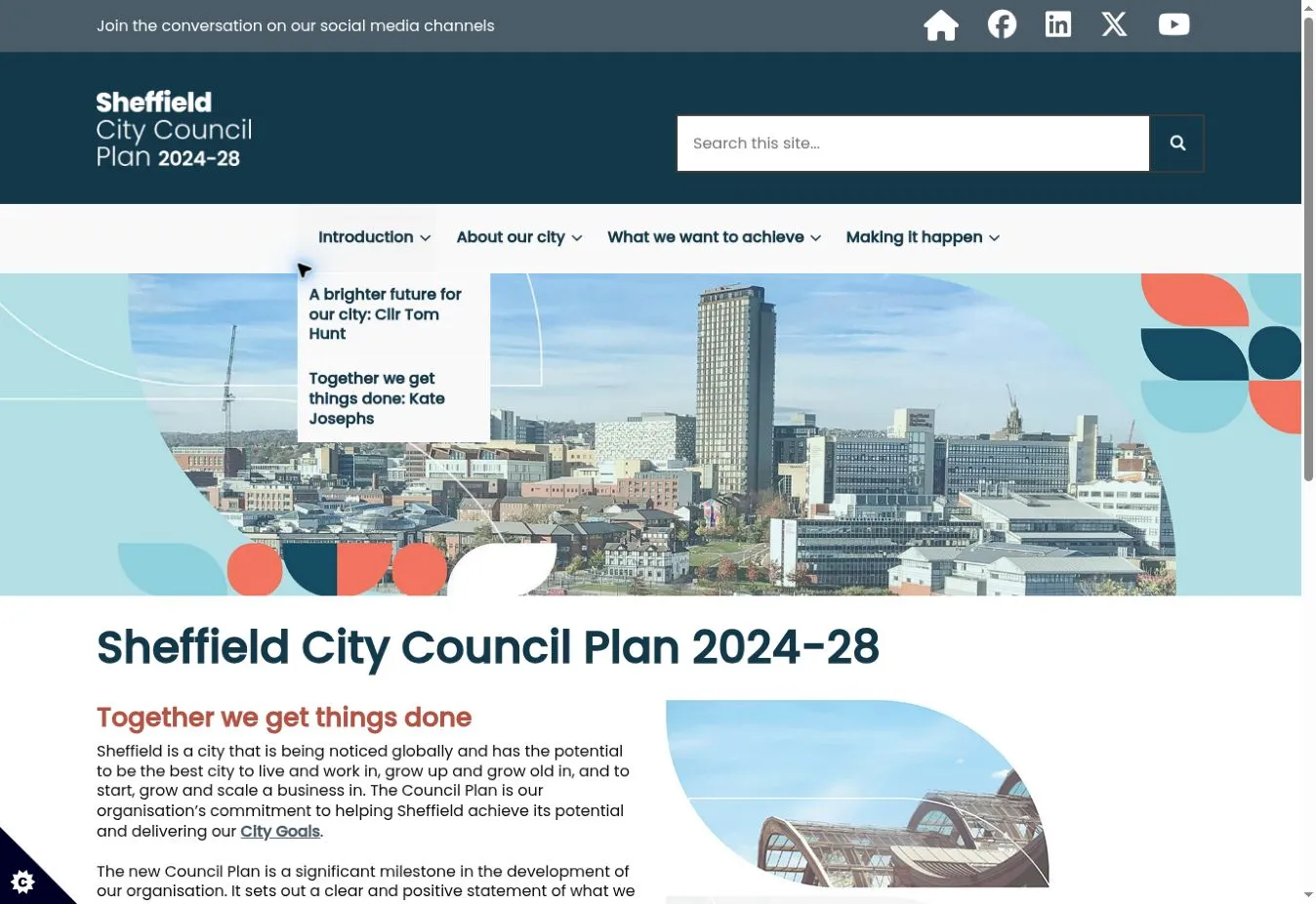
The partnership subsequently established a microsites platform for service and campaign websites. A February 2024 release confirmed configuration for Council Plan and Lifelong Learning, public availability of Fostering, and shared theme, navigation and layout changes.
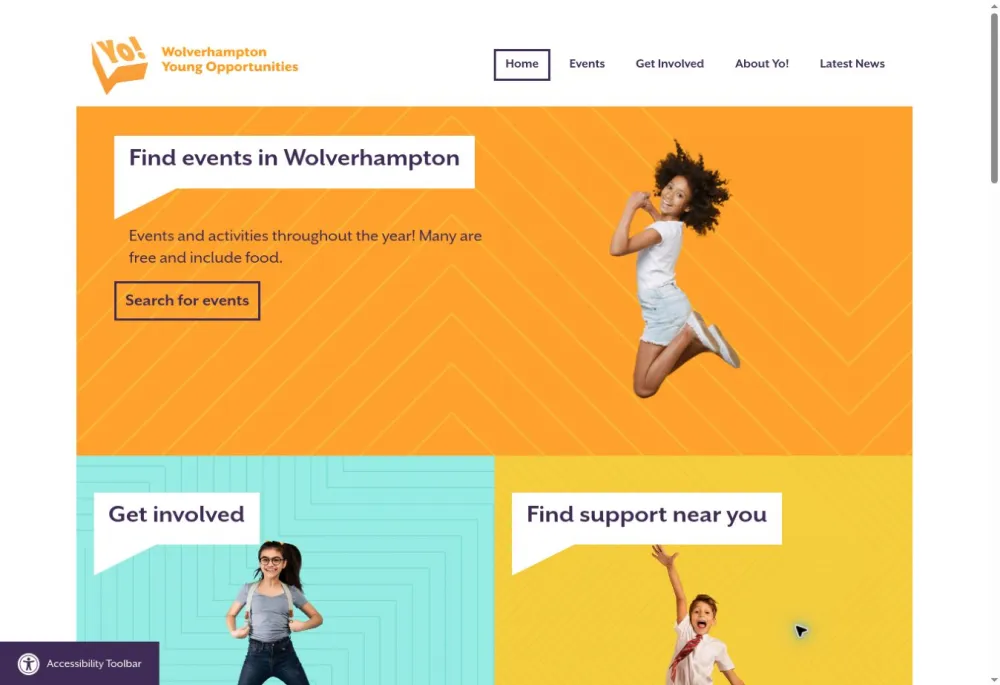
The supported portfolio now spans the 17 sites identified for this case study, including Care Academy, Culture, Health and Wellbeing, Local Area Committees, Pathways to Work, Warm Homes, Sheffield Markets and Breastfeeding South Yorkshire. These serve different audiences while using the LocalGov Drupal Microsites distribution.
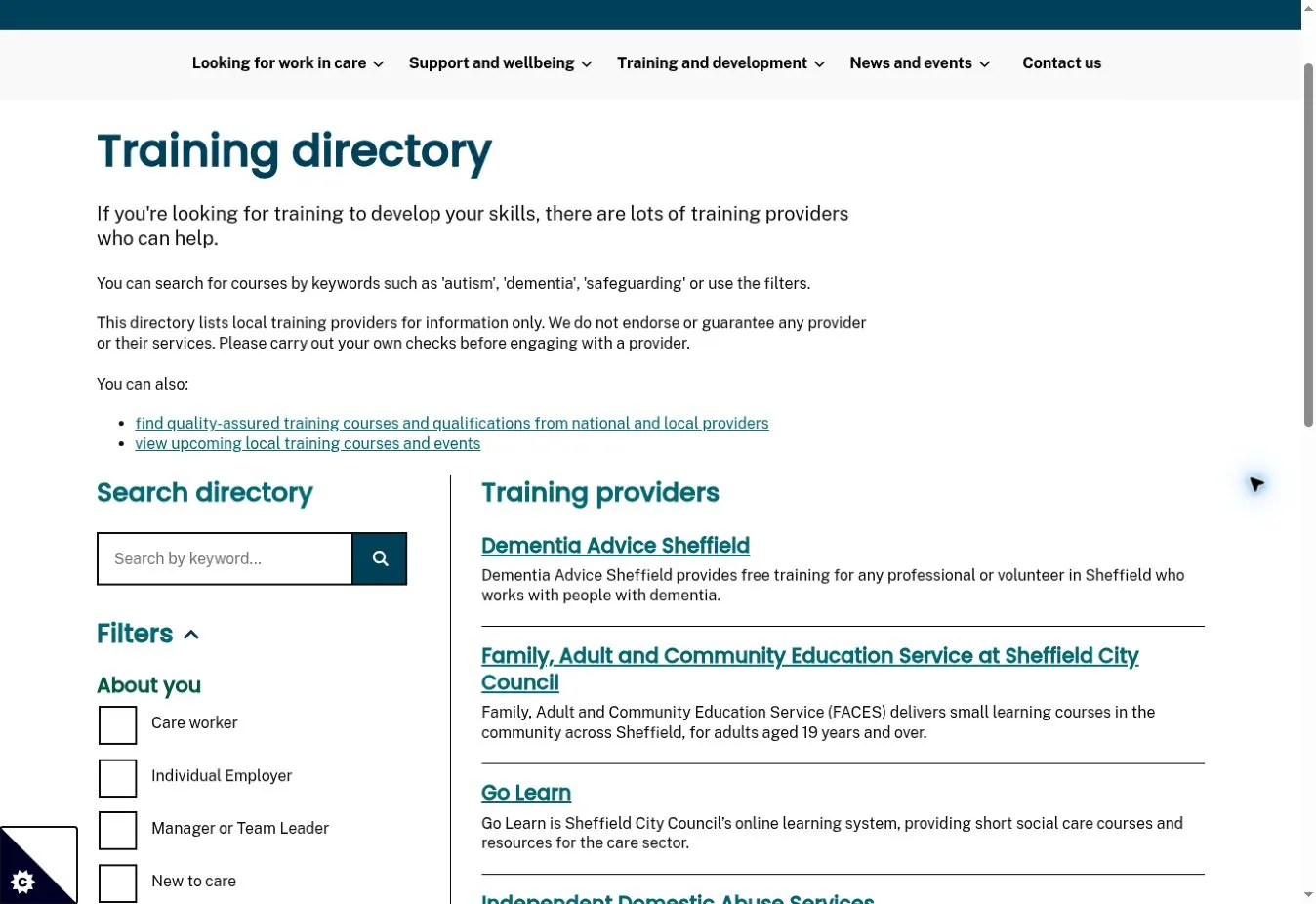
The range extends beyond campaign landing pages. Care Academy’s training directory provides keyword search and filters, while other sites combine news, events, service information and dedicated branding. Further project records also identify BiG Challenge within the wider microsites programme.
Continuing development and support
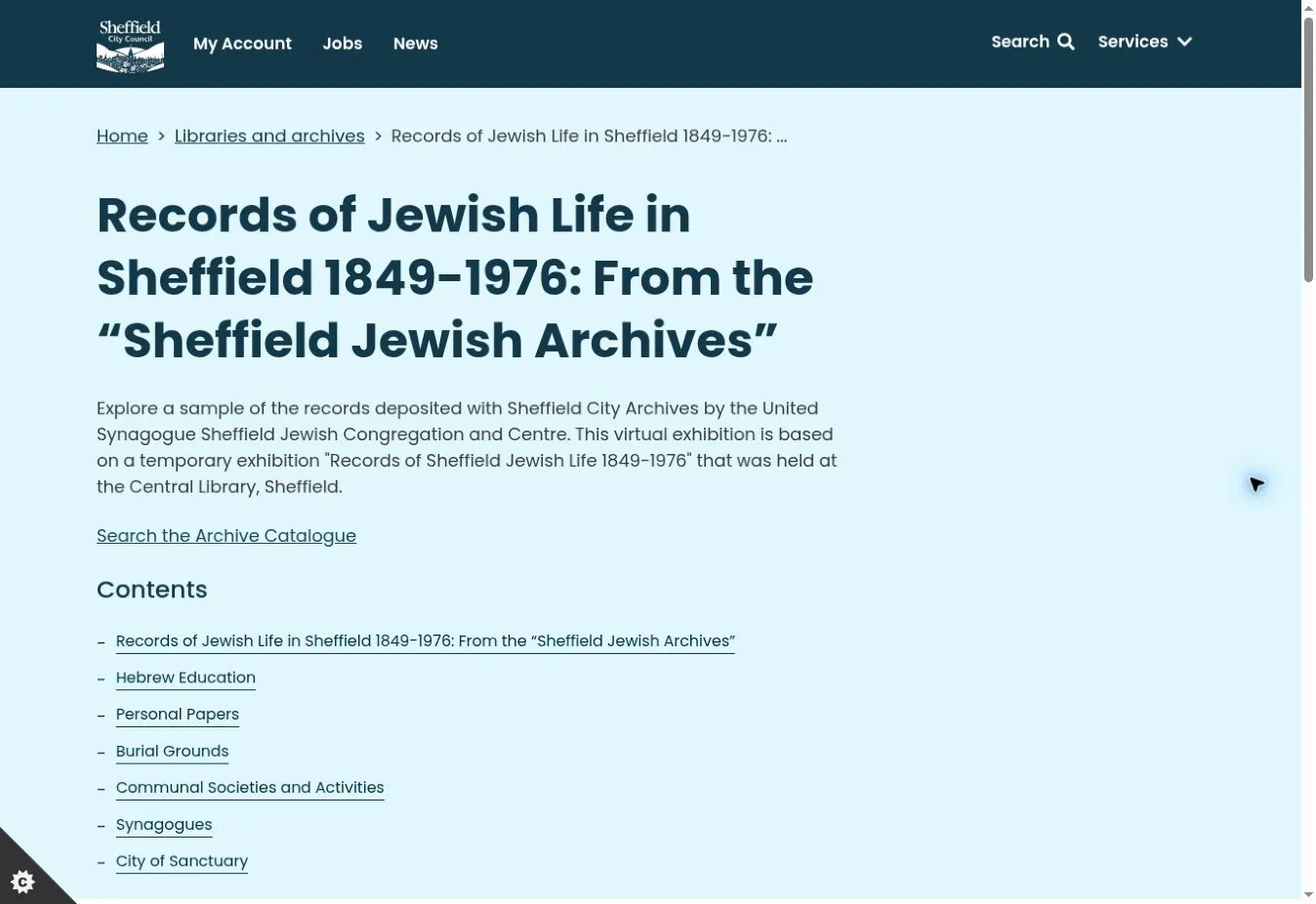
Big Blue Door has continued to support Sheffield’s evolving requirements. A new exhibition content type was completed and signed off in 2025; the public archives exhibition demonstrates its use for presenting a collection through structured sections. Later customer-journey and design work has involved the Council, Big Blue Door and other partners, with shared standards and deployment processes supporting coordinated changes.
Hosting, support and maintenance continue across the estate. The original AWS implementation included autoscaling, a CDN and backups and disaster recovery across separate availability zones. Ongoing work covers infrastructure and application updates, service-desk support and reporting against agreed service arrangements. Release records confirm continued Drupal maintenance, including a completed microsites deployment containing Drupal 10.6.12 in June 2026.
Outcome
Sheffield gained a replacement corporate website and intranet, migrated content and a platform its own team could help develop. The subsequent microsites programme shows how that foundation expanded to support a broad range of services and campaigns. The partnership combines Council ownership and growing internal capability with Big Blue Door’s development, hosting and operational support, enabling the estate to evolve after its initial launch.
Why Drupal was chosen
LocalGov Drupal matched both the Council’s immediate replacement requirement and its ambition to develop the service over time. It offered a foundation designed around local-government publishing, reducing the need to create every capability specifically for Sheffield. In the Council and Big Blue Door’s joint account of the project, cost, flexibility and the opportunity to collaborate were central reasons for the move.
The open-source approach supported a mixed delivery team. Sheffield could develop internal skills, commission specialist help when needed and work with more than one supplier. The Council’s team initially built confidence through theming work, then took on a broader role alongside agency developers. Shared tools and agreed development processes supported that collaboration.
Drupal also provided the flexibility to meet requirements beyond standard public service pages. The project combined a large content migration with editorial permissions, forms, search, geographic information and single sign-on. Applying LocalGov Drupal to the intranet extended its use to staff-facing information, with authenticated access where required.
For the wider estate, LocalGov Drupal Microsites provided a complementary distribution for managing multiple websites. It allows distinct domains, content, editors and visual identities within a centrally maintained platform. This suited Sheffield’s mix of service, campaign and partnership sites, while giving the Council a common technical foundation on which to build. LocalGov Drupal Microsites.
Technical Specifications
Drupal version:
Key modules/theme/distribution used:
LocalGov Drupal provided the base for the public website and intranet. Sheffield’s implementation combined that foundation with custom content types and theming to meet its existing content and service requirements.
LocalGov Drupal Microsites supported the later portfolio of separately branded sites. Big Blue Door’s delivered work included platform and environment configuration, a custom theme, header and menu changes, pre-header and footer presentation, and hero-image styling. These adaptations helped the Council use common technology across different public-facing identities.
SimpleSAMLphp Authentication, together with the SimpleSAMLphp library and Microsoft ADFS, supported the original single sign-on implementation. Editorial permissions distinguished staff who could draft content from administrators authorised to approve and publish it.
The initial project also included Big Blue Door’s accessibility controls for font size and colour contrast. AWS hosting in London, autoscaling, a content delivery network, backups and disaster-recovery arrangements supported operation of the service, with Jenkins used for automated deployments. These operational elements complemented the Drupal application and its publishing workflows.