Sector(s)
Team Members
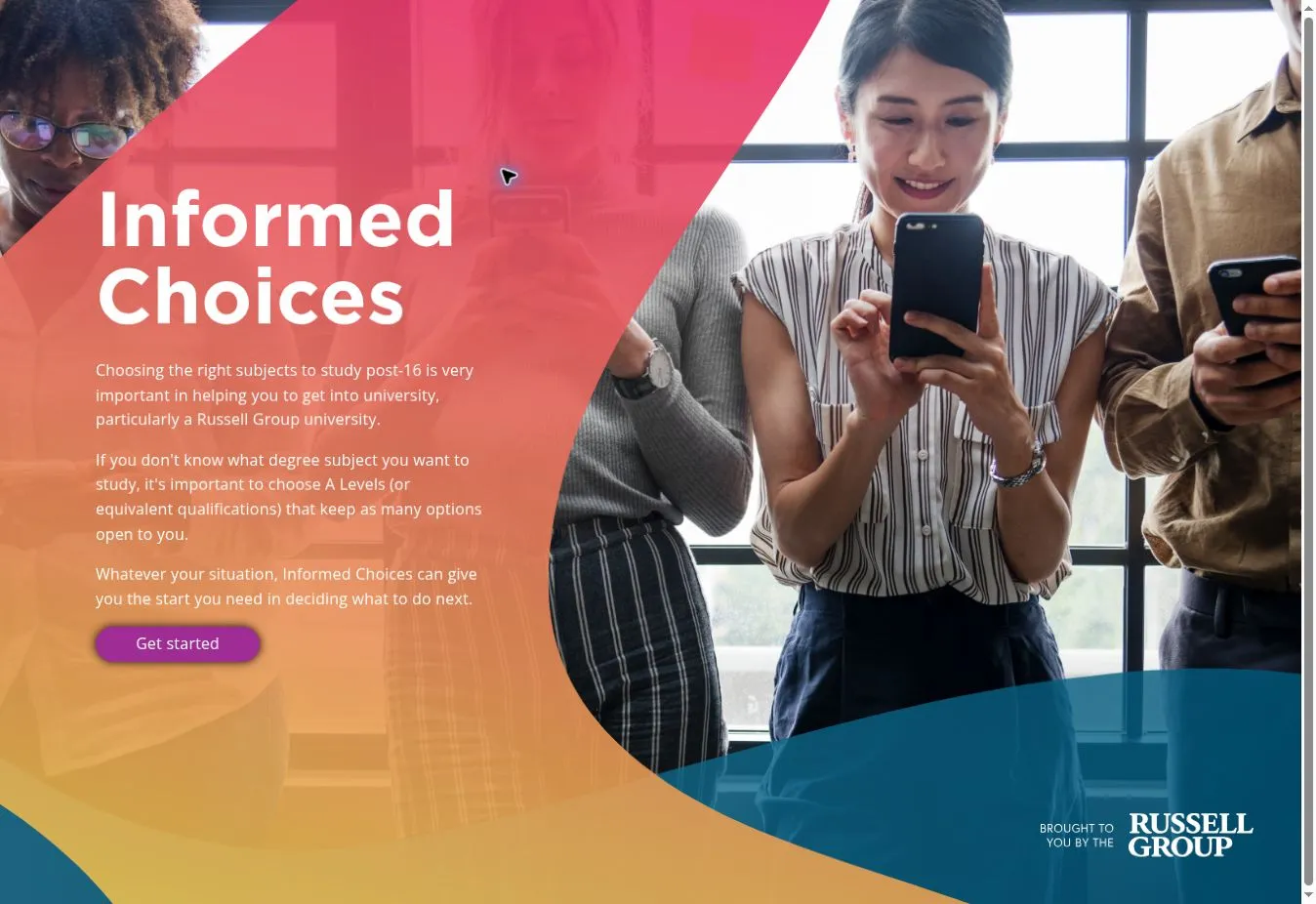
The Russell Group represents 24 leading UK universities. Its Informed Choices resource helps pupils, parents, teachers and advisers understand how post-16 subject decisions can affect future study options.
Beginning in April 2018, Big Blue Door led wireframing and design and developed an interactive website in Drupal 8. The work brought together the Russell Group’s subject expertise, input from its member universities and testing with more than 600 Year 10 pupils. The service launched in 2019.
Big Blue Door’s involvement extended beyond the public interface to the content management tools, documentation, hosting and continuing support. Subsequent work has included CMS refresher training, broken-link reporting and Drupal maintenance, supporting the service as its content and technical platform evolve.
Business case and background
Choosing subjects at school can influence which university courses a pupil can pursue. Yet a young person making those decisions may have little knowledge of degree subjects or how entry requirements differ. Parents and teachers also need clear information to support those conversations.
The Russell Group had published Informed Choices as a printed and downloadable PDF guide since 2011. The next step was to make its advice easier to explore around an individual pupil’s interests. Some pupils already knew the degree they wanted to study; others knew which school subjects they enjoyed but had not identified a university course. The website needed to serve both starting points.
The requirement was therefore more than a digital version of the publication. It called for a usable relationship between subject choices and degree information, supported by clear explanations and routes to further research. The Russell Group also needed to maintain that relationship as guidance changed. The resulting service offers general guidance and encourages visitors to check individual universities’ specific requirements, keeping its role clear within the wider process of choosing a course.
About the project
Making two starting points equally useful
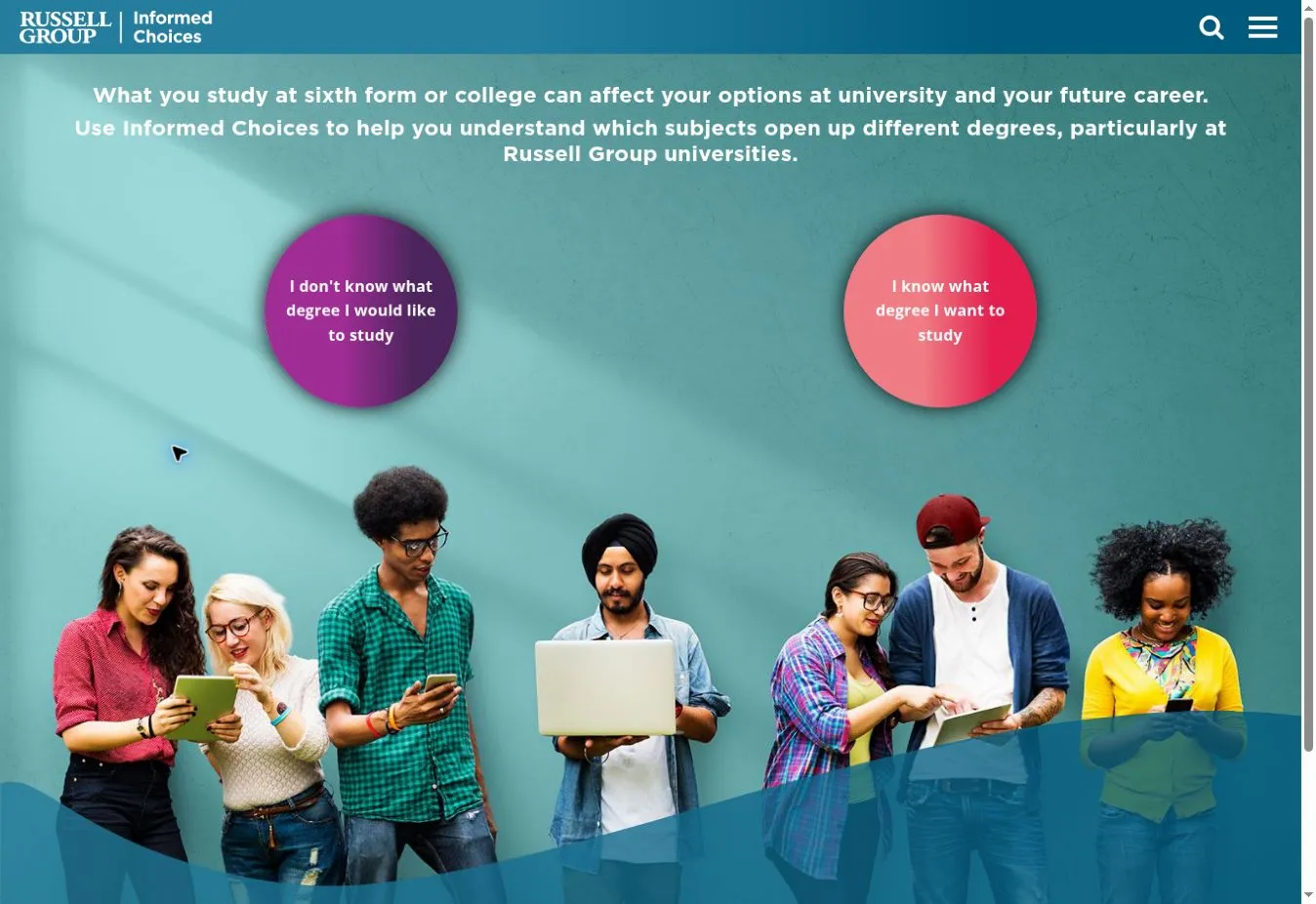
The main goal was to help young people understand their options before committing to post-16 subjects. Big Blue Door built two complementary routes through the guidance. Pupils who have a degree in mind can explore the subjects associated with it. Those who are still considering their future can start with a combination of subjects and discover degree areas that may be open to them.
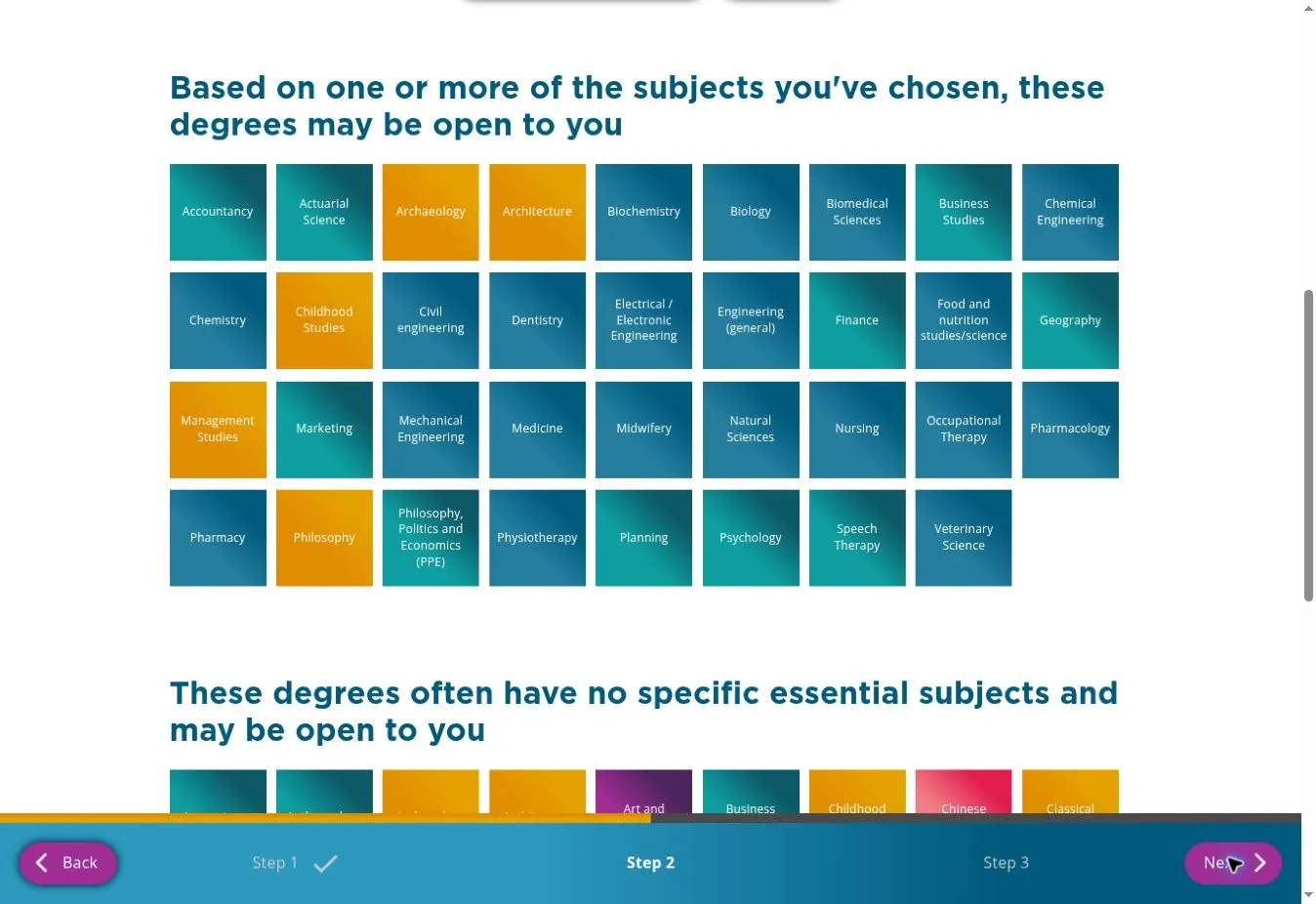
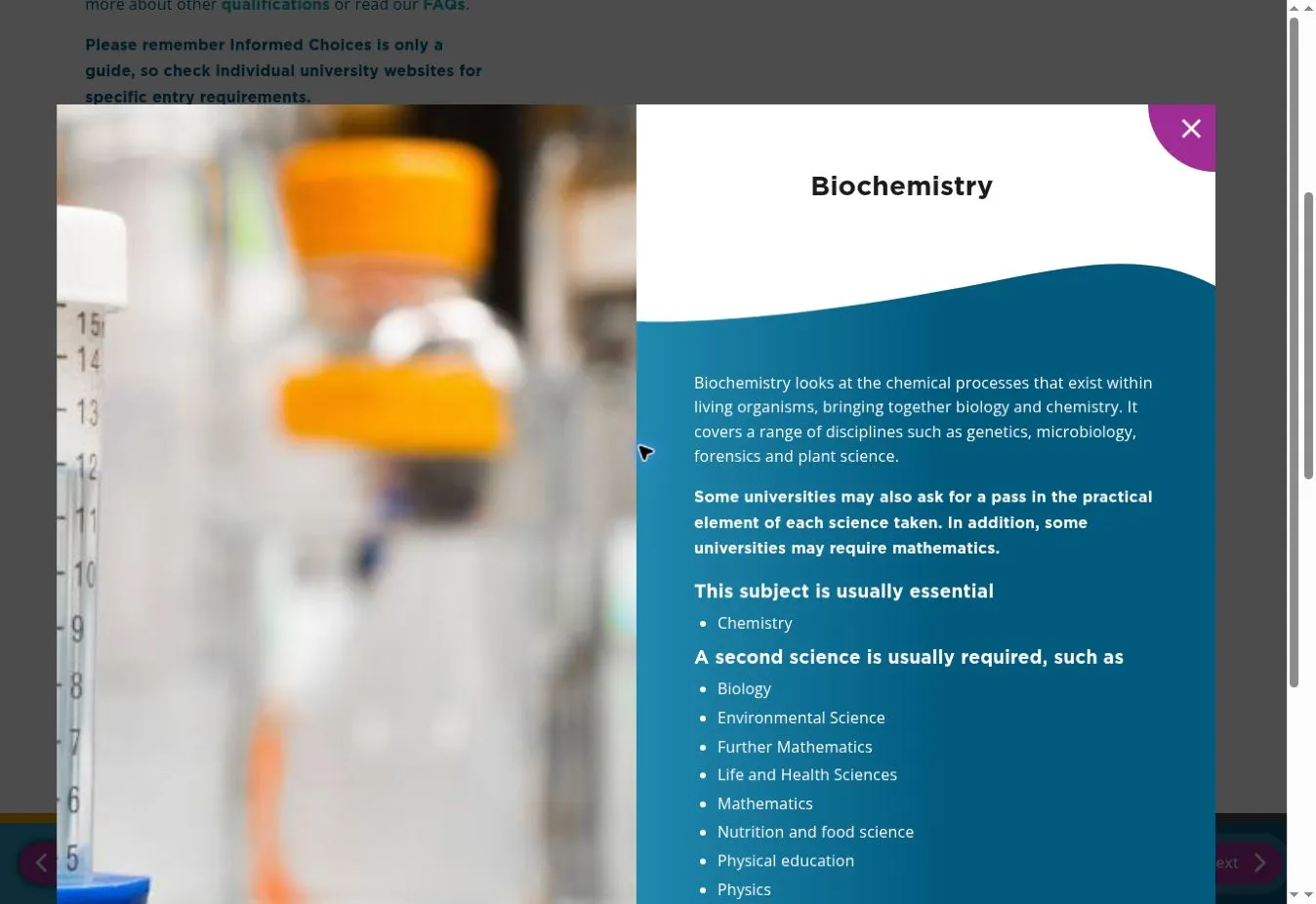
The subject-led journey encourages exploration. Visitors can select subjects, review possible degrees and choose again. Degree details explain the subject area and its preparation requirements, with onward links for further research. The current service also points visitors towards information on other qualifications and makes clear that individual universities’ entry requirements must be checked.
Giving editors control of the guidance
Behind the interface, degree records hold descriptions and subject-matching rules. The CMS guide documents separate controls for required subjects, alternative requirements and recommended subjects. This makes the relationships that drive the tool part of the editable content, alongside the explanatory copy.
Printable outputs extend the usefulness of the service beyond a single visit. The delivered CMS includes settings for degree-specific and general print content, and the live results page offers a download route. Pupils can use the guidance as a starting point for further research and conversations with parents or teachers.
Designing and delivering with users
Work began in April 2018, with a project kick-off at the end of that month and a functional specification in May. Big Blue Door led an extensive wireframing and design phase before developing the Drupal 8 website through agile sprints. Engagement ran alongside development, bringing in the Russell Group and its 24 member universities.
Testing involved more than 600 Year 10 pupils across the country. The project case study reports that 94% of pupils found the information on degree subject requirements useful, while 93% of teachers said they would recommend the website to colleagues and students. These findings describe feedback on the resource, rather than subsequent university admissions outcomes.
The service launched in 2019. A July 2019 account by the Russell Group’s Director of Policy describes its early open-beta period and continued collection of feedback. This approach gave the organisation a way to improve the resource through use, as well as through the initial research.
Supporting the service after launch
Big Blue Door supplied scalable hosting on Amazon Web Services in London and continued hosting, support and maintenance. The existing project case study reports more than 40,000 users in the first two days, alongside national media coverage, demonstrating the level of early interest in the new resource.
The relationship has continued beyond launch. April 2024 account records document completed CMS refresher training, with the recording shared for future reference, and useful broken-link reporting. Subsequent records and Slack delivery messages document ongoing Drupal updates. By June 2026, the account record listed the Informed Choices site on Drupal 10.6.9 following a May deployment.
The result is a maintained interactive service that turns general subject guidance into something pupils can explore around their own interests, supported by editorial tools that let the Russell Group keep the underlying information under its control.
Why Drupal was chosen
Drupal provided a foundation for combining an interactive guidance service with content that the Russell Group could maintain itself. The project needed to represent degrees, school subjects and the relationships between them in a structured way. A conventional collection of article pages would have left pupils to work out those connections for themselves.
Big Blue Door used Drupal’s content model to make degree information and subject requirements manageable within the CMS. Editors could distinguish essential subjects, alternative combinations and recommended preparation. Those relationships supported the public journeys, allowing the same underlying information to help pupils explore a degree or consider the options associated with a set of subjects.
The platform also supported the wider explanatory content surrounding the tool. Reusable page components gave editors a consistent way to assemble guidance, questions and answers, images and links. Revisions provided a means to record and revisit changes. Together, these capabilities helped make ongoing content maintenance part of normal editorial work.
The original Drupal 8 implementation also provided a basis for continued technical development. Later support records document maintenance on Drupal 10, alongside training and operational support. For a service whose value depends on remaining available and keeping its guidance useful, the combination of structured content, editorial control and continuing platform maintenance was central to the solution.
Technical Specifications
Drupal version:
Paragraphs gave the Russell Group reusable building blocks for its guidance pages. The CMS guide documents expandable questions and answers, journey steps, text and image blocks, background-image sections and links. These components allow editors to vary the presentation of a page within an established design.
Drupal’s structured content and revision capabilities support the management of degree descriptions and subject relationships, alongside a history of editorial changes. The degree editing interface exposes the rules used to connect subjects with possible degree areas, so the guidance can be maintained through the CMS.
Project-specific functionality and a custom theme support the two-way journey and its visual presentation. The live site serves assets from Big Blue Door’s custom module and theme directories. The experience combines coloured degree tiles, explanatory overlays and a clear sequence of steps, while printable results help visitors retain guidance for later discussion.