Sector(s)
Team Members
Aston University needed dependable hosting for a new Drupal 8 website developed by another agency to replace its legacy Contensis platform. Big Blue Door joined the project in March 2020, designing a load-balanced, autoscaling AWS environment and testing its ability to handle Clearing traffic.
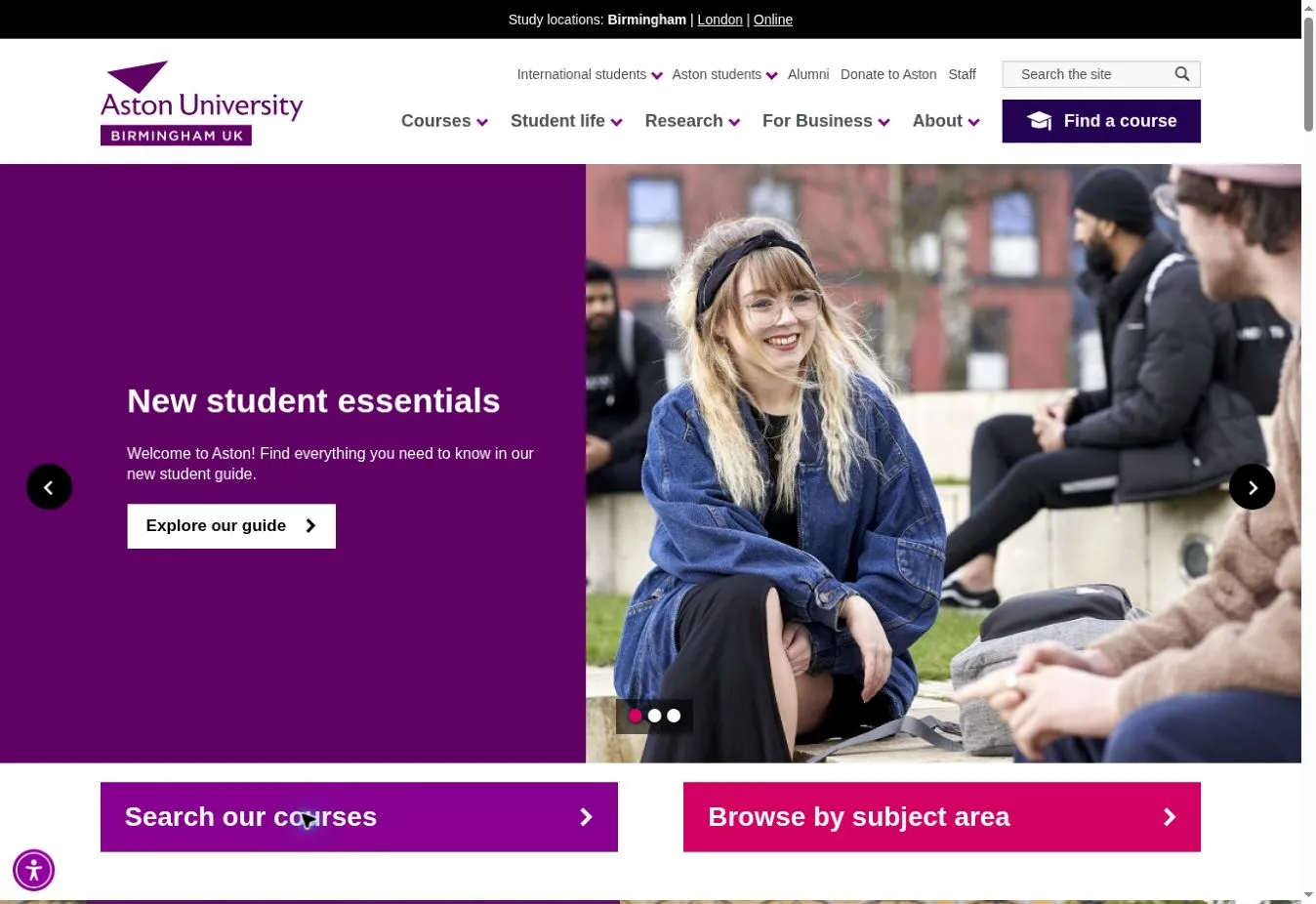
From autumn 2020, the relationship expanded to Drupal development, followed by sole Drupal agency support from spring 2021. Big Blue Door worked with Aston’s internal creative and content teams on new content types, reusable components, editorial improvements and continuing maintenance. Later delivery included a Drupal 10 upgrade, new homepage functionality, a dedicated PhD finder and a separate London Campus website built around the University’s established Drupal functionality.
Business case and background
University websites serve many audiences, but recruitment creates particularly time-sensitive demands. During UCAS Clearing, prospective students need access to course information when traffic can rise sharply. Aston had experienced stability problems in previous years, making infrastructure resilience an immediate priority for its move to Drupal.
The challenge extended beyond hosting. The University was moving information away from Contensis, managing legacy URLs and developing a new publishing environment for a wide range of departments and subject areas. Its content team needed flexible components and structured course information that could evolve without commissioning a complete rebuild for every change.
The London Campus created a further opportunity to reuse that investment. Aston needed a distinct online presence to introduce the new location, explain its courses and support international recruitment. It also needed independent content management while maintaining a recognisable relationship with the main University website. Big Blue Door’s work connected these requirements: reliable infrastructure for critical periods, incremental improvements to an established CMS and a separate Drupal implementation for a new campus.
About the project
Preparing for Clearing
Big Blue Door’s first task was to create hosting infrastructure for Aston’s new Drupal website. The AWS environment combined load balancing, autoscaling and a content delivery network for global caching. Load testing ahead of Clearing assessed the website’s ability to handle the anticipated surge in demand.
During the initial year the site recorded a 150% increase in traffic during Clearing 2020, with 100% uptime during that Clearing period.
Establishing a repeatable release process
Big Blue Door introduced an automated Jenkins deployment pipeline and a coordinated process for releasing work from both the original supplier and its own developers. Code review, staging deployment, University testing and approval preceded production releases, with post-deployment checks and shared communication.
This created a practical foundation for ongoing development. From autumn 2020, Big Blue Door delivered features in individual phases; from spring 2021 it became Aston’s sole Drupal support agency. Fortnightly development sprints, regular meetings and a prioritised backlog supported the evolving programme.
Extending the publishing platform
Working closely with Aston’s internal team, Big Blue Door developed new content types, paragraph components and improvements to editing and workflow. Legacy URL redirection supported the continuing move from the old website to the new platform.
The main site’s Drupal 10 upgrade was deployed in April 2024. In May 2024, the team released a new homepage content type and associated paragraph components, followed by refinements to image cropping and presentation. These changes gave the content team more control over the University’s principal recruitment and campaign pages.
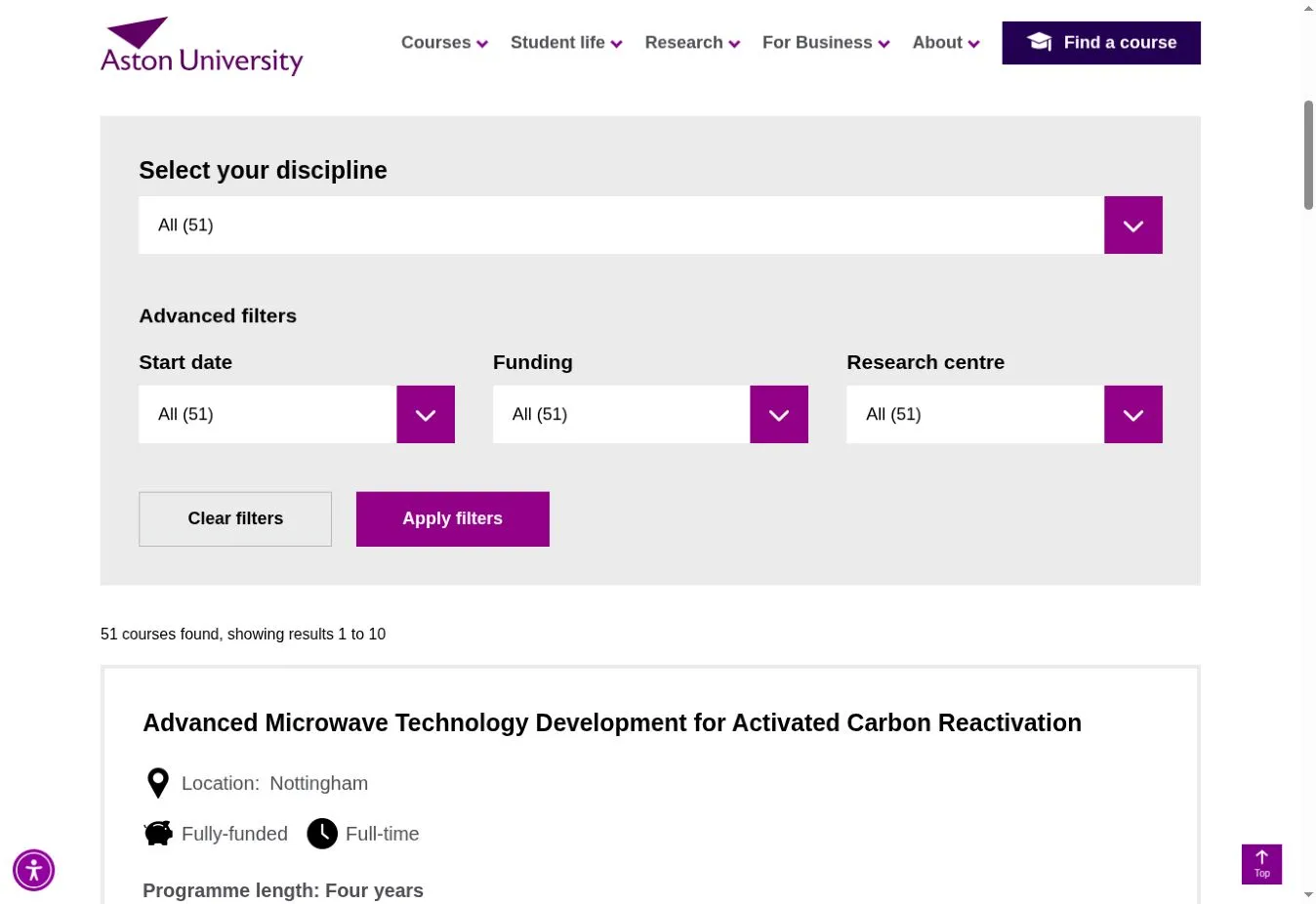
Later work included a dedicated PhD finder. Its research-specific filters and course information help prospective researchers explore opportunities by criteria relevant to postgraduate study, extending the platform beyond a single generic course-listing experience.
Supporting the London Campus launch
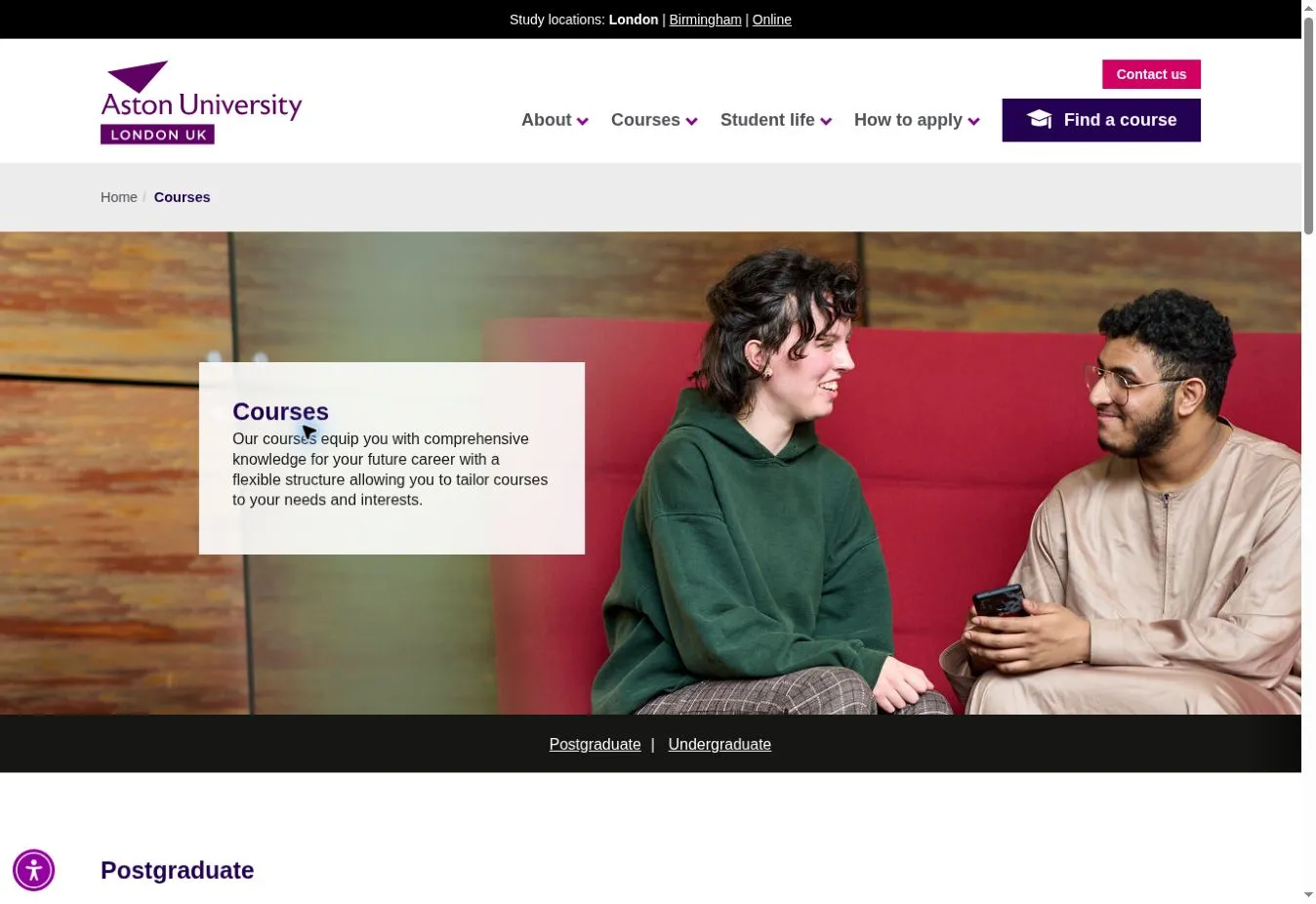
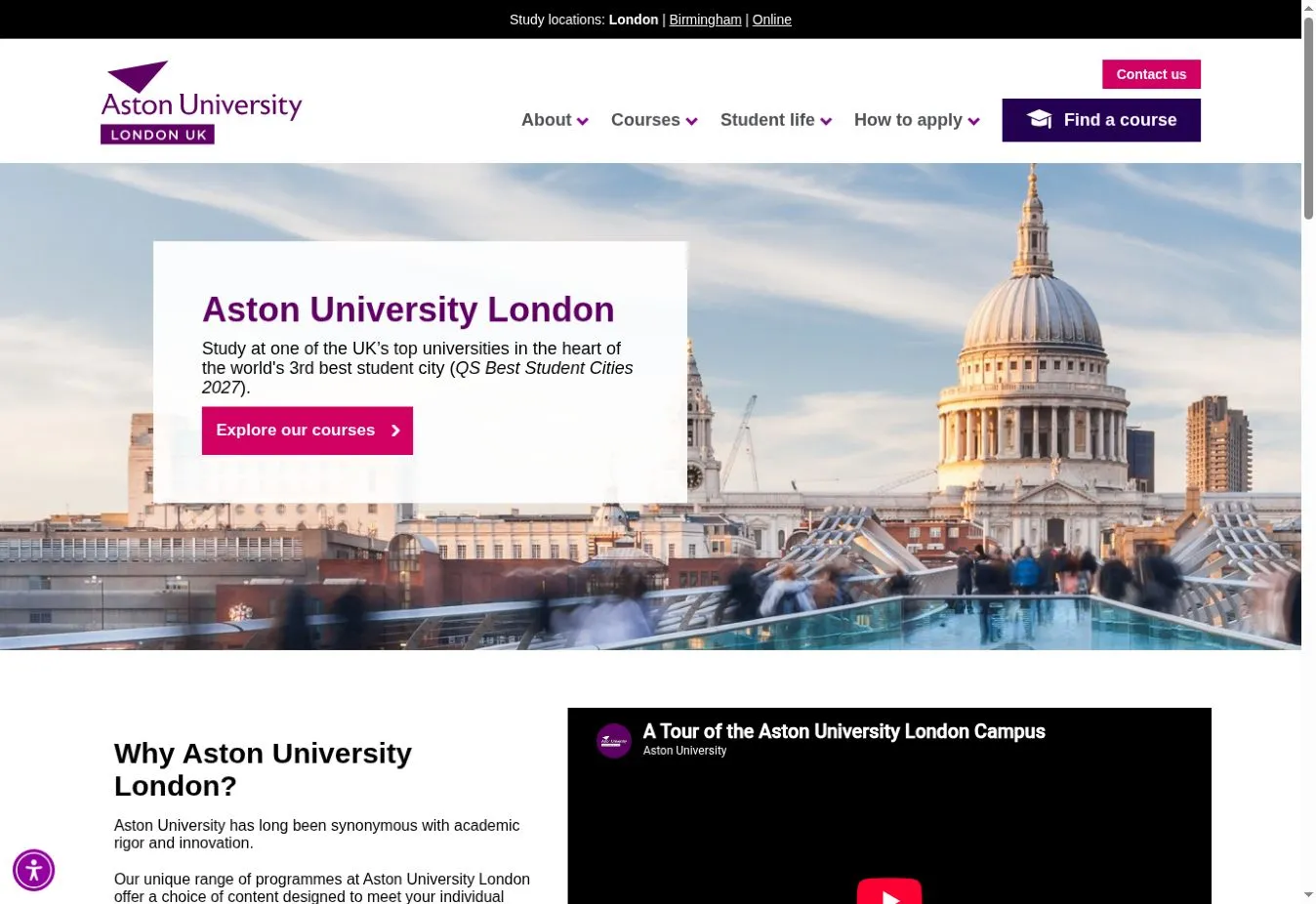
Big Blue Door built a separate Drupal website for Aston University London, reusing relevant functionality from the main platform while providing its own CMS. The project supported the University’s wider ambitions for international recruitment and a new London presence.
The supplied case study records research with students, lecturers and other stakeholders to inform the work. Delivery planning combined that understanding with reusable course and page structures and creative assets led by Aston’s internal team. The resulting site provides London-specific navigation, course information, student-life content and application guidance under the University’s main domain.
The London website was developed during 2024, ahead of the campus’s official opening in June 2025. Big Blue Door continued to support both the main and London sites through subsequent maintenance and development releases.
Outcomes and continuing value
Aston gained a hosting environment prepared for recruitment peaks, a repeatable release process and a development partner able to extend its existing Drupal platform. The London project demonstrated how established functionality could support a new campus without requiring a completely separate technology approach.
Why Drupal was chosen
Drupal had already been selected for Aston’s new website when Big Blue Door joined the project. The agency’s initial responsibility was to provide the infrastructure and deployment process around that platform, before taking on its ongoing development. The case for Drupal therefore centres on how Aston and Big Blue Door could extend an existing investment over time.
Structured content types suited the University’s course information and wider publishing requirements. Reusable components allowed editors to assemble different pages within an established design, while the platform could accommodate changes to editorial workflows and specialist journeys such as postgraduate research discovery.
Drupal also supported the London Campus approach. Rather than starting again with an unrelated CMS, Big Blue Door reused the main website’s codebase and relevant content structures to create a separate site. This retained familiar publishing tools while allowing London-specific navigation, presentation and content management.
The partnership demonstrates the practical value of an extensible, open-source platform: another supplier’s original Drupal build could be supported, upgraded and developed by Big Blue Door, and its functionality could form the foundation for a new campus website. Aston could introduce additional features and keep the platform maintained through a continuing programme of work.
Technical Specifications
Drupal version:
Custom content types and reusable Paragraphs components gave Aston’s editors tools tailored to university publishing. Big Blue Door developed course pages, landing pages and other page-building components, then extended the homepage with a dedicated content type and additional paragraph types. This allowed new presentation options to be introduced within the University’s existing editorial environment.
Taxonomy and structured course fields supported the organisation and discovery of course information. Later PhD finder work introduced research-specific information and filtering, including discipline, funding, start date and research centre. This addressed a different set of questions from a general undergraduate course search.
Aston’s custom theme and London-specific presentation retained the University’s identity while supporting different audiences. Big Blue Door worked with the internal creative team to implement design changes, including homepage components and the London site. Focal-point support for homepage imagery gave editors more control over how photographs appeared across screen sizes.
Reuse of the existing Drupal platform was the key architectural choice for London. The project used a separate CMS based on the main site’s codebase and relevant content types, rather than introducing a local-government distribution or an unrelated publishing system. This balanced independent management with reuse of established functionality.