Sector(s)
Team Members
Project Team
Agencies : Smart Agence, Numerik-ea, Temesis
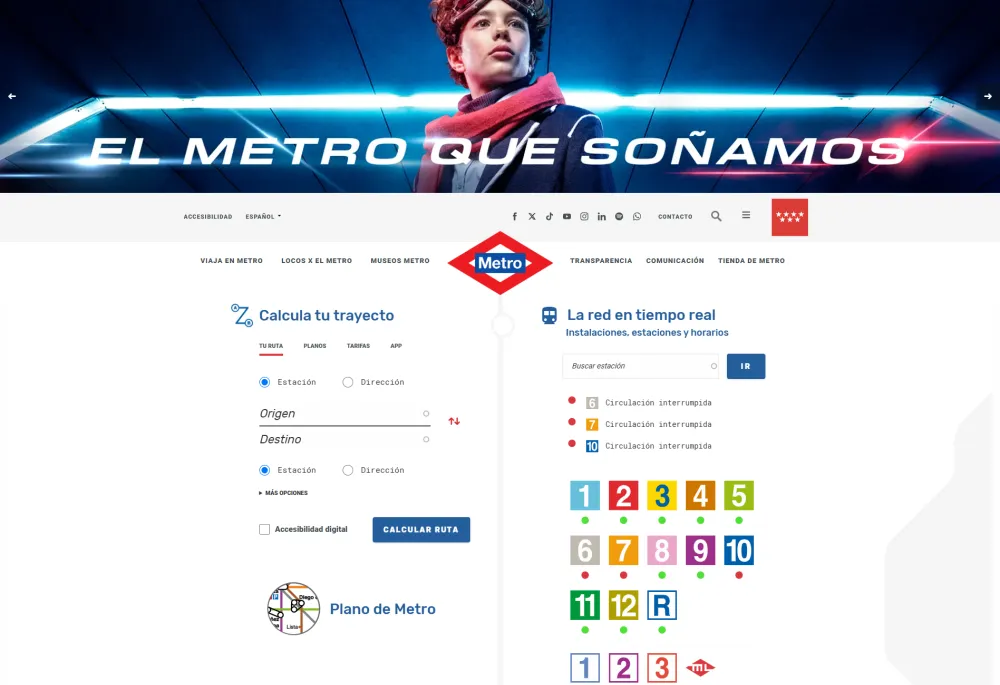
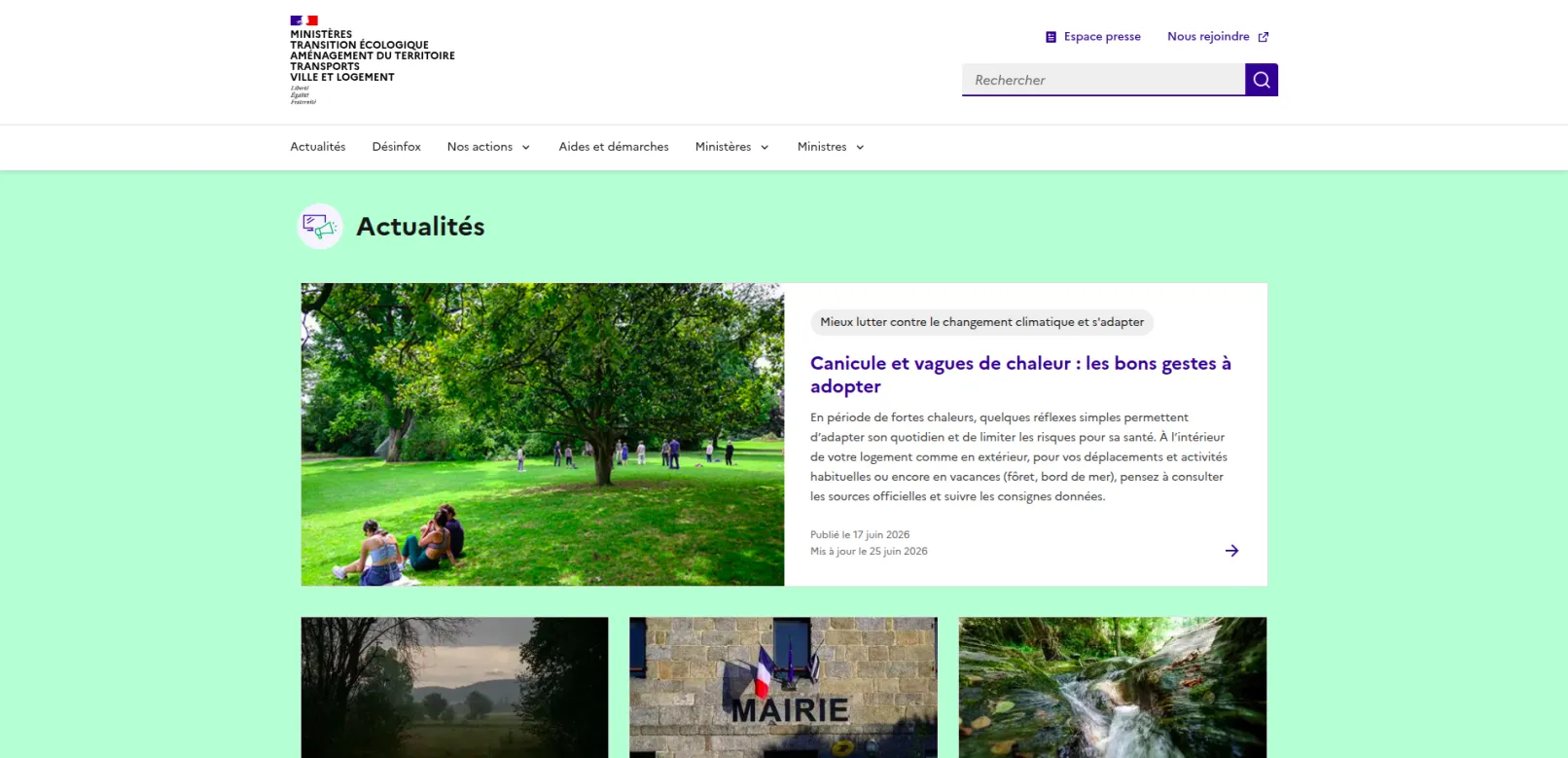
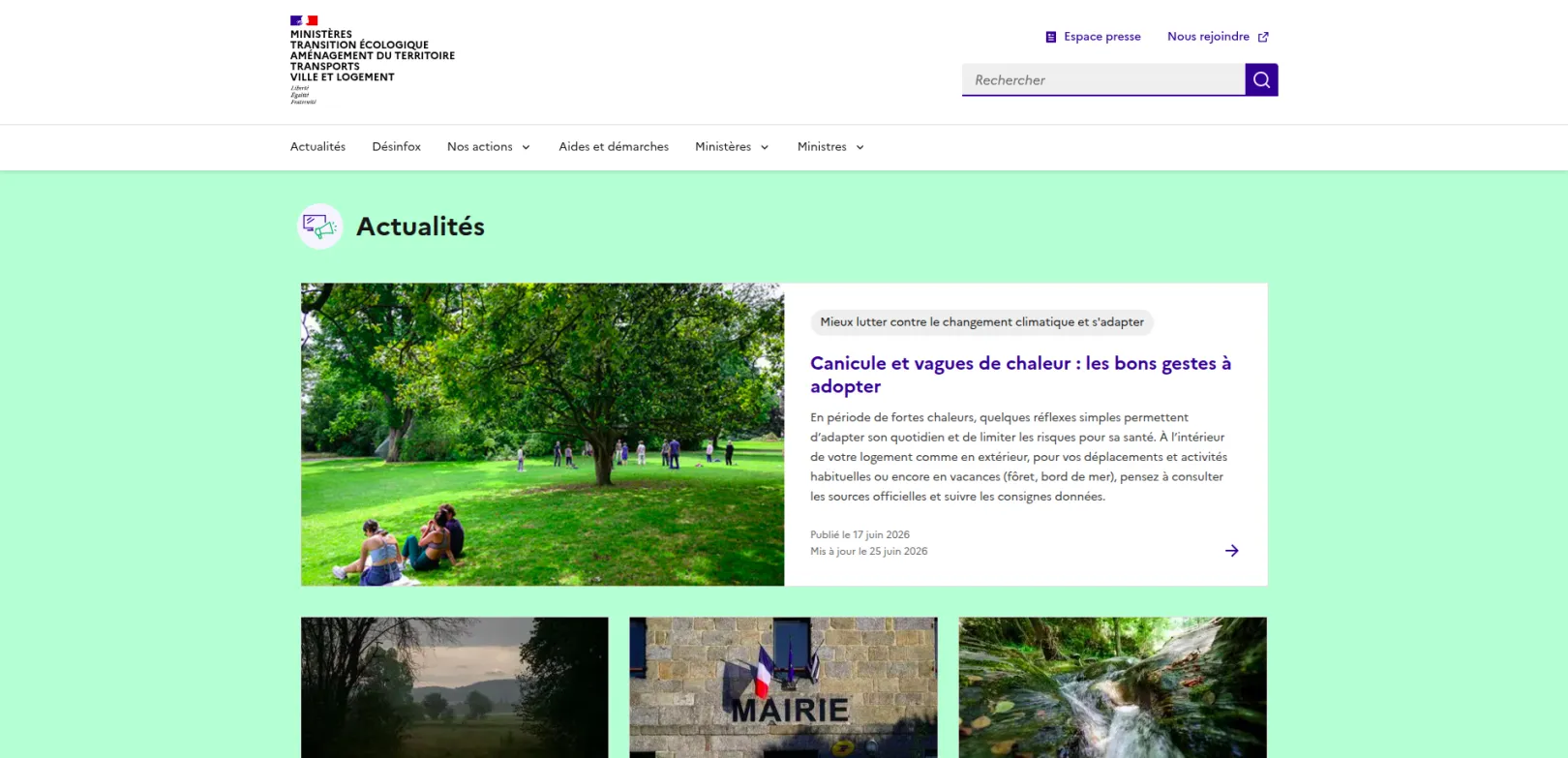
ecologie.gouv.fr is the public information platform for French ministries covering ecological transition, territorial planning, transport, housing and urban affairs. It serves citizens, local authorities and professionals, publishing official data, regulatory resources, press releases and policy information across multiple departments and services.
Over time, the site's architecture had grown complex, accumulating redundant components and unused features. The redesign was undertaken with three priorities: reducing the environmental footprint of the digital service, simplifying content administration, and reinforcing security and accessibility in line with French public sector standards.
ecedi, a digital agency specialising in open source solutions and part of the Ctrl-a group, led the redesign using Drupal. The project delivered a leaner and more accessible platform, with a component library reduced from 57 to 25 and measured performance improvements across the site.
About the project
Goals and requirements
The redesign of ecologie.gouv.fr addressed accumulated technical debt on a high-traffic site administered by numerous editorial teams across different departments. The previous architecture had become difficult to maintain, costly to operate, and inconsistent with the environmental commitments the site is meant to promote.
The main objectives were:
- Reduce the site's environmental footprint, in direct coherence with ecologie.gouv.fr's ecological mission;
- Simplify content administration, with fewer components and a clearer editorial interface for non-technical contributors;
- Adopt the French State Design System (DSFR) to align with French public sector digital standards;
- Improve accessibility by automating compliance tasks previously handled manually by contributors;
- Reinforce security through stricter content policies and structured update management;
- Rationalise content, removing obsolete material while retaining content required for regulatory reasons.
What makes this project special
Ecodesign as a project requirement. ecologie.gouv.fr cannot advocate for digital sobriety while operating a resource-heavy website. The redesign placed ecodesign at the centre of both technical and editorial decisions. A deliberate stance was adopted: limiting the use of images to where they provide genuine informational value. Heavy embedded content loads only on demand, and unused features were removed.
A PWE audit conducted by Temesis identified and addressed the site's most significant environmental impact points. This audit, more concrete in its implementation than the RGESN framework, served as the basis for prioritising actions and measuring the improvements achieved.
Outcomes and results
Editorial stance: images limited to where they add informational value, heavy content loaded on demand only.
PWE audit conducted by Temesis: identification and correction of the site's key environmental impact points.
Component library reduced from 57 to 25, simplifying administration and accessibility maintenance.
Improvements contributed back to the Drupal community, raising the quality of shared modules across the ecosystem.
- Environmental footprint reduced through ecodesign applied from the outset and validated by an external PWE audit;
- Accessibility compliance automated at the platform level, removing manual workload for contributors;
- French State Design System adopted, with a contribution pathway established for future DSFR updates;
- Security reinforced through content policies and structured update management;
- Community contribution delivered: module improvements contributed back to the open source Drupal ecosystem.
Delivered by ecedi | ecedi.fr | Ctrl-a Group
Why Drupal was chosen
The site was already built on Drupal, and internal teams were familiar with the platform. Rebuilding on a different technology would have introduced unjustified risk and cost, while the project's requirements (permissions management, security constraints, French State design standards) called for a solution with a proven track record in each of these areas.
Drupal was retained and modernised for the following reasons:
- Continuity and internal expertise. Internal teams and the internal recommendation body (SIG) already endorsed Drupal. Maintaining a single technology stack reduced training needs and simplified long-term maintenance.
- Modular architecture. Drupal's modular approach allows components and features to be updated or removed independently, without affecting the rest of the site. This was essential for rationalising a large codebase.
- French State Design System compatibility. Drupal's ecosystem includes a community-maintained integration with the French State Design System (DSFR), enabling ecologie.gouv.fr to adopt official design standards while staying aligned with future DSFR updates. ecedi contributed improvements back to this community theme, benefiting all future projects built on it.
- Security for a government context. Drupal's core and community provide a set of configurations and built-in mechanisms that ensure a high security baseline by default. Drupal also operates a notification process when vulnerabilities are identified, whether in core or contributed modules, allowing teams to respond without delay.
- Open source commitment. ecedi and ecologie.gouv.fr share a commitment to open source and responsible digital practices. Drupal's open source model ensures transparency, longevity and community-driven evolution.
Technical Specifications
Drupal version: