Sector(s)
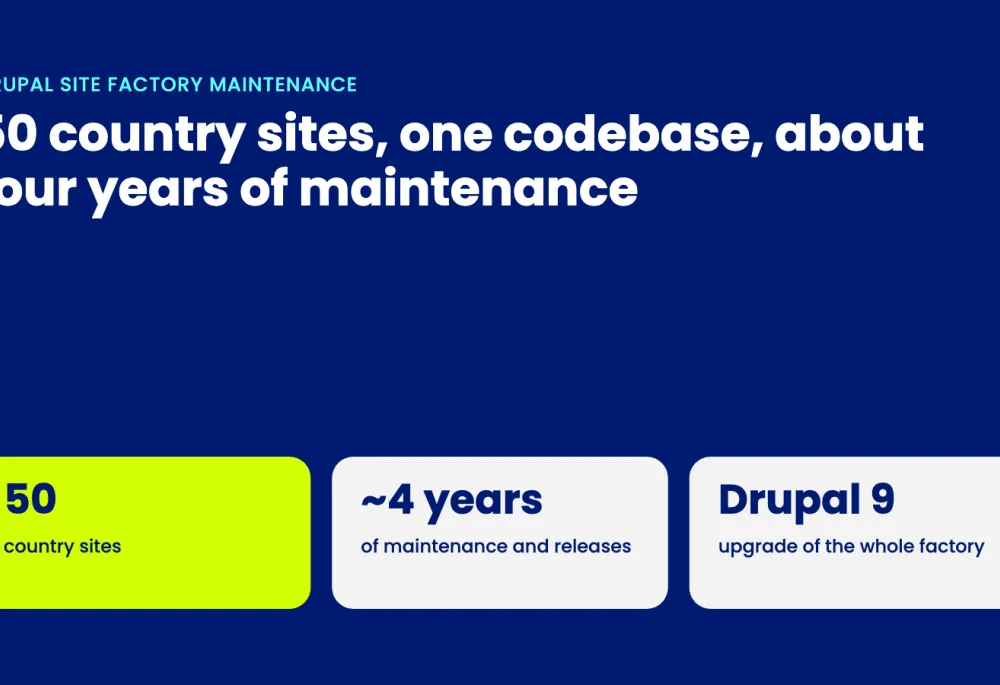
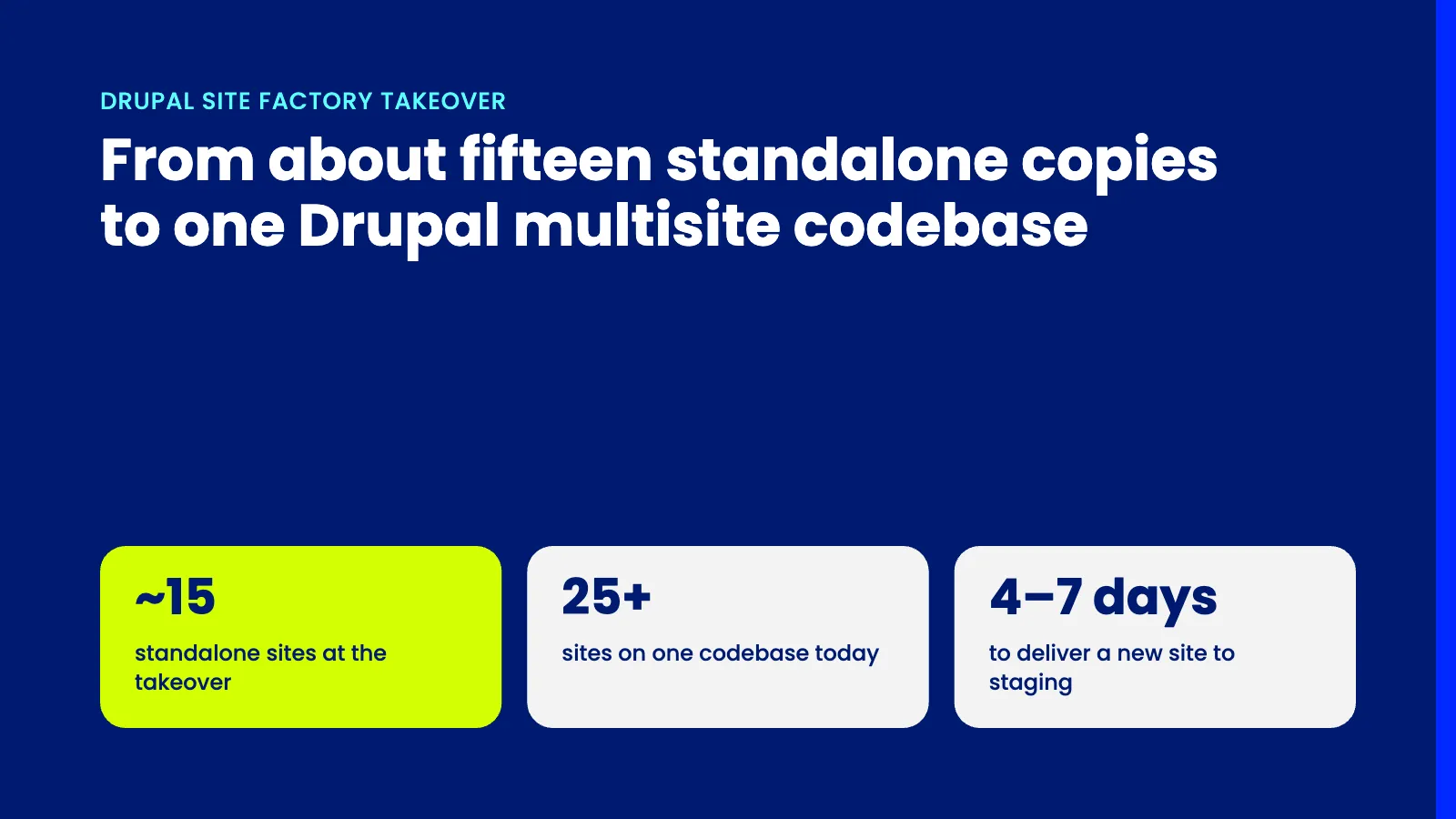
The group runs country sites, service sites and corporate sites. At the takeover, about fifteen sites already ran on Drupal, but each one was an independent copy: no multisite, no shared code. Parker+Parker recovered the code, paid down the technical debt, then brought the sites together on a single Drupal multisite codebase. The fleet now has more than 25 sites. The agency has maintained and extended it ever since.
About the project
Results
- About fifteen independent sites brought together on one Drupal codebase, then a fleet grown to more than 25 sites.
- A new site delivered to staging in 4 days to a week, ready for acceptance testing and content entry.
- Every fix and every feature built once, then delivered to all the sites that use it.
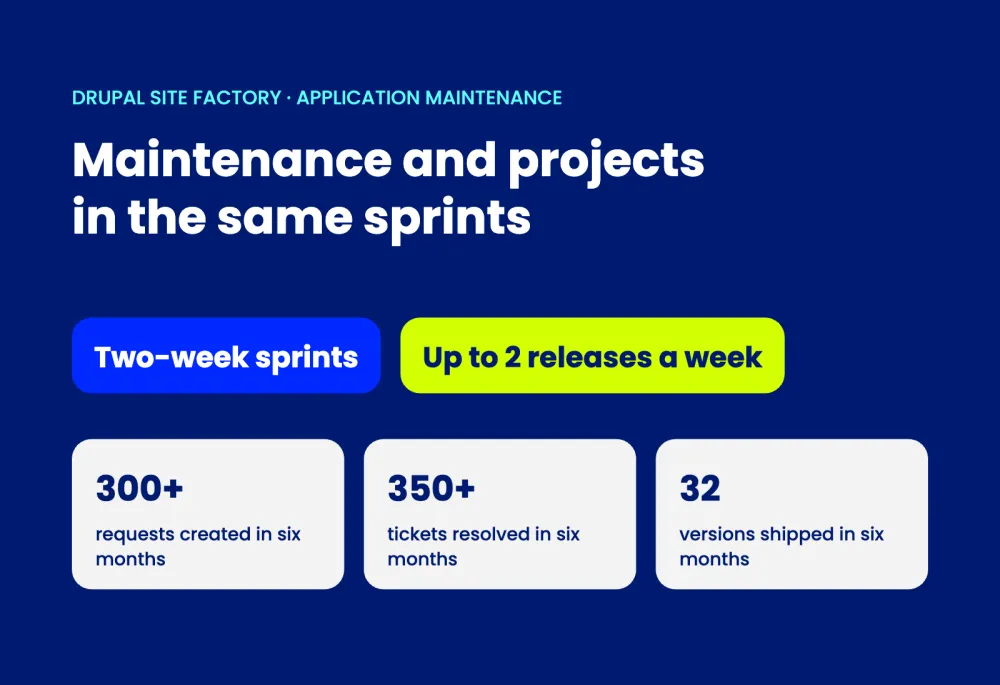
- More than five years of continuous development and maintenance on the same platform.
Goal
Give a decentralized digital organization a single platform. Country teams make their own requests, sometimes at the same time. The group wanted to meet them without maintaining about fifteen diverging copies, and to launch new sites quickly.
Challenge
Each site was a standalone copy. A fix had to be applied site by site. Features had drifted apart, and each new country started from a copy. The sites were live and had to stay live during the transformation.
Solution
- Code takeover and audit. The code of each site was recovered and the copies compared. Technical debt was fixed before any new development.
- Multisite architecture. All sites share the same Drupal codebase, with one database per site. Shared styles and a shared block library keep the sites consistent.
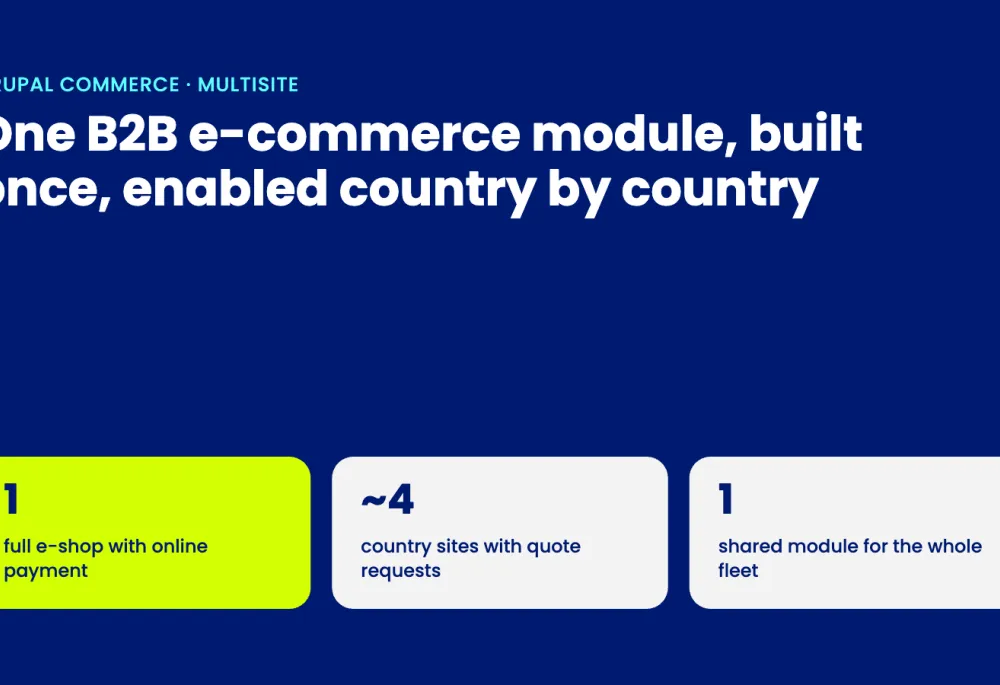
- Features enabled site by site. Each feature is deployed everywhere, then enabled where it is needed. A feature matrix shows which site uses what.
- New sites on demand. A new site is created from the master site. The client describes its needs in a form: domain, languages, pages, features. The site reaches staging in 4 days to a week.
- Major shared developments. B2B e-commerce with online payment or quote requests depending on the country, a price configurator, a search engine with autocomplete and spelling suggestions, and expert directories.
- Maintenance and major versions. The platform follows Drupal's major versions, with a single upgrade method for the whole fleet.
What editors do without developers
Country teams build their pages with the shared block library and manage their own languages and menus. Opening a new site starts with a form, not with a development ticket.
Why Drupal was chosen
The sites already ran on Drupal, but each one had been copied and then changed separately. The group needed a shared platform, built on the tool its teams already knew. Thanks to multisite, a Drupal core feature, a single codebase serves every site, each with its own database, languages and configuration. Drupal's configuration management makes it possible to enable a feature on one site and keep it disabled on another. Drupal Commerce brings B2B online sales into the same platform: e-commerce does not require a second tool. Drupal's module ecosystem provides per-site indexed search, with autocomplete and spelling suggestions. Staying on Drupal also kept content and editor habits in place while the architecture changed.
Technical Specifications
Drupal version:
Key modules/theme/distribution used:
Paragraphs powers the block library shared by all sites. Drupal Commerce runs B2B e-commerce, enabled site by site. Search API provides each site's search, with autocomplete and spelling suggestions. All sites share one codebase through Drupal core's multisite feature.