Team Members
Project Team
Any more from BRANDCODE. With love from Munich.
Visit the site
Visit the siteOrganizations Involved
Community contributions
Contributions
- Gin: Dropdown button is broken in Operations
- Gin: Initial `--drupal-displace-offset-left` is missing until the window is resized
- Media Library Edit: Enable the edit button by default
- SVG Image: Read width and height from viewBox if explicit attributes are not available
- Views Reference Field: Sort views in the widget by label, not machine name
- etc.
About the project
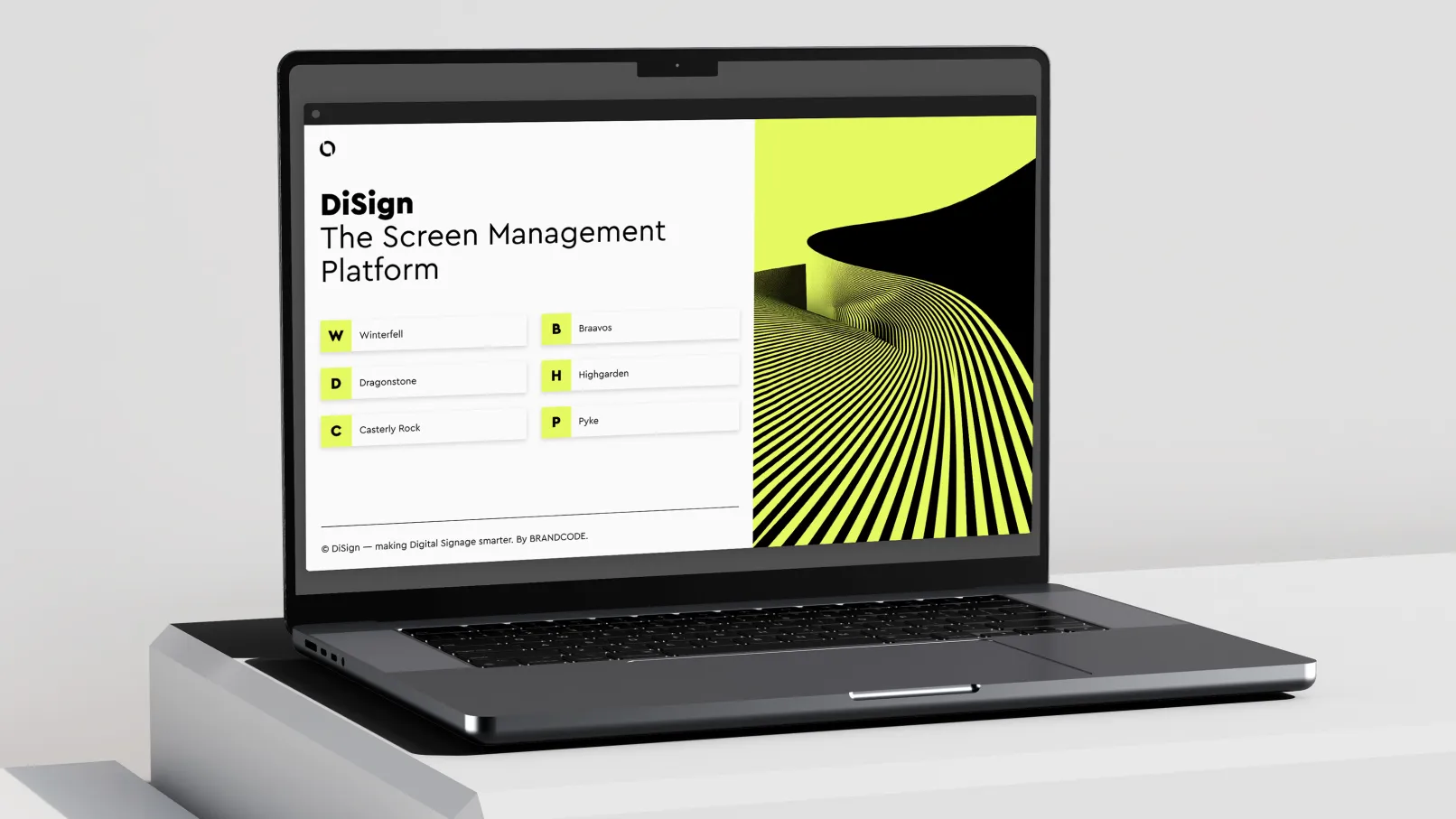
A platform for smart information spaces
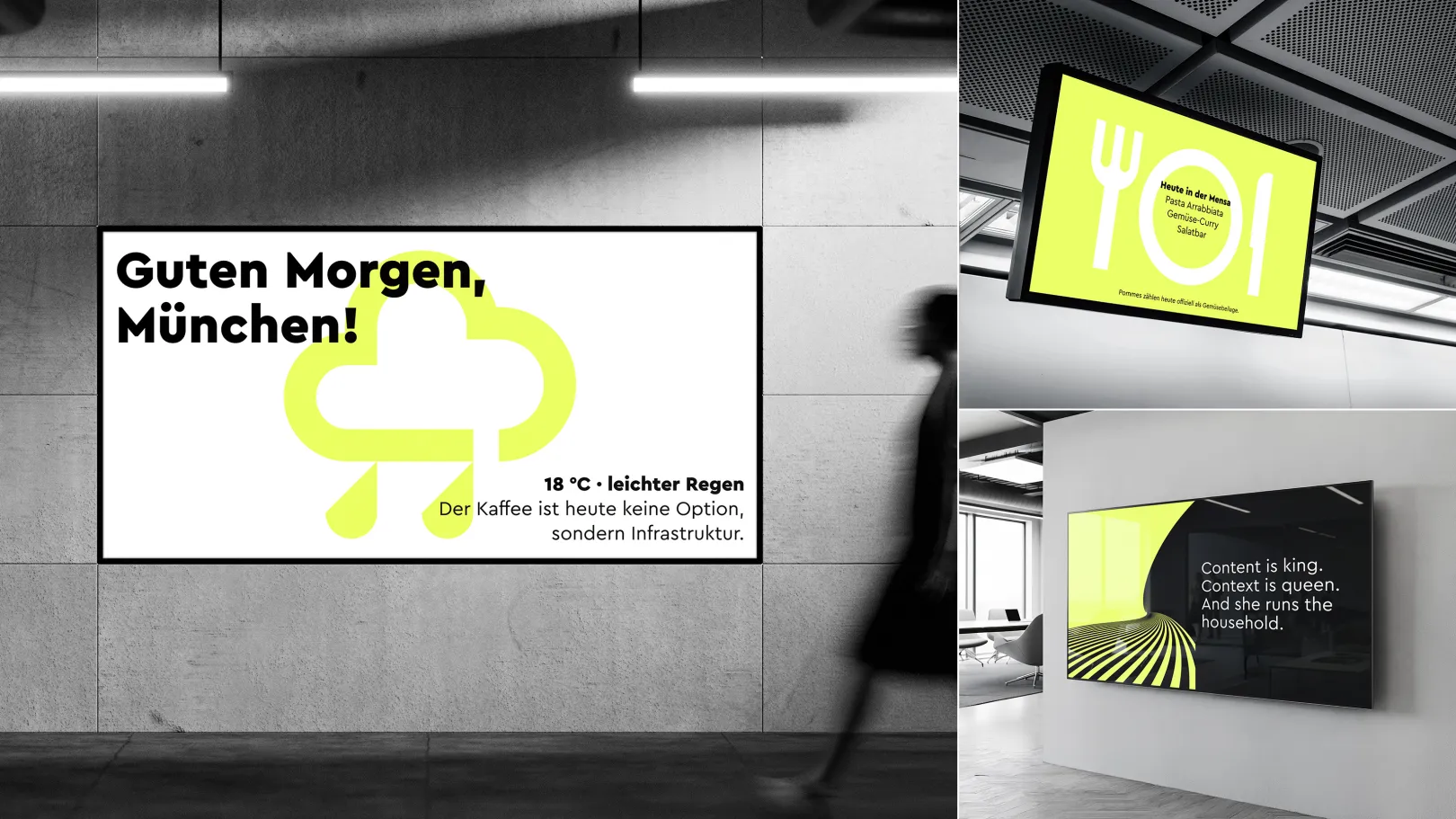
Today, digital information and wayfinding systems perform a wide range of tasks in public and semi-public spaces. They inform students about the current cafeteria menu, show visitors the way, and communicate events, alerts, or the latest news. Nevertheless, many digital signage solutions still rely on a traditional principle: content is managed as playlists and distributed to screens via proprietary systems.
DiSign takes a different approach.
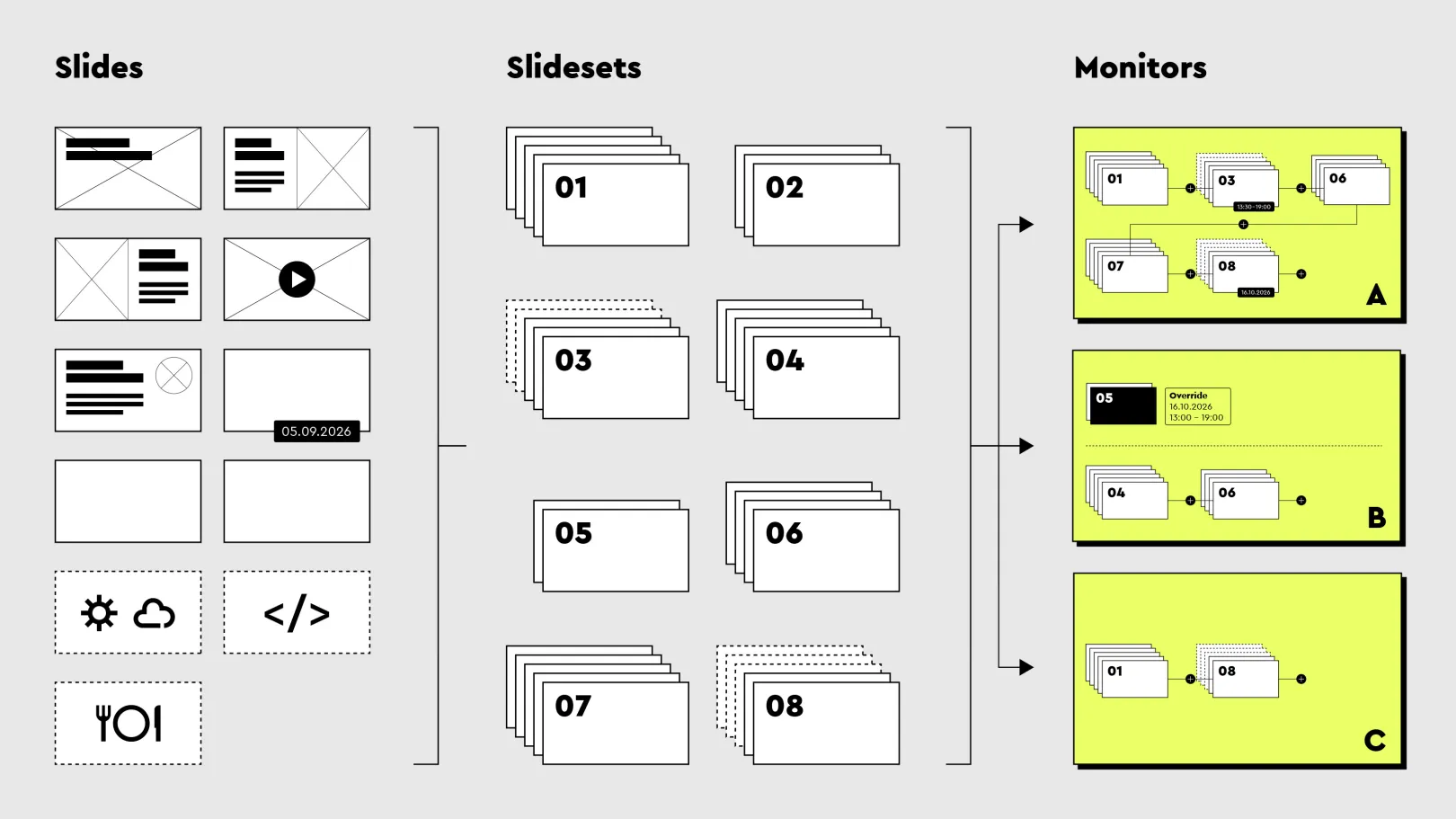
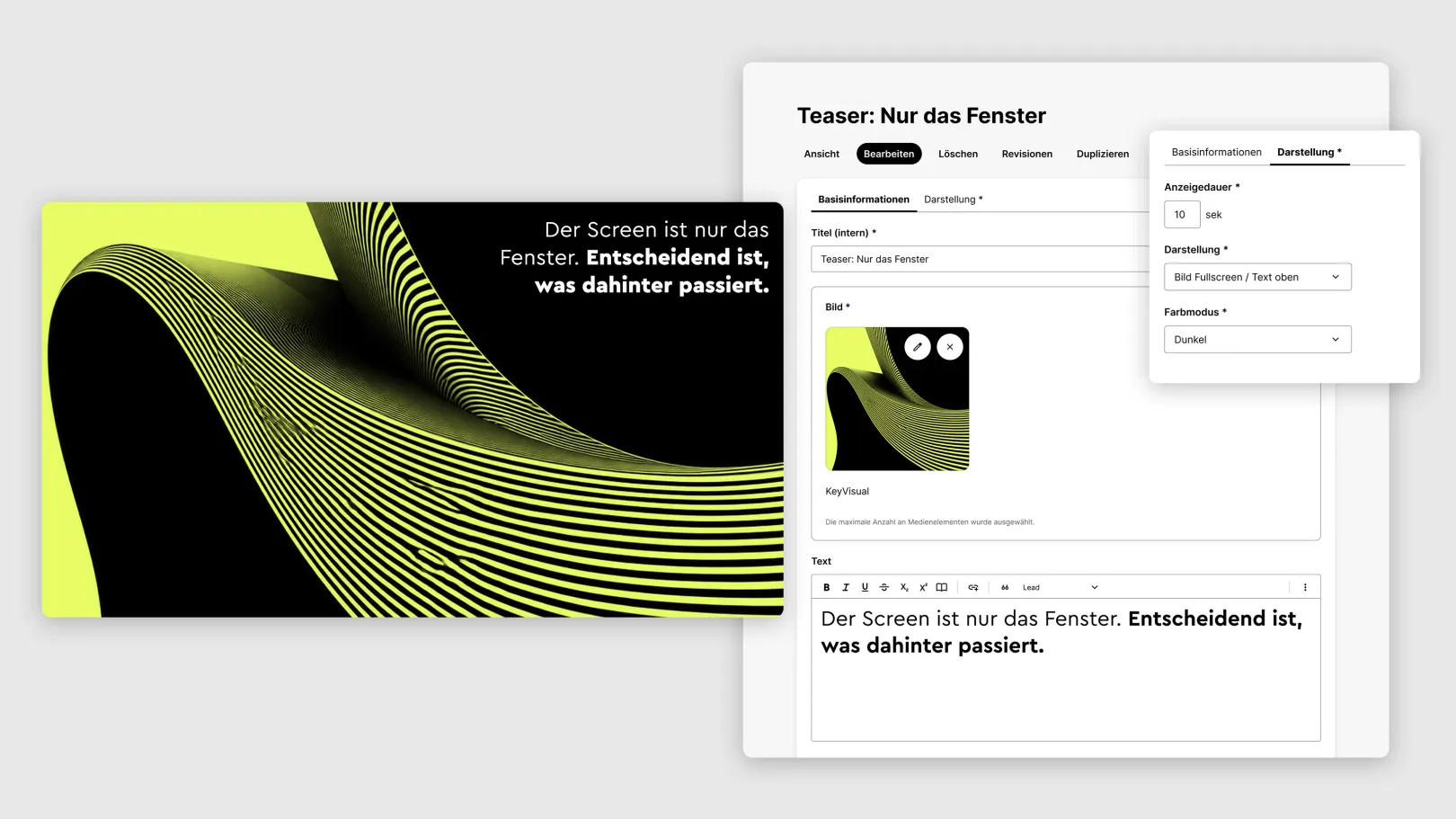
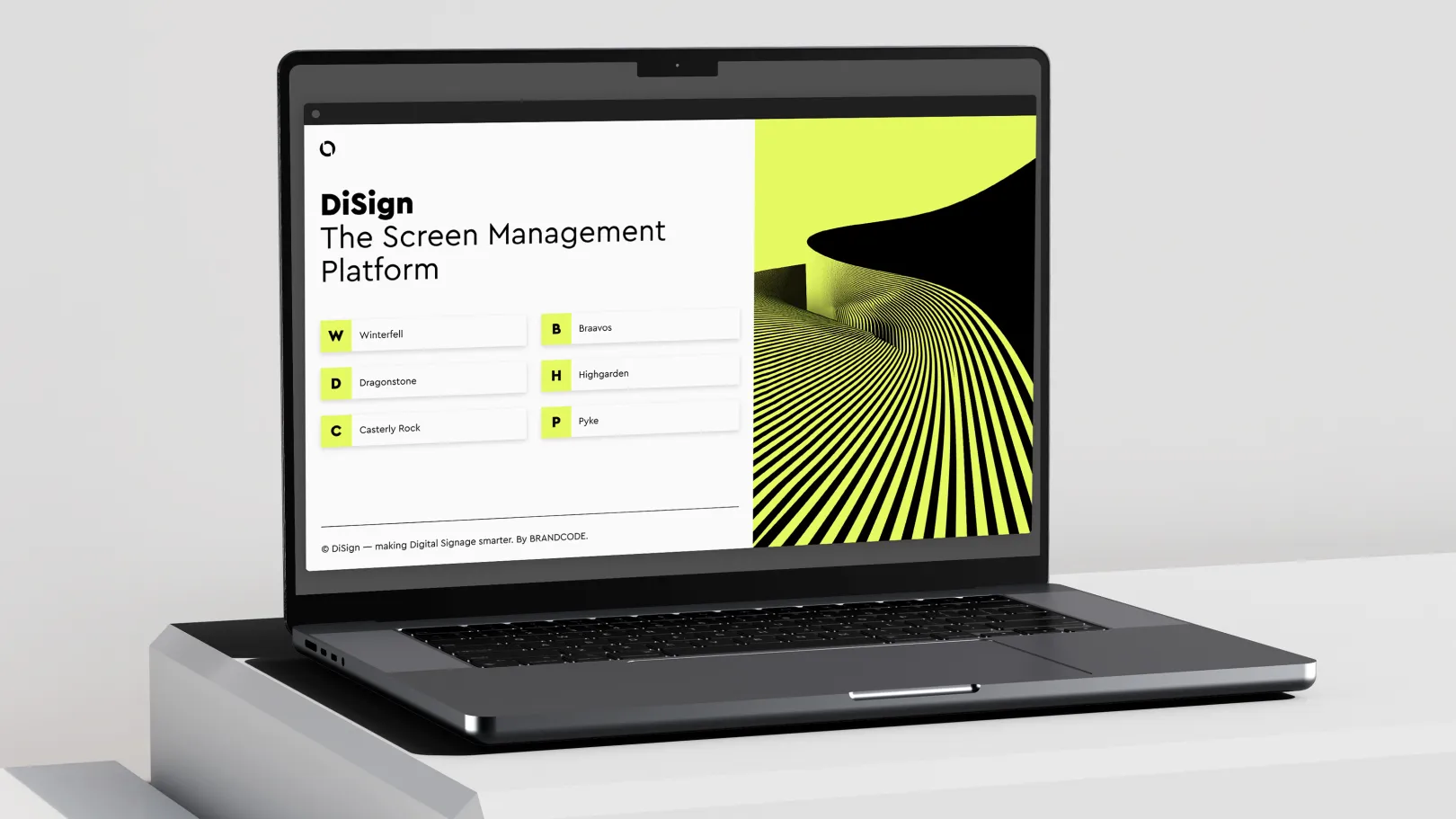
The platform does not see itself as a traditional digital signage system, but rather as a Drupal-based screen management platform. The focus is not on screens or slides, but on structured information. Drupal handles content modeling, media management, scheduling, and assignment to different screen views, thereby serving as the central communication system.
Each display is provided as a browser-based web application. The screens simply open a defined URL and automatically retrieve the content intended for them. This ensures that the technical infrastructure remains deliberately lean, system-independent, and usable without proprietary player applications. Changes to content or configurations are made exclusively and centrally in Drupal and become available automatically with the next update.
DiSign’s true strength lies in its intelligent integration of various information sources. Editorially maintained content can be combined with dynamic data—such as cafeteria menus, event information, weather data, transit information, or news from existing Drupal websites. Information is not maintained multiple times but is made available exactly where it is needed.
Drupal does far more than traditional content management. The sophisticated role- and permission-based system enables decentralized content management with centralized governance. Departmental teams manage their own content independently, while organization-wide information—such as emergency alerts or last-minute notices—can be published on a schedule across all relevant screens.
A key component of the concept is the consistent separation of content and presentation. Information is managed in a structured manner within Drupal and stored independently of the subsequent layout. It is displayed via custom-developed, responsive front ends that adapt to different screen sizes, resolutions, and corporate designs. Unlike traditional slide layouts, no static screen pages are created. Content remains flexible and can be combined with images, videos, audio, or dynamic data sources without having to be maintained multiple times for different devices.
In this way, Drupal evolves from a website CMS into a platform for intelligent, connected screen communication.
Why Drupal was chosen
Goals
- Establish Drupal as a platform for digital information spaces.
- Centrally manage structured content and reuse it.
- Simplify editorial processes and clearly separate responsibilities.
- Seamlessly integrate dynamic data sources.
- Enable different corporate designs on a common technical platform.
- Create a modular and long-term scalable product architecture.
Results
- Browser-based playback without proprietary player software.
- Centralized management of structured content, media, and timing controls.
- Reusable information modules for different screen layouts and user contexts.
- Customizable, responsive front ends built on a common technical foundation.
- Integration of external data sources for dynamic information.
- Extension of the Drupal roles and permissions system to enable easy administration and flexible management of decentralised editorial processes.
- Centralized maintenance combined with individualized delivery of information.
Technical Specifications
Drupal version: