Sector(s)
Visit the site
Visit the siteOrganizations Involved
Community contributions
Patterns developed during this engagement, especially around configuration management for multi-environment deployments and editorial UX in large multilingual sites, have informed contributions from SparkFabrik developers in related project issues on drupal.org.
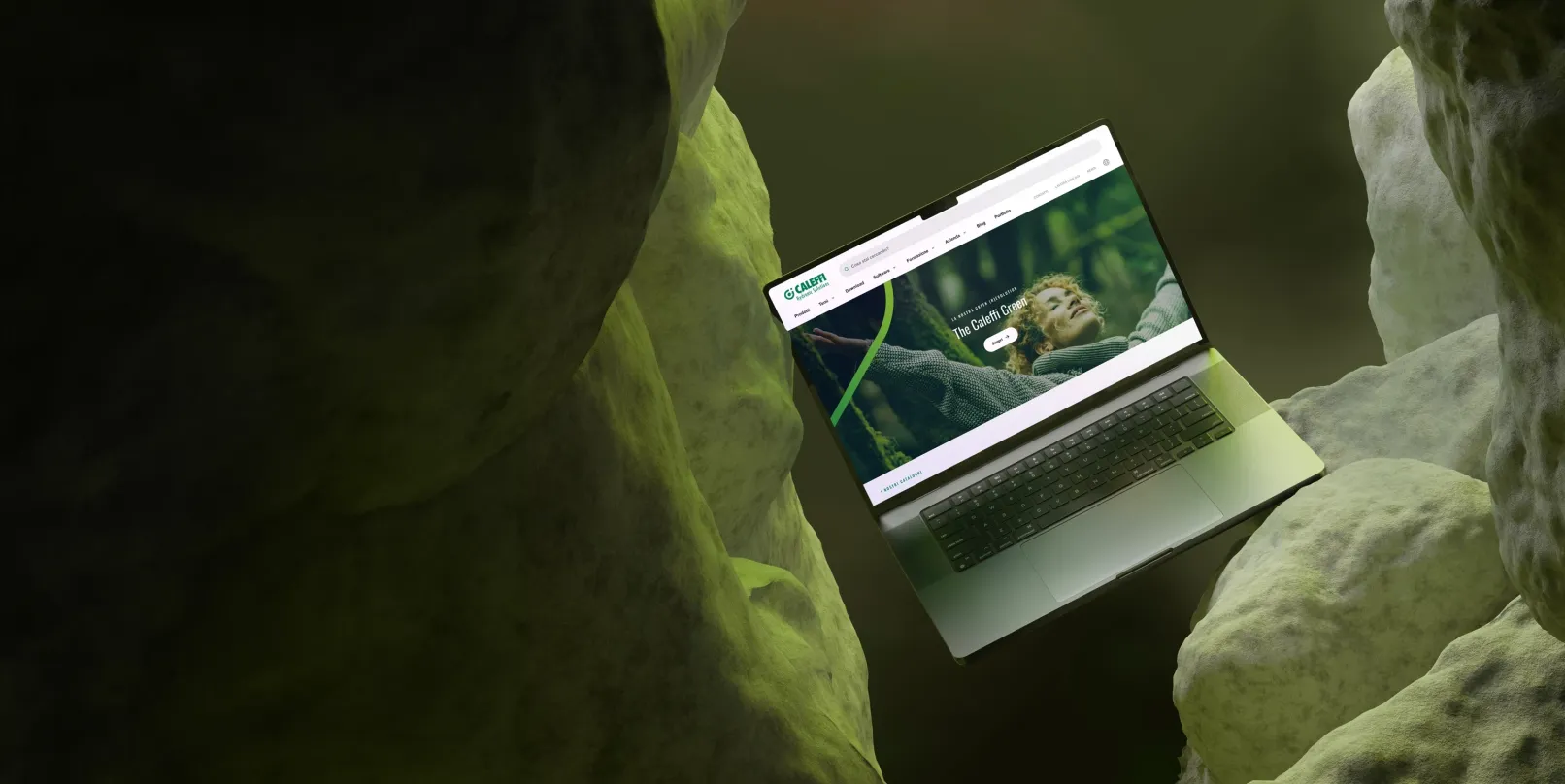
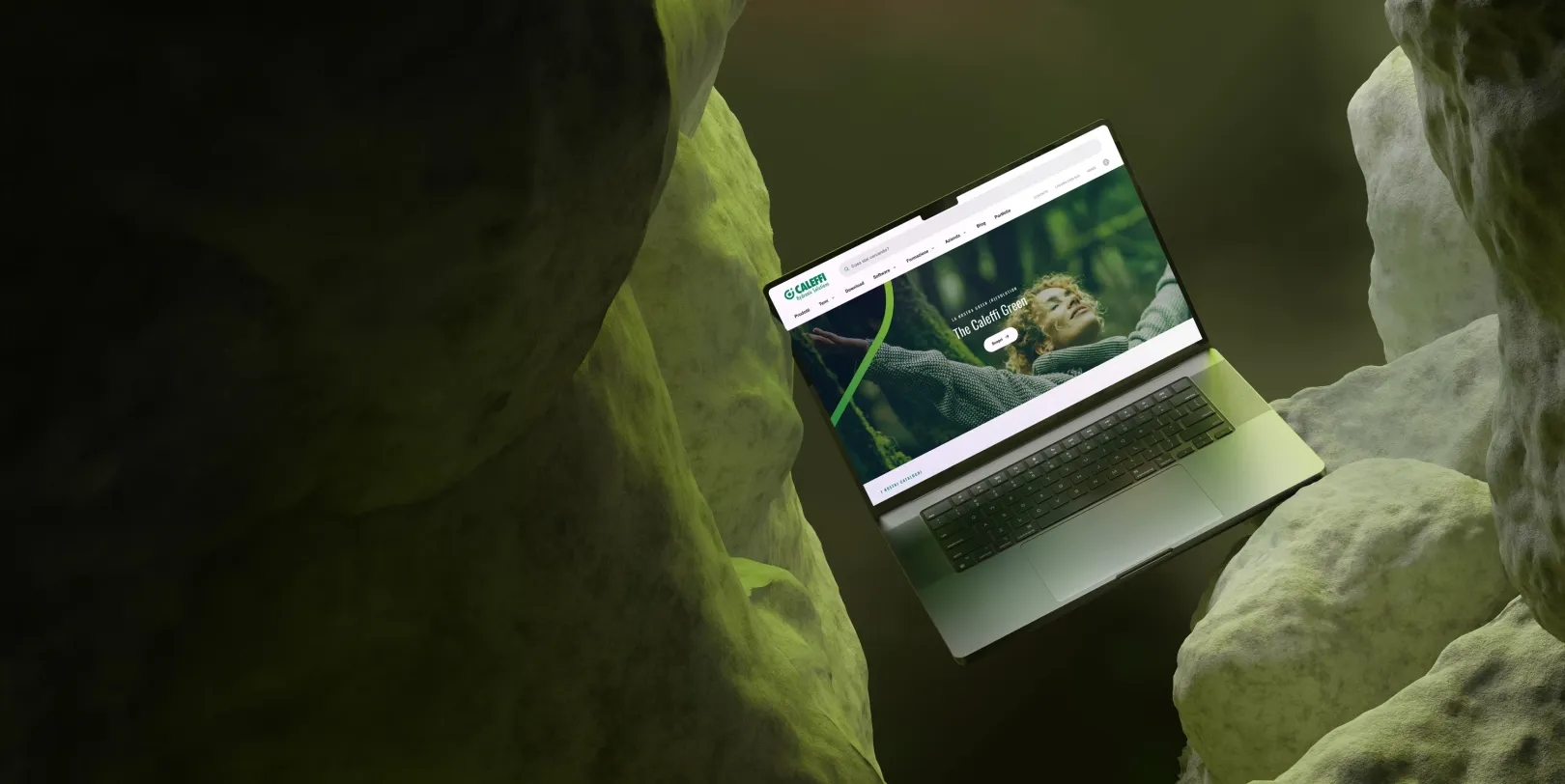
Caleffi, a global manufacturer of heating, plumbing and renewable-energy components with around 1,630 employees and operations in more than 90 countries, rebuilt its enterprise portal on the latest version of Drupal. The portal handles a catalogue of thousands of product references across 30 country sites in more than 20 languages, and it serves three very different audiences: installers, technical designers and wholesalers. The new architecture decouples product data, sourced from an external Product Information Management system, from editorial content owned by local marketing teams, with both flowing into Drupal.
About the project
Goals
- Replatform the legacy enterprise portal and migrate content from an older version of Drupal.
- Redesign information architecture, user experience and visual identity for installers, designers and wholesalers.
- Integrate an external PIM as the single source of truth for product data, leaving editorial content to country teams.
- Support 30 country sites and more than 20 languages from a single platform.
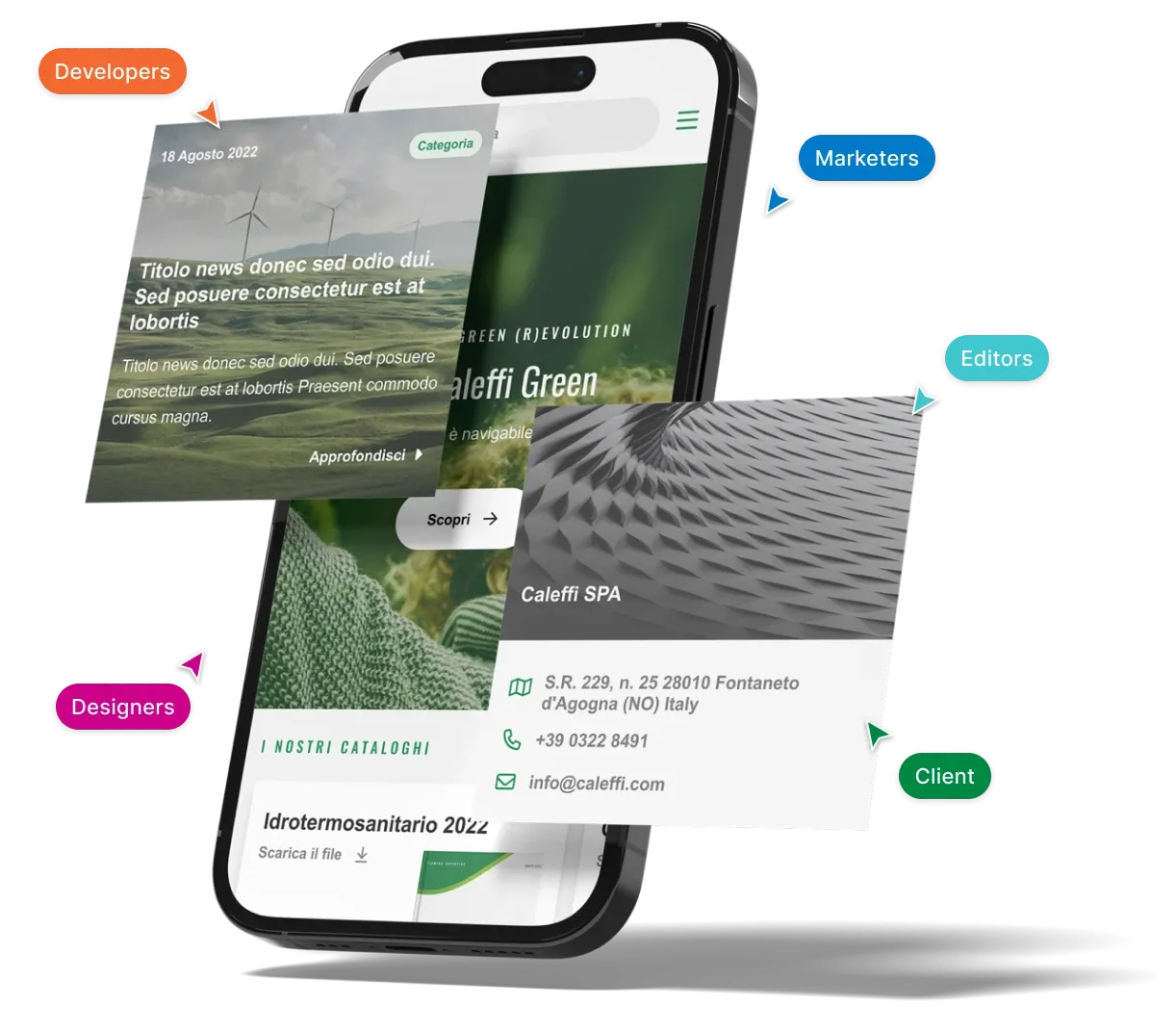
- Deliver a mobile-first experience for technical users consulting product information on construction sites, in thermal plants and during inspections.
Challenge
Over a decade the portal had grown into an industry information hub well beyond its commercial origin: thousands of product variants, dozens of asset types per product (videos, brochures, navigable diagrams, BIM, technical drawings), digital magazines, design diagrams and dimensioning software. Years of incremental work had layered information in ways that no longer matched how technical users navigated the catalogue. The rebuild had to clean up that legacy while preserving uptime and SEO.
Solution
- The product catalogue was redesigned from scratch as a complex content model in Drupal, with product data consumed from the PIM via REST APIs.
- Drupal stays in sync with the PIM and augments PIM data with editorial information created and managed by country editors directly in the CMS.
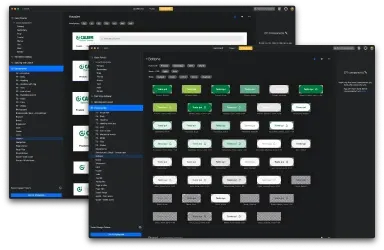
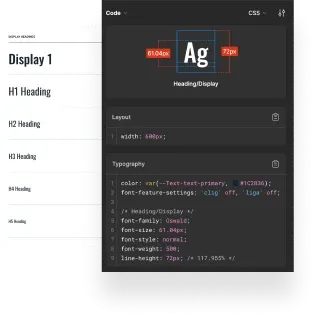
- A Design System was formalised covering colour, typography, spacing, components and templates. Country editors compose pages from the component library and cannot break the visual rules.
- Each country has its own editorial team but inherits global brand foundations from the parent company. Smaller branches can also reuse content already produced by other countries through a shared dashboard.
- User journeys validated through personas, customer journey mapping and user stories built with the client in workshops.
Timeline and major milestones
The new platform replaced a previous portal that had been in production for around ten years. The current version went live in autumn, after a multi-quarter programme that covered strategic assessment, co-design, Design System formalisation, content migration, PIM integration and a staggered rollout across country sites.
Project management approach
Agile delivery with co-design as the leading method. The early phase combined a qualitative construction of personas, customer journey mapping and user stories formalised together with the client. Implementation worked in iterations against a prioritised backlog. Country sites were rolled out in sequence rather than as a single big-bang launch, which let editors and country teams get hands-on training as their site went live.
What makes this project special
Three things: the scale (30 countries, 20+ languages, thousands of product references with dozens of asset types each), the clean separation between the PIM as the single source of truth for product data and Drupal as the editorial environment, and the longevity of the platform choice (over a decade on Drupal, with the team confidently re-confirming the choice for the next decade).
Outcomes
- Product information centralised and kept current in real time across all country sites.
- Subsidiaries worldwide manage their own content autonomously without breaking brand consistency.
- Mobile experience optimised for the on-site usage patterns that analytics had revealed.
- In the words of the client's Digital Innovation Manager, the launch represented a revolution in how product information and assets are managed, more than a simple website refresh.
Why Drupal was chosen
Caleffi had already run its corporate portal on Drupal for around ten years. When the previous platform reached end of life, the team evaluated whether to stay on Drupal or migrate. Alternatives considered included a proprietary enterprise CMS bundled with the existing PIM vendor and a major commercial digital experience platform from the Adobe ecosystem. Drupal was confirmed for the following reasons:
- Proven long-term reliability on a business-critical, internationally distributed site.
- Mature multilingual content workflows with full per-language editorial control.
- Strong integration capabilities with external systems through REST APIs, essential for the PIM.
- Ability to combine structured product data with rich editorial content in a single environment.
- Granular editorial permissions, allowing the parent company to enforce brand consistency while giving subsidiaries autonomy.
- A large community-supported ecosystem for SEO, search, media management and accessibility, keeping custom development to a minimum.
- No per-seat or per-site licensing across 30 country sites, with predictable cost growth as new country sites are added.
Technical Specifications
Drupal version:
Key modules/theme/distribution used:
- Paragraphs and the layout builder give editors freedom to compose pages from a curated component library without breaking the Design System.
- Search API with Solr powers fast, faceted product search across very large catalogues and multiple languages.
- Pathauto, Metatag and Redirect were essential to preserve and improve SEO during migration from the legacy platform.
- Migrate handled historical content import and the synchronisation patterns required for the PIM integration.
- Config Split lets the team manage configuration across many country environments while keeping per-country differences explicit and reviewable.