Sector(s)
Team Members
Project Team
Sean O'Connell
Visit the site
Visit the siteOrganizations Involved
Community contributions
- HTML to Entity – facilitates mapping at a high level. For example, a developer can write a plugin to say “on the old site, the date is in this specific CSS class; put it in the Drupal Date field”.
- Media on Demand – gives you a way to provide a URL and get back a media entity. Everything involved in that - downloading, detecting duplicates etc - happens behind the scenes.
- HTML Transformer – a low level mechanism for tidying up HTML prior to using it in Drupal, e.g. turning a <b> tag into a more semantic <strong>, or turning <img> into <drupal-media>.
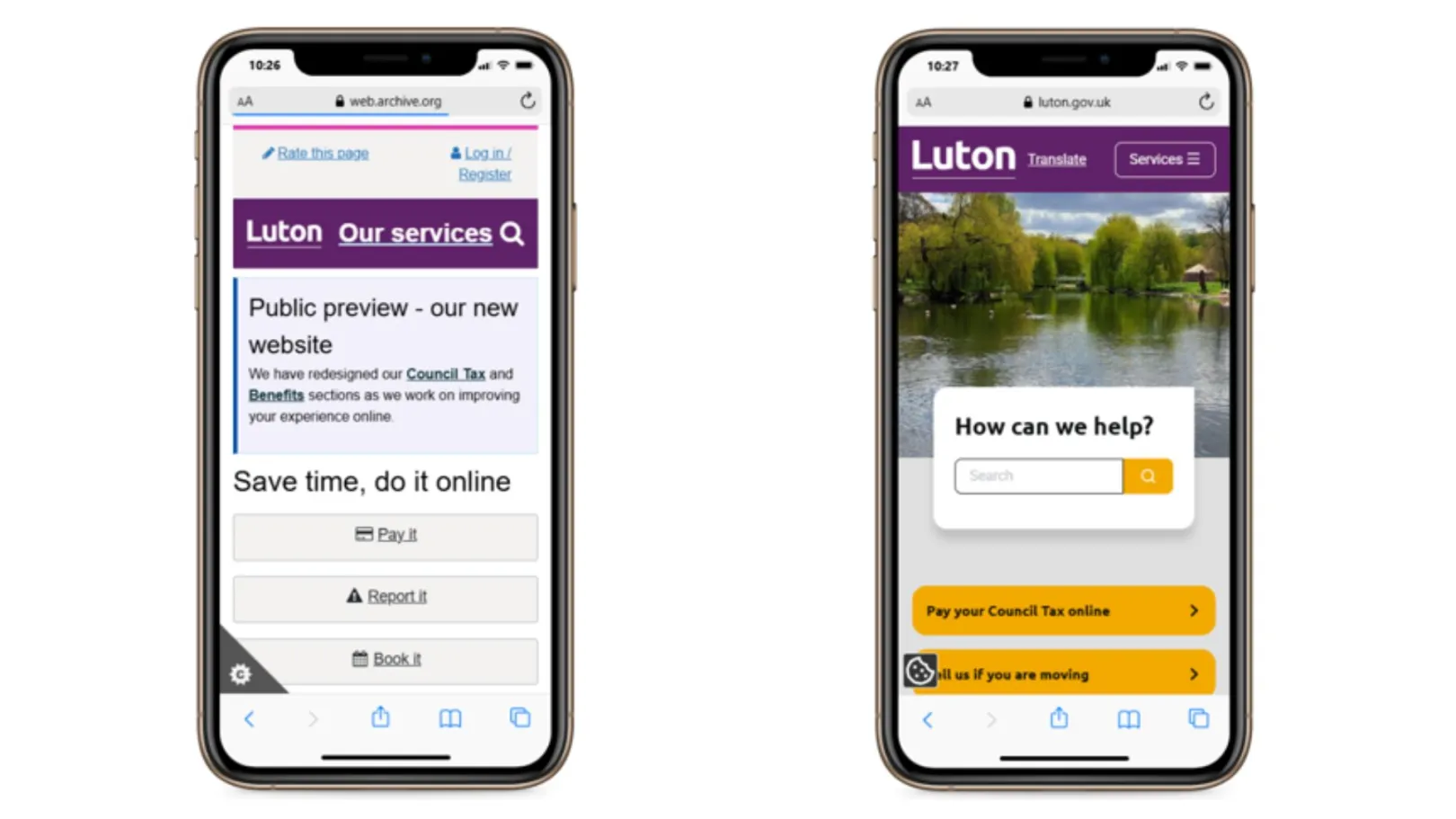
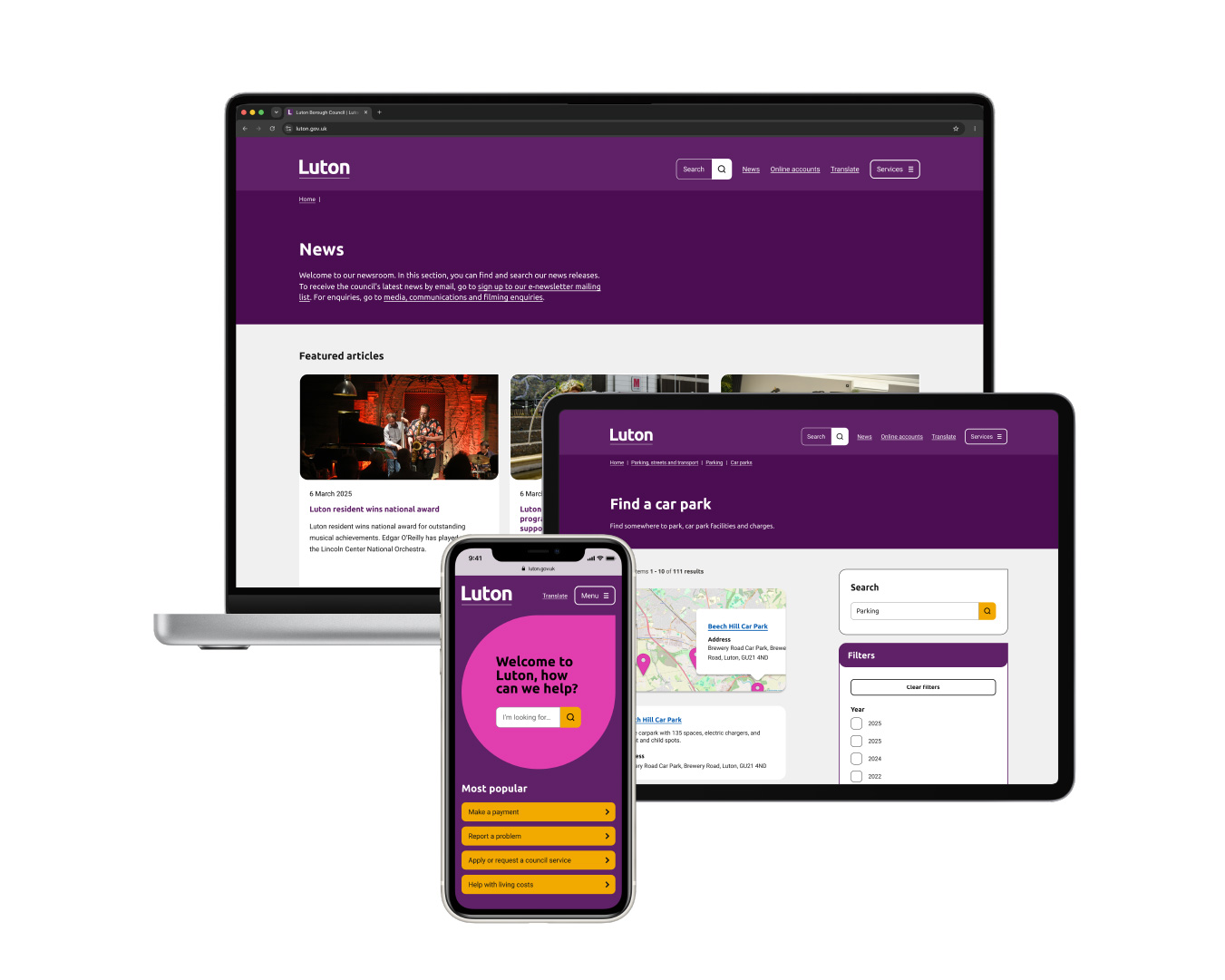
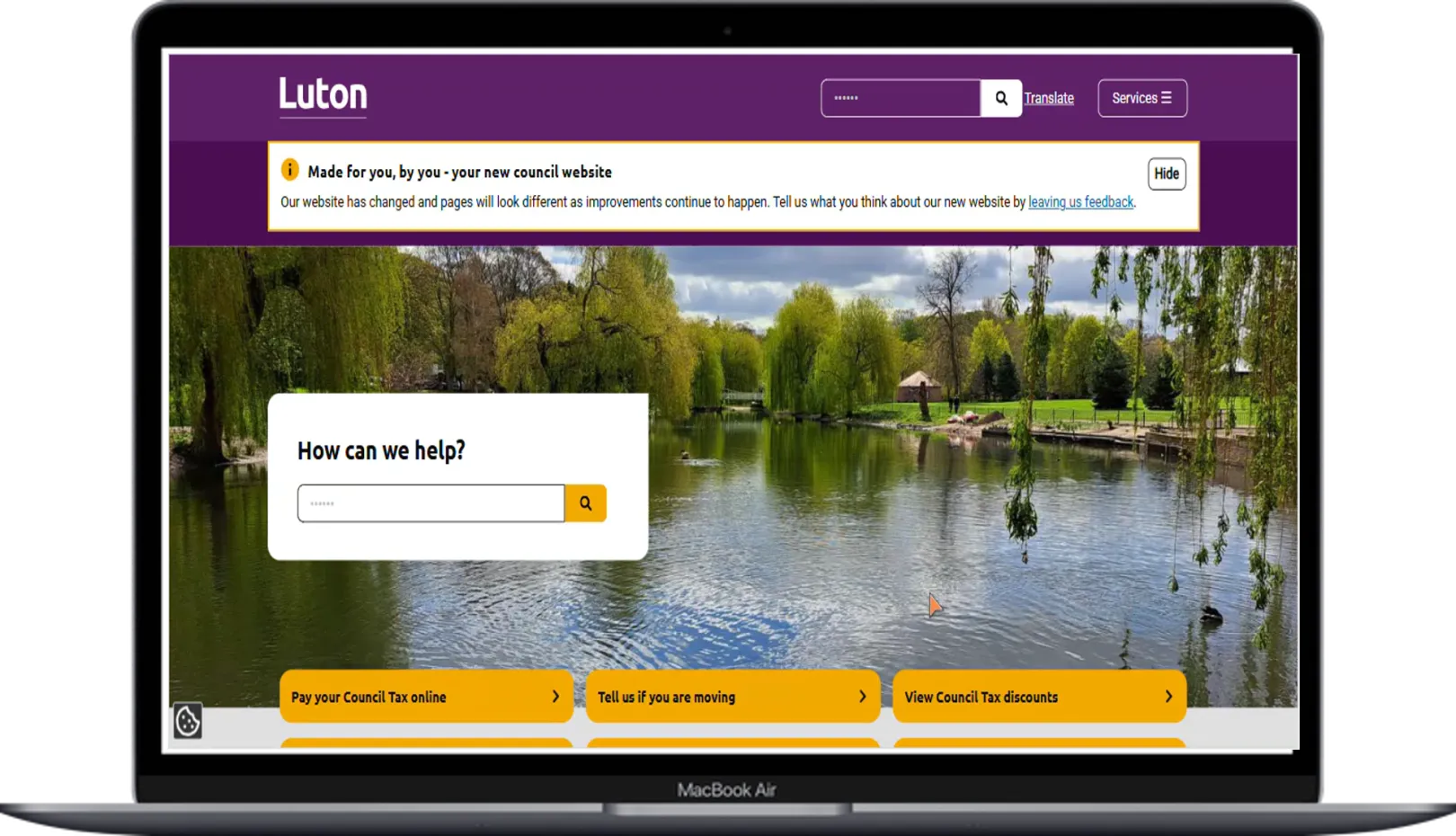
Luton Borough Council embarked on an ambitious digital transformation to replace an ageing web platform with a modern, user-centred website built on LocalGov Drupal.
The council serves a diverse and growing population, with residents increasingly expecting simple, accessible and effective digital services. Working with Annertech, Luton set out to create a website focused on residents' needs and aligned with UK Government Design System patterns.
The project moved at an exceptional pace: the public beta launched in just 77 days from project inception, with the full website launching 14 weeks later. The project combined Luton’s local government expertise, Annertech’s technical experience and dedicated content design support from experienced partners The Digital Word and Cornerstone Content to deliver the transformation.
About the project
Challenges
Luton faced several challenges in moving away from its legacy platform:
- Legacy content and migration: Years of existing content needed to be reviewed, with the team identifying what was genuinely useful to residents and what could be removed or rewritten.
- A demanding delivery timeline: The project needed to navigate public-sector procurement, stakeholder management and internal approvals while maintaining an ambitious delivery schedule.
- User-centred digital services: The new site needed to be intuitive and focused on residents' most important tasks rather than mirroring the council's internal organisational structure.
- Mobile accessibility: Nearly 70% of Luton’s website traffic comes from mobile devices, making responsive design, usability and accessibility particularly important.
- Modern government standards: The website needed to align with UK Government Design System patterns and provide a strong foundation for accessible public services.
Solutions
Luton and Annertech used a collaborative approach that combined council expertise, technical development and content design.
A decision matrix was created to prioritise services according to key criteria such as user need and service/stakeholder readiness which were weighted more than other criteria like political urgency. This helped the team focus the initial public beta on the services that mattered most to residents: Council Tax, Benefits and Waste.
Development and content redesign work happened in parallel. While developers established the new platform and production environment, content designers audited the existing site and prepared content for migration. This allowed the technical and content workstreams to progress together.
To accelerate the migration of existing content, Annertech developed a Single Page Migration tool. The Digital Services team (DSt) at Luton could enter the URL of a page from their old website and automatically bring across the title, body content and media. This helped reduce the content migration timeline from what would otherwise have been a lengthy manual migration process to a series of much quicker tasks. In addition, the Digital Services team was able to sign off and review new pages with services stakeholders quicker.
The project also embraced the collaborative nature of LocalGov Drupal. Improvements developed during the project were contributed back to the distribution, including the Single Page Migration tool, Publication Page Summaries and improvements to Content Moderation Bulk State Change. This means other councils can benefit from the work rather than having to develop the same functionality independently.
Outcomes
The new Luton Borough Council website provides a modern, user-centred platform designed around residents' needs and built on LocalGov Drupal.
Key outcomes include:
- 77 days from project inception to public beta launch.
- 70% of traffic from mobile devices, supported by a mobile-first user experience.
- 97 Lighthouse accessibility score, demonstrating a strong focus on accessibility.
- A rating from GTmetrix, reflecting strong website performance.
- Elimination of proprietary licence fees through the adoption of open-source software.
- Access to a wider community of councils and developers working with LocalGov Drupal.
- Contributions back to LocalGov Drupal that can benefit other local authorities.
- Reduction of JavaScript errors by roughly 20%
- A focused user-centred design information architecture drove a reduction in in-site search functionality by 78%
- The launched version was 10.5. We were able to pivot fast to D11 within a matter of days.
The project demonstrated that local government digital transformation does not necessarily need to take years. By combining clear priorities, user-focused content and design, technical expertise and an open-source platform, Luton was able to deliver significant change at pace.
Why Drupal was chosen
Drupal was chosen because it provided a flexible, open-source foundation for delivering a modern local government website without the costs and restrictions associated with proprietary platforms.
Luton selected LocalGov Drupal, a Drupal distribution specifically developed to help UK councils publish public-facing websites more quickly, cheaply and effectively. It provides common functionality and patterns needed by local authorities while allowing individual councils to adapt the platform to their own communities and requirements.
The open-source model was particularly important. Instead of each council having to build and maintain the same functionality independently, LocalGov Drupal enables councils and suppliers to collaborate on shared solutions and contribute improvements back to the wider community.
For Luton, this meant starting with an established platform and community rather than building a new system from scratch. It also provided access to existing local-government functionality, ongoing development and a network of councils and developers facing similar challenges.
The project demonstrated another key advantage of Drupal: the ability to contribute solutions upstream. Features developed during Luton’s transformation were contributed to LocalGov Drupal, allowing the investment made by one council to potentially benefit many others. This collaborative approach is central to LocalGov Drupal and to the wider Drupal community.
Technical Specifications
Drupal version:
Key modules/theme/distribution used:
LocalGov Drupal (LGD)
Moving to the LocalGov Drupal distribution allowed Luton Council to replace its aging legacy platform with a modern, open-source foundation. Built by councils for councils, LGD provided a pre-tested core feature set, proven content architecture, service directories and step-by-step landing page patterns. This drastically accelerated the build, allowing the team to hit public beta in just 11 weeks.
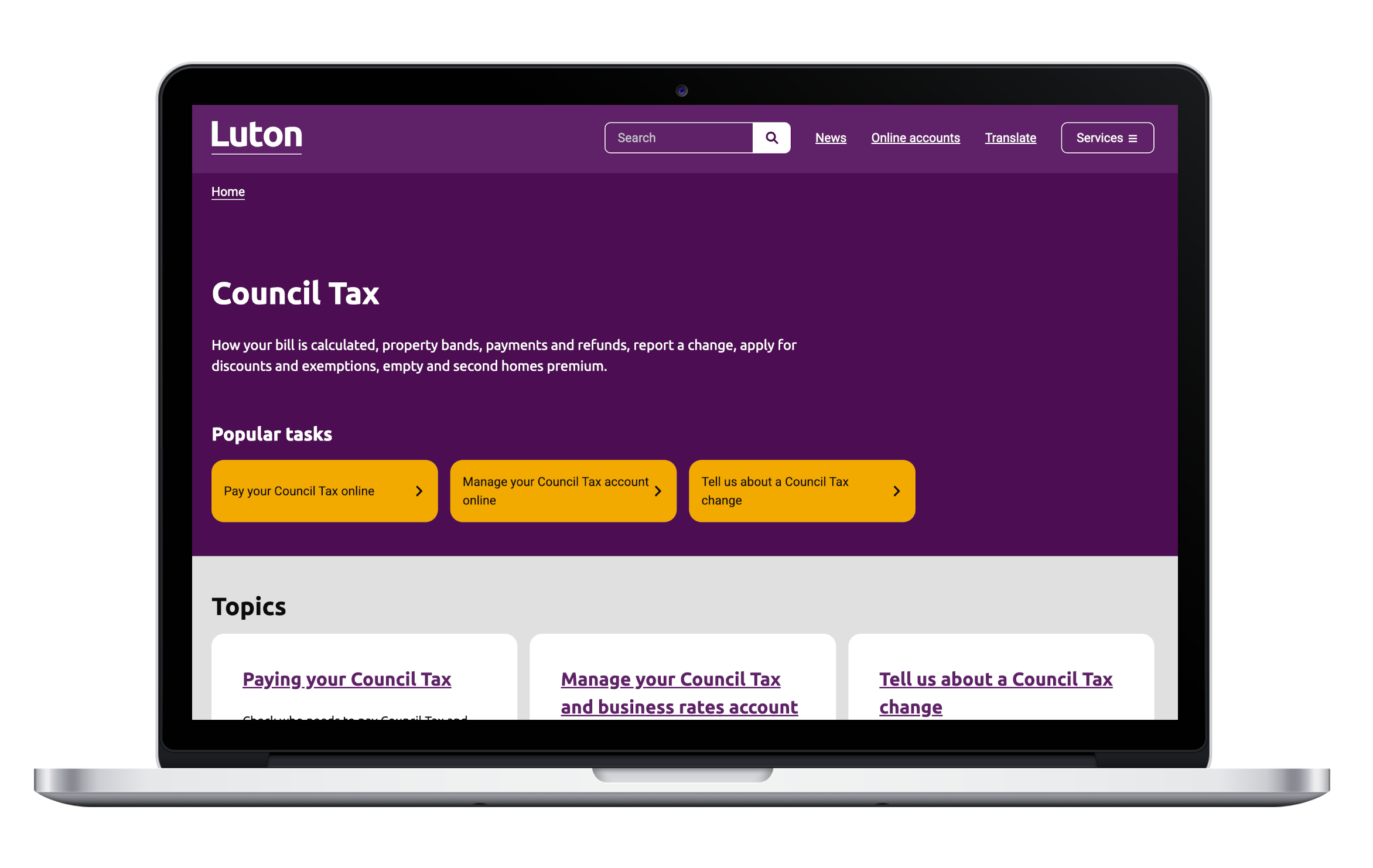
LocalGov Base (with custom sub-theme)
Rather than building a theme from scratch, Annertech used the robust localgov_base theme as the launchpad. Overlaid with a tailored custom sub-theme, it seamlessly aligns with Luton Council's brand guidelines, component styles and layout structures while maintaining accessible, mobile-first design standards out of the box.
Key modules
To complement the rich suite of default features in LocalGov Drupal, Annertech curated a set of key functional modules to meet Luton’s specific operational needs:
- Editoria11y (Accessibility Checker): Accessibility is non-negotiable for public sector platforms. Editoria11y was integrated to give content editors instant, real-time feedback on potential accessibility issues right inside the editing interface before content goes live.
- LocalGov Services & Guides (localgov_services / localgov_guides): These modules form the backbone of the council's information architecture, organising complex public information into intuitive service structures, sub-services and clear, step-by-step user guides.
- LocalGov Directories (localgov_directories): Essential for community engagement, this module powers searchable directory listings for local services, venues and community resources.
- LocalGov News & Events (localgov_news / localgov_events): Keeps local residents informed by managing press releases, council news updates and interactive local event calendars.
- Layout Paragraphs: Paired with LocalGov Drupal's layout features, Layout Paragraphs gives content creators the flexibility to assemble dynamic, visually engaging and accessible landing pages without touching a single line of code.
- Webform: The workhorse for online citizen interaction, powering everything from quick feedback workflows and service requests to complex multi-step forms.