Sector(s)
Team Members
Visit the site
Visit the siteOrganizations Involved
Community contributions
- Conference presentations.
- Technical blog posts.
- Pattern Lab to SDC migration experience.
- Drupal frontend modernization.
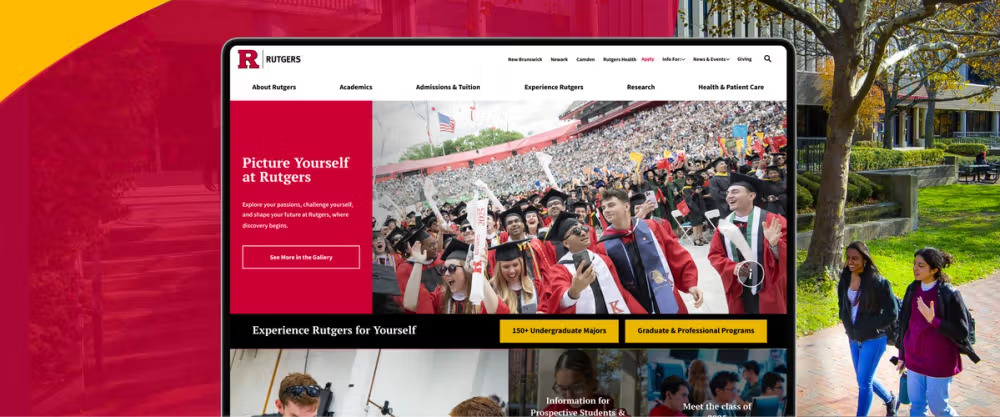
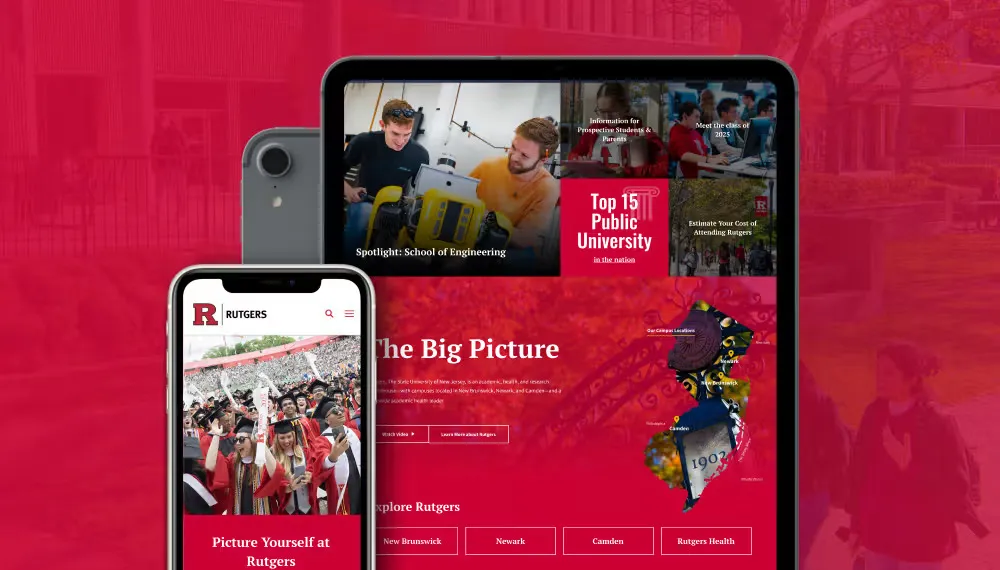
Rutgers University partnered with Cheppers to redesign its primary homepage while modernizing the shared Drupal component library used across more than 80 university websites. The project combined a new user experience with Drupal's Single Directory Components (SDC) architecture and Storybook, creating a reusable design system that improves accessibility, maintainability, and consistency across Rutgers' digital ecosystem. The redesigned homepage also delivered significantly higher engagement with key calls to action.
About the project
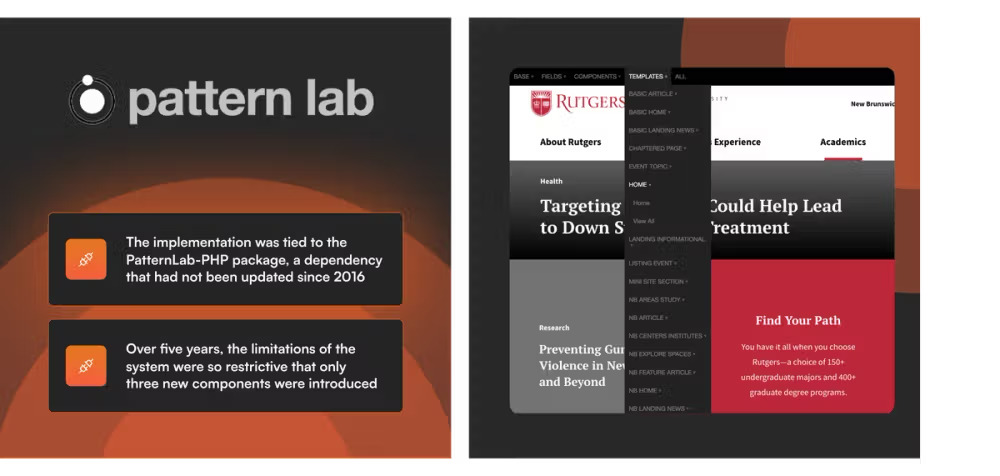
Rutgers University maintains a large digital ecosystem consisting of more than 80 Drupal websites supported by a shared component library. Over time, the frontend architecture had become difficult to maintain. The existing design system was built around Pattern Lab PHP, which was no longer actively maintained, making it harder to evolve alongside modern Drupal development practices.
The goal of the project was not only to redesign the Rutgers homepage, but also to modernize the underlying component architecture without disrupting the established design system. Rutgers wanted to preserve its existing investment in reusable components while moving to a solution that better aligned with Drupal's direction and would be easier to maintain in the future.
Cheppers worked closely with Rutgers to redesign the homepage, improve content hierarchy and user engagement, and migrate the existing component library from Pattern Lab to Drupal Single Directory Components (SDC). Existing components were reviewed, updated where necessary, and adapted to the new architecture rather than being recreated from scratch. Storybook was introduced as the primary environment for developing, documenting, and testing components independently of Drupal pages.
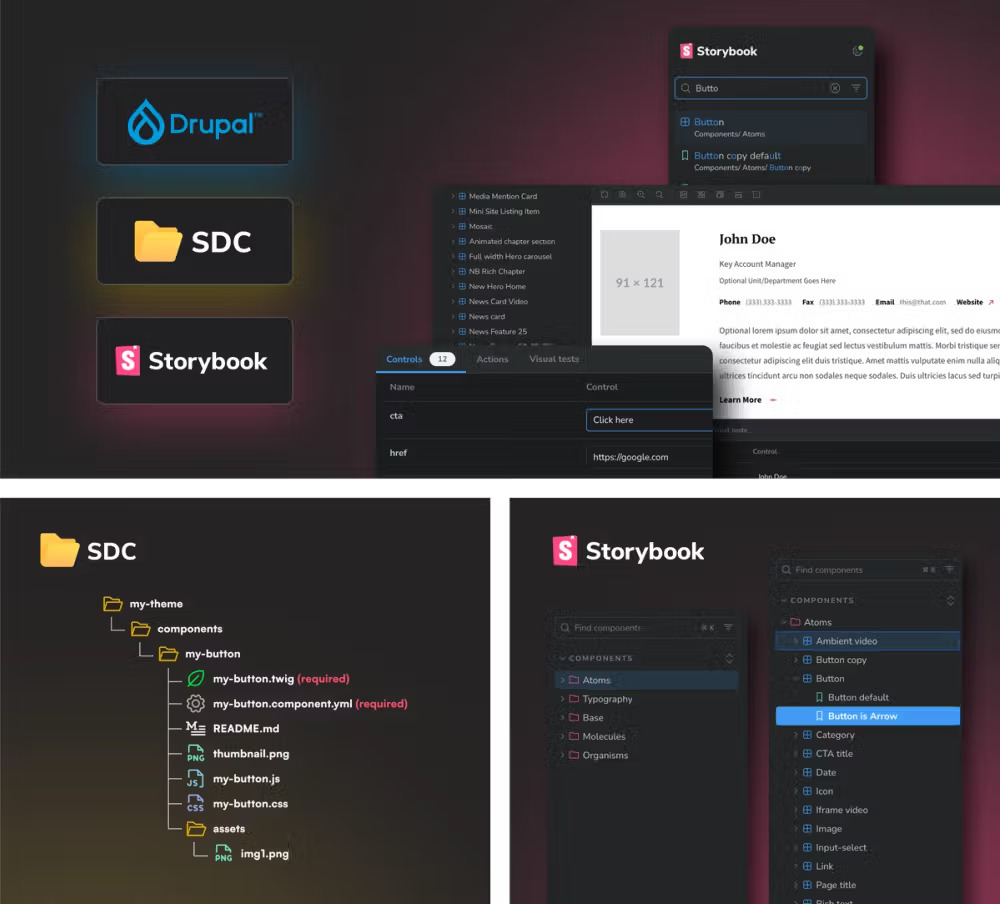
The new homepage delivered a significantly improved visitor experience, while the migration to SDC established a modern, Drupal-native component architecture that can continue to evolve with the platform. Improvements made during the project can now be reused across Rutgers' wider ecosystem of more than 70 websites, reducing maintenance effort and providing a stronger foundation for future development.
Why Drupal was chosen
Rutgers had already standardized on Drupal as the platform powering its large network of university websites. Rather than replacing that investment, the project focused on adopting newer Drupal capabilities that would improve the maintainability of the existing frontend architecture.
Drupal's Single Directory Components (SDC) provided a natural evolution from the existing Pattern Lab-based workflow by bringing component definitions directly into Drupal. Templates, stylesheets, JavaScript, metadata, and schemas are kept together, making components easier to understand, maintain, and reuse. This also reduces the disconnect between standalone design system implementations and production Drupal code.
Technical Specifications
Drupal version:
Key modules/theme/distribution used: