
-
Image

Global Experts Converge in Rotterdam
Leaders and practitioners from across the world will gather in Rotterdam to share real experience delivering AI in enterprise and public sector environments. -
Image

A Full Day of Sessions to Inspire Action
Explore practical case studies from peers and organisations applying AI in production. Gain insights you can adapt to your own context, turning experiments into dependable systems that deliver measurable business value. -
Image

Real Business Needs Open Source Solutions
Gain clear, practical guidance on how to apply AI to your own business requirements using open source systems that support sovereignty, sound governance and responsible use. -
Image

Networking and Collaboration
Connecting you with leaders exploring APIs, AI, agents, cyber security and modern digital infrastructure.
About the Dev AI Summit
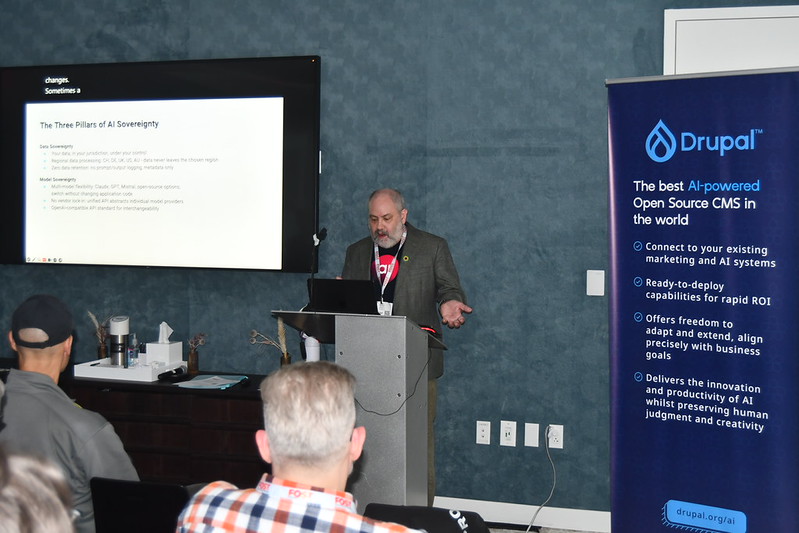
Drupal AI Summit NYC 2026 (Sold out)
If you’re a Drupal developer interested in AI, this day is designed to help you get practical, hands-on insight into the rapidly evolving AI landscape.
Artificial Intelligence is reshaping how developers build applications, manage content, automate workflows, and interact with digital platforms. At the same time, Drupal, PHP, and the broader open web ecosystem are rapidly evolving to support new AI-driven experiences.
This summit brings together developers, architects, technical leaders, and open-source innovators to explore what AI means in practical terms for modern web development and digital experience platforms.
This event is intended for developers and technical practitioners who are curious about AI, actively experimenting with it, or already deploying AI-enabled solutions in production environments.
Featured Speakers
-
Image

Matthew Saunders, AI Ambassador, amazee.io
Matthew Saunders is an AI Ambassador at amazee.io and a long-time Drupal leader with two decades of contribution. He helps organizations adopt practical, secure AI within Drupal, with a focus on data sovereignty, enterprise delivery, and neuro-inclusive design. -
Image

Shibin Das, Developer, Factorial
I’m Shibin Das, an Indian-born engineer turned software enthusiast with a passion for crafting innovative solutions and contributing to the world of open source. I work with cross-functional teams at the intersection of UX, Product, and Engineering to improve how digital products move from idea to delivery. -
Image
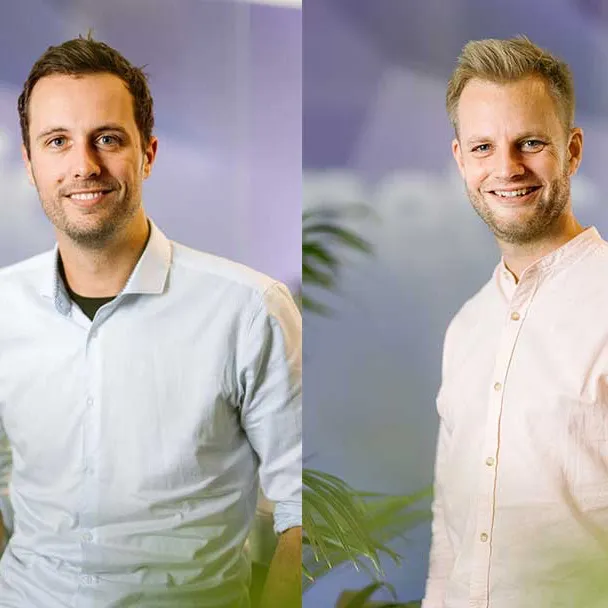
Sam Zwaaij and Jordy Vleugel, Synetic
Sam Zwaaij and Jordy both work at Synetic, where they help organizations build and evolve complex digital platforms with Drupal at the core. Together, they combine more than 25 years of Drupal experience, covering everything from architecture and engineering to strategy, AI and product development. While Jordy focuses on designing and building scalable Drupal solutions as a Solution Architect and Team Lead, Sam bridges technology and business, helping organizations translate innovation into practical value. Together, they explore how AI is changing the way we build, maintain and think about Drupal applications. -
Image

Jürgen Haas, Drupal Architect, LakeDrops
Jürgen Haas is founder and CEO of LakeDrops, a Drupal agency specializing in no-code automation through the ECA (Events-Conditions-Actions) module. Since 2005, he's contributed to Drupal core and maintained modules used by thousands of sites. As lead developer of ECA - Drupal's visual workflow builder - Jürgen enables site builders to create complex automations without custom code. He now explores how AI agents can accelerate Drupal development, bridging traditional workflows with modern tooling. Jürgen combines deep technical knowledge with practical experience running a distributed agency, making him equally comfortable discussing architecture patterns and business strategy. -
Image

Nick Veenhof, Director, Developer Relations, Gitlab
The long chapter before GitLab was Drupal. Maintainer-scale work: patches, releases, community governance, a seat on the board of the Drupal Association, leading the Belgian Drupal community, and a decade of conference stages across Europe and beyond. That is where a conviction formed: communities outbuild companies, and I have watched it happen for 19 years. In 2026 I ran for the Linux Foundation board on exactly that conviction. At GitLab I lead DevRel Engineering and DevRel Programs. The work is making contribution easier and more rewarding. The reason is straightforward: a bigger contributor community makes the platform more valuable for everyone who uses it. GitLab calls this the dual-flywheel effect. My current obsession is different. I design AI systems that run my own work. The central piece is Paul, an AI chief of staff I built in the open on open source tools. The craft I call loop engineering: designing the system that directs the agent instead of directing it line by line. Gates that block instead of warn. Memory that survives the session. Work that lands in the same review flow as code. Building a chief of staff is where to start. I coach and mentor by conviction, and I lead by example. I try to make our digital world a better and more open place compared to yesterday, every day. -
Image

Michael Anello, co-founder and lead instructor, DrupalEasy
Mike Anello (@ultimike) is co-founder and lead instructor at DrupalEasy, a Florida-based Drupal training and consulting firm. With over 20 years of Drupal experience, he has taught countless developers through DrupalEasy's courses and hosts the DrupalEasy Show & Tell podcast/video series. Mike maintains several contrib modules — including Smart Trim and Markdown Easy — and serves as Treasurer of the DDEV Foundation. A frequent speaker at DrupalCon and regional camps, he's known for practical, hands-on training on topics ranging from site building to the latest Drupal AI tooling. -
Image

Luca Lusso, Lead developer, SparkFabrik
Luca Lusso is a Drupal developer with more than 15 years of experience; he worked as a consultant and contributed to building some of the biggest Drupal websites in Italy. Luca is also a teacher, and has taught Drupal to many different teams, from universities to big system integrators. Luca is an open source lover and Drupal contributor; he maintains popular modules such as WebProfiler and Monolog. He’s also a speaker at conferences such as DrupalCon Europe and Drupal Developer Days. -
Image

Martin Anderson-Clutz, Sr PMM, Acquia
Martin Anderson-Clutz is a Drupal specialist and web professional based in London, Ontario, with a background in design and nearly two decades of Drupal experience. He is a speaker, module maintainer, and podcast contributor focused on making Drupal and AI more human-centred and practical. -
Image

Marcus Johansson, Tech Lead Drupal AI Initiative, Senior Developer, FreelyGive
Currently I'm working on the combination of AI and Drupal and I am one of the co-maintainers of the AI module. Generally I'm working with PHP, js and Python based development and engineering. I have tried a lot of different tools for both R&D and live purposes. I do sysadmin and frontend when needed as well. I've built integration and automation engines for all large AI services like OpenAI, Anthropic, Ollama, LMStudio, ElevenLabs, DreamStudio, Azure, AWS Bedrock, Deepgram. I've built and deployed AI applications that are being used by Fortune 500 companies.
The Agenda
Attendees will hear from global leaders and experienced AI practitioners who are actively delivering AI inside enterprise and public-sector organizations. Sessions will focus on case studies, shared best practices, and emerging approaches that are already being applied in production environments, helping organizations stay ahead by learning what actually works.
Bridging Strategy and Execution
Those attending can expect sessions grounded in real experience, demonstrations with clear purpose and discussions focused on long term value. For organizations assessing how AI will influence their digital estate, the summit will provide an informed and practical perspective.
The compelling case for open source
The Summit will highlight the role of open source platforms in making responsible AI adoption practical. Drupal AI demonstrates how AI can be embedded directly into content, data, and workflow systems, where enterprise work actually happens, while preserving transparency, extensibility, and organizational control. This perspective resonates beyond Drupal, offering value to teams working across open source ecosystems who face similar enterprise constraints.
Schedule
-
Introduction and Welcome
Matthew Saunders, AI Ambassador, amazee.io
A quick introduction to the program today and what to expect.
-
Humans and AI Agents, One Contribution Loop
Nick Veenhof, Director, Developer Relations, Gitlab
My team at GitLab uses AI to accelerate open source contributions. The real barrier to contributing is not code quality. It is documentation & real enablement - which we call Co-Create. When documentation is public and machine-readable and enablement is really tangible, both humans and AI agents can onboard faster. What used to take a new contributor weeks now takes hours. I'll share the pattern behind this acceleration, the trade-offs we hit, and the cases where it breaks, with real numbers.
-
Pluto: Infrastructure for AI-Native Development
Sam Zwaaij, Digital Strategy, Synetic
Jordy Vleugel, Solution Architect, SyneticAn inside look at Pluto, our AI-powered development platform. We'll explore how we combine hosted LLMs, background agents, n8n workflows, and modern AI coding tools to enable customers to build and extend their own solutions.
-
FlowDrop in Production: Observable, Async, Cost-Controlled Agentic Workflows for Drupal
Shibin Das, Developer, Factorial
A production-grade introduction to FlowDrop, the visual workflow editor for agentic Drupal — covering observability, async scale, and cost control.
Agentic demos look magical. Agentic systems in production look different: unpredictable latency, runaway token bills, opaque failures, and flows that can't be replayed or audited. Enterprises need a harness.
FlowDrop is a visual workflow editor that runs on your own Drupal runtime — no hosted control plane, no hidden backend. In this 25-minute session I'll introduce FlowDrop and walk through the three production concerns that matter once agents leave the demo stage:
- Observability — every agent decision inspectable, replayable, and version-controlled
- Async scale — execution that escapes the request cycle and handles long-running, parallel, and event-driven flows
- Predictable cost — composing many small AI skills instead of one large prompt, with measurable token and latency budgets
Demo that shows a real flow handing off between deterministic steps and an agentic decision point — including what observability looks like when something goes wrong. We'll close with where FlowDrop fits alongside ECA and how to start small.
-
From Developer to Code Director: Strategic AI Acceleration for Drupal
Martin Anderson-Clutz, Senior Product Marketing Manager, Acquia
As AI tools evolve from simple autocomplete extensions into sophisticated reasoning partners, the role of the developer is shifting. For technical leaders, this evolution offers a massive opportunity: transforming engineering teams from line-by-line coders into high-level "code directors." But how do we strategically harness this shift to accelerate both internal velocity and open-source contribution?
In this fast-paced, 20-minute session designed for technical leaders, we will explore the practical realities of "vibe coding" within the Drupal ecosystem. Drawing on real-world engineering workflows, we will look at how leading models and assistants—including Gemini, Claude, Codex, and Copilot—act as powerful force multipliers.
We will cut through the AI hype to examine how these tools can be used as strategic reasoning partners to solve complex architectural challenges, accelerate custom development, and supercharge community contributions.
You will leave this session inspired by the future of AI-driven development and equipped with practical, high-impact tips you can bring back to your engineering teams immediately to maximize their impact and velocity
-
Your AI Decisions Are Creating Risk: What Agency and Business Leaders Need to Own Now
Matthew Saunders, AI Ambassador, amazee.io
AI is already part of how work gets delivered.
It’s in the tools your teams are using, the platforms you’re recommending, and the solutions you’re putting in front of clients. It’s being introduced quietly often without much scrutiny.
That raises real concerns around data privacy, sovereignty, and who actually controls the systems your work depends on. A lot of AI-enabled workflows depend on sending data to systems you don’t control, running on models you can’t inspect, in environments you didn’t choose.
That creates a gap between what organisations believe they are responsible for, and what is actually happening.
We can close that gap.
We’ll look at how AI is really showing up in client work today in delivery pipelines, vendor decisions, and everyday tooling. Let's sort out where risk is introduced, how sovereignty is affected by common integration patterns, and what it takes to stay in control.
We'll review:
• Where AI is entering projects without clear oversight
• How data moves through typical AI-enabled workflows
• The implications of relying on closed vs open ecosystems
• How vendor choices shape long-term control and flexibility
• What transparency looks like when you actually need to explain a system
• Approaches to governance that can be applied in active projects
We don't need to slow teams down, but let's make sure the decisions being made are intentional, understood, and aligned with the responsibilities you carry. -
Context as a Platform: From Configuration to Custom Integrations
Marcus Johanssen, Tech Lead AI Initiative/Senior Developer, FreelyGive
Drupal AI Context, also known as Context Control Center (CCC), helps Drupal sites provide structured, governed context for AI agents and workflows. But beyond the UI features, CCC is designed as an extensible platform developers can configure, customize, and build on.
This session takes a technical look at how CCC works and how to extend it for real-world Drupal AI implementations.
We’ll explore configuration patterns, including:
* configuring scope plugins
* enabling advanced capabilities
* tuning agent-to-context selection behavior
* controlling how context is filtered and assembledWe’ll also walk through extension points available today, including:
* creating custom scope plugins
* extending or modifying existing behavior
* prefiltering context before selection
* adding new context source types beyond files and URLsFinally, we’ll look ahead to extensibility patterns under development, including remote and dynamic context connectors, reusable context templates, and integrations with standards such as MCP (Model Context Protocol).
Whether you’re building AI-powered editorial workflows, custom agents, semantic search systems, or organization-specific AI tooling, this session will show how Drupal AI Context can become the governed context layer behind your implementation.
-
Defending Drupal AI: Hands-on with the guardrails system
Luca Lusso, Lead developer, SparkFabrik
As AI features become central to web experiences, controlling their inputs and outputs is no longer optional. This session dives deep into the Guardrails subsystem within the Drupal AI module, exploring exactly what guardrails are and why they are critical for brand protection, compliance, and mitigating prompt injection. We will unpack the vital difference between deterministic guardrails (like rigid regex checks and structural validation) and LLM-based evaluators (such as topic classification, toxicity detection, and tone analysis). We will discover how guardrails are integrated into Automators and Agents, and how they operate globally. Finally, we will put theory into practice with a hands-on developer walkthrough, showing you which guardrails already exist, how to code a custom guardrail, how to configure pre- and post-generate sets, and how to test your defense layers live using Drupal's AI Explorer.
-
Giving Authors Before-the-Save Power with AI-Powered Field Widget Actions
Mike Anello, Developer/Trainer, DrupalEasy
The Field widget actions (https://drupal.org/project/field_widget_actions) module allows site-builders to put the power of AI directly at authors' fingertips on Drupal content entry forms in a controlled and structured manner. Most importantly, Field widget actions can do all of this before the author clicks the "Save" button, ensuring they have the opportunity to review and modify any AI generated content.
In this 30-minute session, we'll see a series of examples that will provide an overview of the Field widget actions module and how it integrates with the AI automators and AI content suggestions modules. -
Operationalizing AI Safely in Enterprise Workflows - Without Custom Code Everywhere
Jurgen Haas, Drupal Architect, LakeDrops
I've spent the last year combining ECA's deterministic workflow engine with AI agents for the non-deterministic parts. The pattern works surprisingly well.
Three real examples:
1. Context-aware content suggestions - Editors click a button, ECA checks the content type and user role, then fires different AI prompts based on context. Same workflow, different AI instructions per situation.
2. Automated comment moderation - ECA watches for new comments, passes them to an AI agent for toxicity/spam analysis, then routes to different approval queues based on the agent's response. Fully auditable.
3. AI-generated workflows - I built an ECA MCP server that lets AI agents read ECA documentation and generate complete workflow models from natural language prompts. The meta-loop: AI creates the automation that will later invoke other AI.What you'll see:
- Live workflow debugging showing AI input/output at each step (you see what the agent decided, not how) - Permission boundaries that keep AI from accessing what it shouldn't
- Config-based deployment (no custom code sprawl)
- The limitations I hit (AI hallucinations still need validation gates)
- The core insight: deterministic workflow control (ECA) wrapping non-deterministic AI decisions gives you the safety enterprises need with the flexibility AI provides.I'll show working code, real debugging sessions, and the mistakes I made figuring this out.
-
Group Breakout Sessions
All Attendees
-
One table for AI core
-
One table for ECA
-
One table for Flowdrop
-
One table for Context Control Centre
-
-
Breakout Presentations
Table Presenters
Each table nominates one person to give a short presentation (5-10 minutes) on what they learned.
-
Closing Remarks
Matthew Saunders, AI Ambassador, amazee.io
Final wrap up for the day.