Sector(s)
Team Members
Project Team
Visit the site
Visit the siteOrganizations Involved
Community contributions
About the project
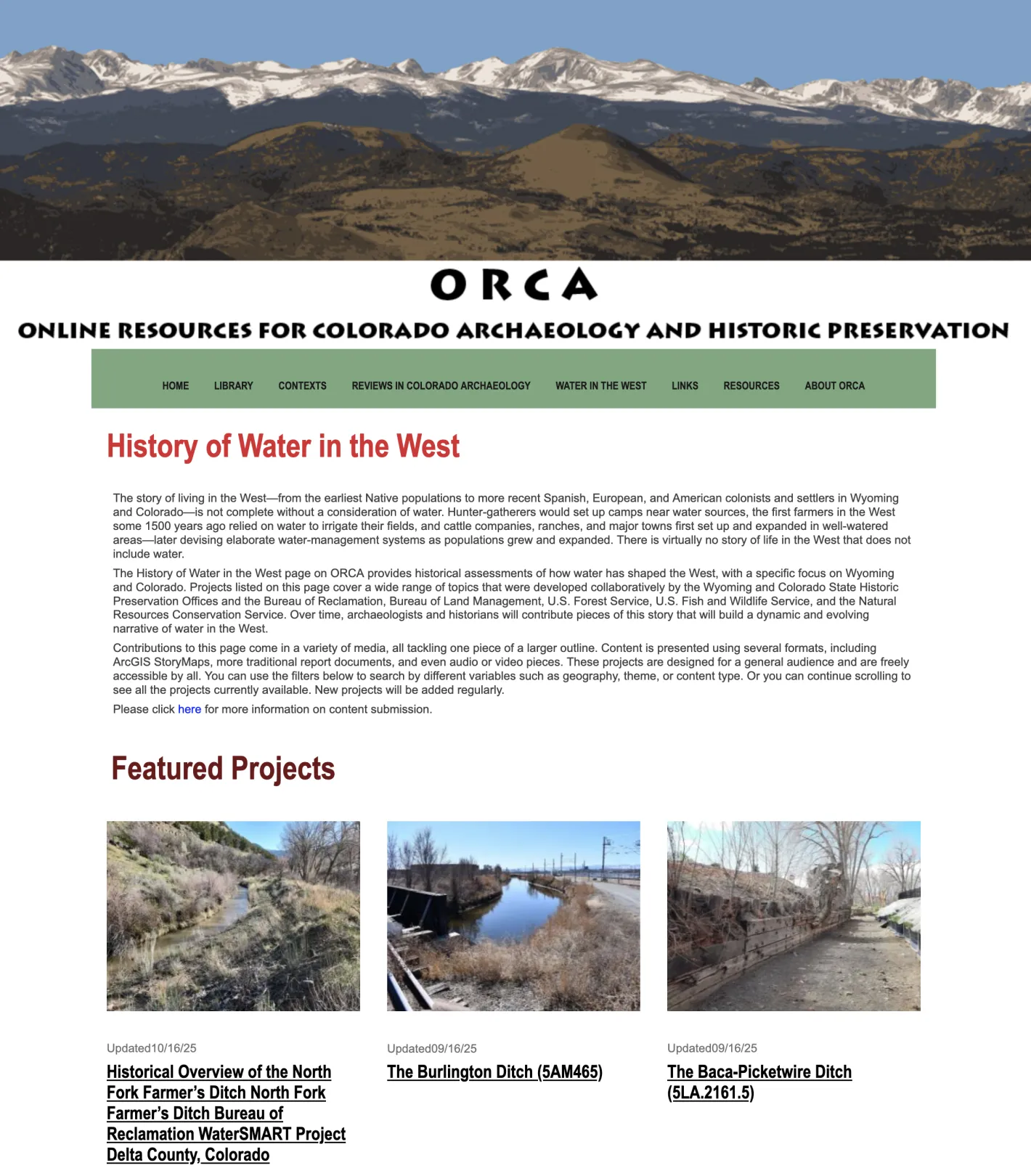
ORCA (Online Resources for Colorado Archaeology) serves as a vital digital repository for Colorado's archaeological and historic preservation community. Managed by Paleocultural Research Group, the platform provides researchers, educators, and the public with access to archaeological resources, research libraries, and professional forums.
The Challenge:
ORCA faced a critical challenge common to academic and research institutions: their Drupal 7 platform, while functional, was approaching end-of-life with no further security updates. The site housed irreplaceable archaeological research data, including a comprehensive PDF research library with complex metadata, geographic and thematic taxonomies, and an active professional community forum. Any migration had to preserve this scholarly resource completely while modernizing the underlying technology.
Files to Media Entity Conversion:
Legacy file attachments across the research library and resource content types were converted to Drupal's modern Media entity system. This included 3 media types -- document, image, and private document -- with proper access controls for professional-only content. The conversion ensures better management, reusability, and preservation of historical photographs, maps, and documents that form the backbone of archaeological research.
PHP Theme to Twig Conversion:
The original Artisteer-generated PHP theme was completely rebuilt using Drupal's Twig templating engine. Over 17 custom templates were created to maintain the site's distinctive look while enabling modern responsive behavior.
Research Library Preservation:
The PDF Research Library with its complex field structure -- including document types, project types, temporal keywords, thematic keywords, and publication metadata -- was fully migrated with all searchable facets intact. This library represents decades of scholarly work that, once lost, would be irreplaceable.
Specialized Content Architecture:
The migration preserved ORCA's specialized content architecture designed for archaeological research:
- Resource -- General archaeological resources with geographic and thematic categorization, downloadable files, and external links
- PDFResearchLib -- Comprehensive research library entries with citation information, document types, project classifications, temporal/thematic keywords, and professional-only access controls
- Forum -- Active community discussion spaces for professional archaeologists with full threading and notification systems
- Basic Pages -- Informational content about Colorado archaeology and historic preservation
Taxonomy Structure Migration:
Five taxonomy vocabularies essential for resource categorization were preserved. Geographic, thematic, and content-type taxonomies power the site's ability to organize archaeological resources by location, topic, and format.
Forum Community Preservation:
The professional archaeology forum, essential for community discussion, was migrated with all threading, user relationships, and comment notification systems preserved for continued scholarly collaboration.
Migration by the Numbers:
- 360+ configuration files migrated
- 17+ custom Twig templates created
- 3 media types configured (document, image, private)
- 5 taxonomy vocabularies preserved
- 22 Views configurations migrated
- Multi-facet research library search retained
Infrastructure:
The upgraded site was deployed to Pantheon's managed hosting platform with proper CI/CD workflows, Drush integration, and configuration management for ongoing maintenance.
Client Testimonial:
"Niels and his team made this potentially stressful process simple and seamless. They explained every step of the process, were very knowledgeable, professional, and accommodated an 8-hour time difference when we needed to discuss things. The site was accessible the entire time and the site looks and functions exactly like the older Drupal version. We highly recommend working with Niels and the team at CodeLift." -- Paleocultural Research Group
Ongoing Maintenance:
ORCA operates under CodeLift's "Always on the Latest Version" service level agreement. This ensures the platform receives continuous security updates, core upgrades, and module maintenance -- critical for an academic resource serving the archaeology community.
Why Drupal was chosen
Technical Specifications
Drupal version:
Key modules/theme/distribution used: